
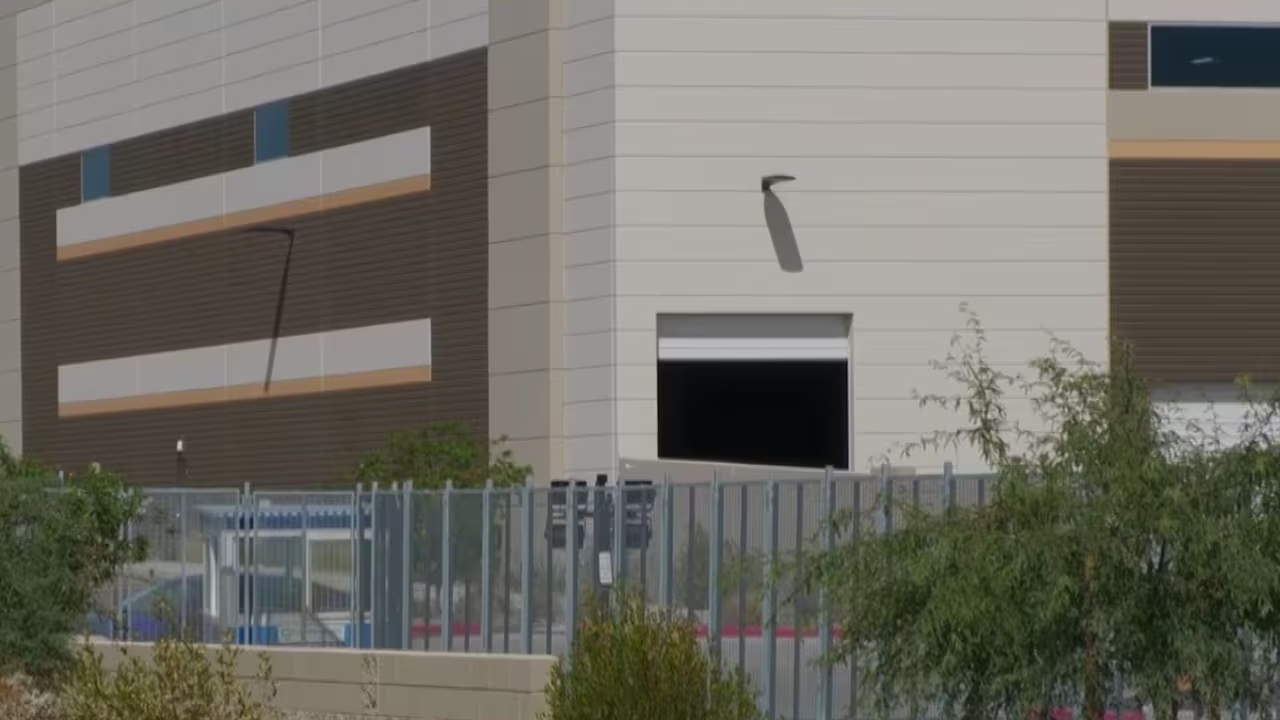
The U.S. Immigration and Customs Enforcement (ICE) has temporarily halted plans to convert a commercial building in Surprise, Arizona, into a migrant detention facility, according to a statement released by the agency on April 5, 2024. The decision followed an agreement between local officials and advocacy groups, though details of the pact remain undisclosed. The suspension marks a significant reversal for a project that had sparked intense debate over immigration policy and local governance.
The proposed facility, located on the site of a former retail complex, had been under consideration since late 2023. ICE had initially outlined plans to accommodate up to 300 detainees, citing a need to address overcrowding at existing detention centers. However, the project faced immediate opposition from residents, environmental advocates, and legal experts, who raised concerns about its compliance with zoning laws and potential environmental impact.
“This decision reflects our commitment to balancing immigration enforcement with community welfare,” said an ICE spokesperson in a written statement. “We are working closely with local authorities to ensure all legal requirements are met before proceeding.” The agency did not specify whether the suspension is permanent or a procedural delay, but it emphasized that the matter remains under review.
What led to the suspension?
The suspension followed weeks of public hearings and legal challenges. A coalition of local groups, including the Arizona Immigrant Equity Coalition, filed a lawsuit in early March 2024, alleging that the project violated state environmental regulations. The lawsuit cited a 2022 state law requiring thorough environmental assessments for large-scale developments, which the coalition claimed had not been properly conducted.
Local government officials also played a role in the delay. The City of Surprise’s planning board voted in February 2024 to deny a key zoning variance required for the project, citing insufficient community input. “We prioritized the voices of our residents over any single development proposal,” said Mayor Karen K. Smith in a public address. “This decision is about transparency and accountability.”
The legal and administrative hurdles were compounded by broader political pressures. Arizona, a state with a contentious immigration history, has seen increasing scrutiny of federal immigration policies. In 2023, the state legislature passed a bill limiting the use of private detention facilities, a move that critics argue could complicate future ICE projects.
What are the next steps?
As of April 10, 2024, no official timeline has been announced for resuming the project. ICE has not confirmed whether it will appeal the zoning denial or seek alternative locations. Meanwhile, advocacy groups are pushing for a permanent halt. “This is a victory for transparency, but we cannot afford to be complacent,” said Laura Mendoza, a policy analyst with the Arizona Immigrant Equity Coalition. “The federal government must recognize that such projects require community consent, not just legal loopholes.”

The case also highlights the growing influence of local governments in shaping immigration enforcement. In recent years, cities across the U.S. have increasingly resisted federal immigration initiatives, citing concerns over civil liberties and resource allocation. A 2023 report by the Pew Research Center found that 62% of U.S. mayors support stricter oversight of federal immigration policies, a trend that could reshape future detention center negotiations.
For now, the building remains vacant. Local officials have not indicated plans to repurpose the site, though some residents have proposed converting it into a community center or affordable housing. “We’re ready to explore alternatives that benefit everyone,” said Surprise City Council member David R. Lee. “This isn’t just about one project—it’s about building trust.”
Why does this matter?
The case underscores the complex interplay between federal immigration enforcement and local governance. Detention centers, often located in rural or suburban areas, have long been a flashpoint for community resistance. A 2022 study by the Migration Policy Institute found that 78% of U.S. counties hosting immigration detention facilities reported increased public anxiety, citing concerns over safety, labor practices, and environmental impact.
The suspension in Surprise also reflects broader shifts in U.S. immigration policy. Under the Biden administration, ICE has faced pressure to reduce reliance on detention, with a 2023 executive order directing agencies to prioritize alternatives to incarceration. However, the agency has maintained that detention remains necessary for certain cases, such as those involving criminal convictions or flight risks.
For migrants, the delay could mean temporary relief from potential detention. Advocacy groups estimate that the proposed facility would have processed approximately 1,200 individuals annually, though exact figures are not available. “Every day without detention is a day of dignity,” said Maria Gonzalez, a legal aid attorney specializing in immigration law. “This decision doesn’t solve the system’s flaws, but it buys time for real reform.”
What happens next?
The next major development is expected in early May 2024, when ICE is scheduled to submit a revised proposal to the Department of Homeland Security. The agency has not yet commented on whether it will address the zoning and environmental concerns raised by critics. Meanwhile, the Arizona Supreme Court is set to hear a related case on April 25, 2024, which could determine the legality of the zoning denial.
Residents of Surprise remain divided. While some support the suspension, others argue that the decision could strain the region’s limited resources. “We’ve seen how detention centers can strain local services,” said Tom Harris, a member of the Surprise Chamber of Commerce. “But we also need to consider the economic impact of leaving this building empty.”
As the debate continues, the case serves as a microcosm of the national conversation on immigration. With federal and local interests often at odds, the outcome in Surprise could set a precedent for future projects. For now, the building stands as a symbol of both resistance and uncertainty, its