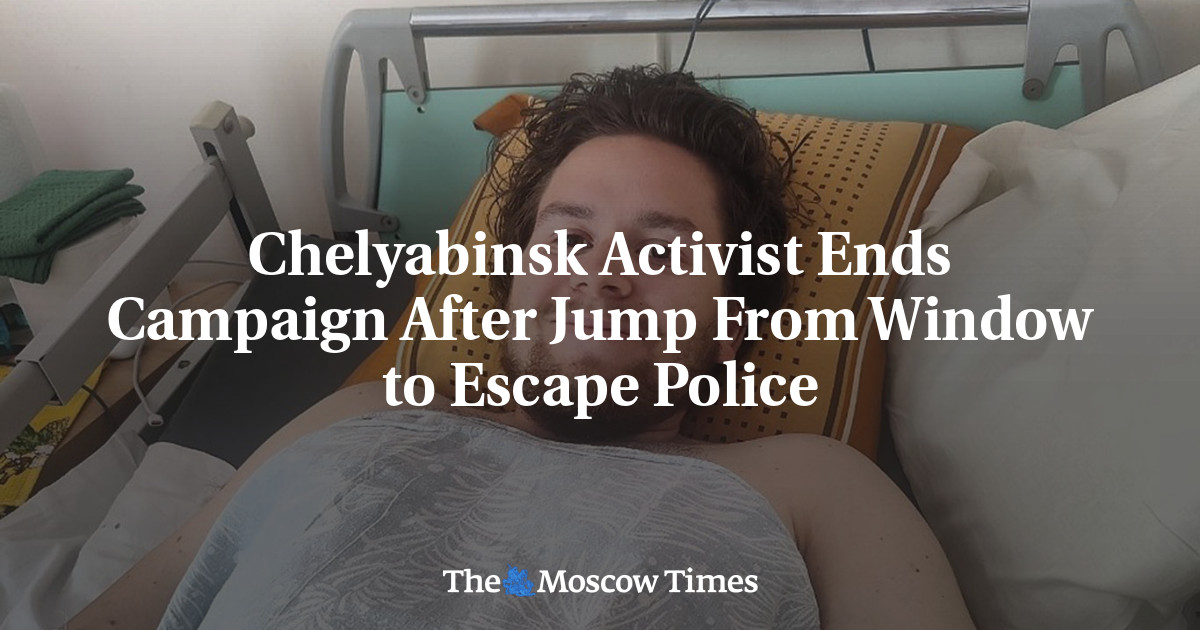
Mikhail Popov, a political activist in Chelyabinsk, Russia, was hospitalized with a fractured spine after jumping from a second-floor window to evade police officers during a home visit last week. The incident has led to the cessation of his public campaign activities as he undergoes medical treatment.
The event occurred when law enforcement officers arrived at Popov’s residence. According to reports on the incident, Popov attempted to flee the premises by leaping from the upper floor, resulting in severe spinal injuries that required immediate hospitalization. The specific charges or the nature of the police visit have not been officially detailed by regional authorities.
Popov’s campaign, which focused on local activism and political engagement in the Chelyabinsk region, has effectively ended due to his current physical condition and hospitalization. This development marks a sudden halt to his public-facing work in a region where political activism is frequently monitored by state security services.
Details of the Hospitalization and Injuries
Medical reports indicate that Popov suffered a spinal fracture upon impact after the fall from the second story. He remains under medical supervision to address the trauma to his vertebrae. The severity of the injury suggests a prolonged recovery period, which has forced the suspension of all his professional and political commitments.
The circumstances leading to the jump are characterized as an attempt to escape the visiting police officers. While the exact sequence of the encounter inside the home remains unconfirmed by an official police report, the physical outcome—a fractured spine—is the primary verified medical consequence of the event.
The Impact on Chelyabinsk Political Activism
The sudden removal of Mikhail Popov from the public sphere leaves a void in the specific campaign he was leading. Activism in the Ural region, including Chelyabinsk, often involves navigating strict legal frameworks regarding public assembly and political speech. The cessation of his campaign reflects the precarious nature of such activities when they intersect with law enforcement actions.
Observers of Russian regional politics note that the physical and legal pressures on activists often lead to the collapse of grassroots movements. In this instance, the physical incapacitation of the campaign leader serves as a definitive end to his organized efforts to influence local policy or political structures.
For those tracking human rights and political freedoms in Russia, this incident underscores the risks associated with domestic activism. The transition from a public campaign to a hospital bed due to a police encounter is a stark illustration of the volatility facing political dissidents in the provinces.
Legal and Security Context in the Region
The visit by police to Popov’s home fits into a broader pattern of state oversight of political figures in Russia. While the specific legal trigger for the visit—whether a summons, a search warrant, or a preventative detention attempt—was not specified in the immediate reports, the result was a confrontation that ended in severe injury.
Under current Russian law, political activism can be categorized under various administrative or criminal codes, including laws against “discrediting” the military or violating regulations on public protests. These legal tools are frequently used to justify home visits and detentions of activists across the country.
The lack of a formal statement from the Chelyabinsk police department regarding the intent of the visit or the legality of the encounter is typical of such operations, leaving the account of the event largely to medical records and witness reports from the activist’s circle.
Further updates regarding Popov’s legal status or the potential for criminal charges following his escape attempt are expected once he is medically stable enough to be questioned or processed by the judicial system.
Readers may follow official updates from the Chelyabinsk regional administration or human rights monitoring organizations for further developments on this case. Please share this report and leave your comments below to discuss the implications for regional activism.
Keep reading