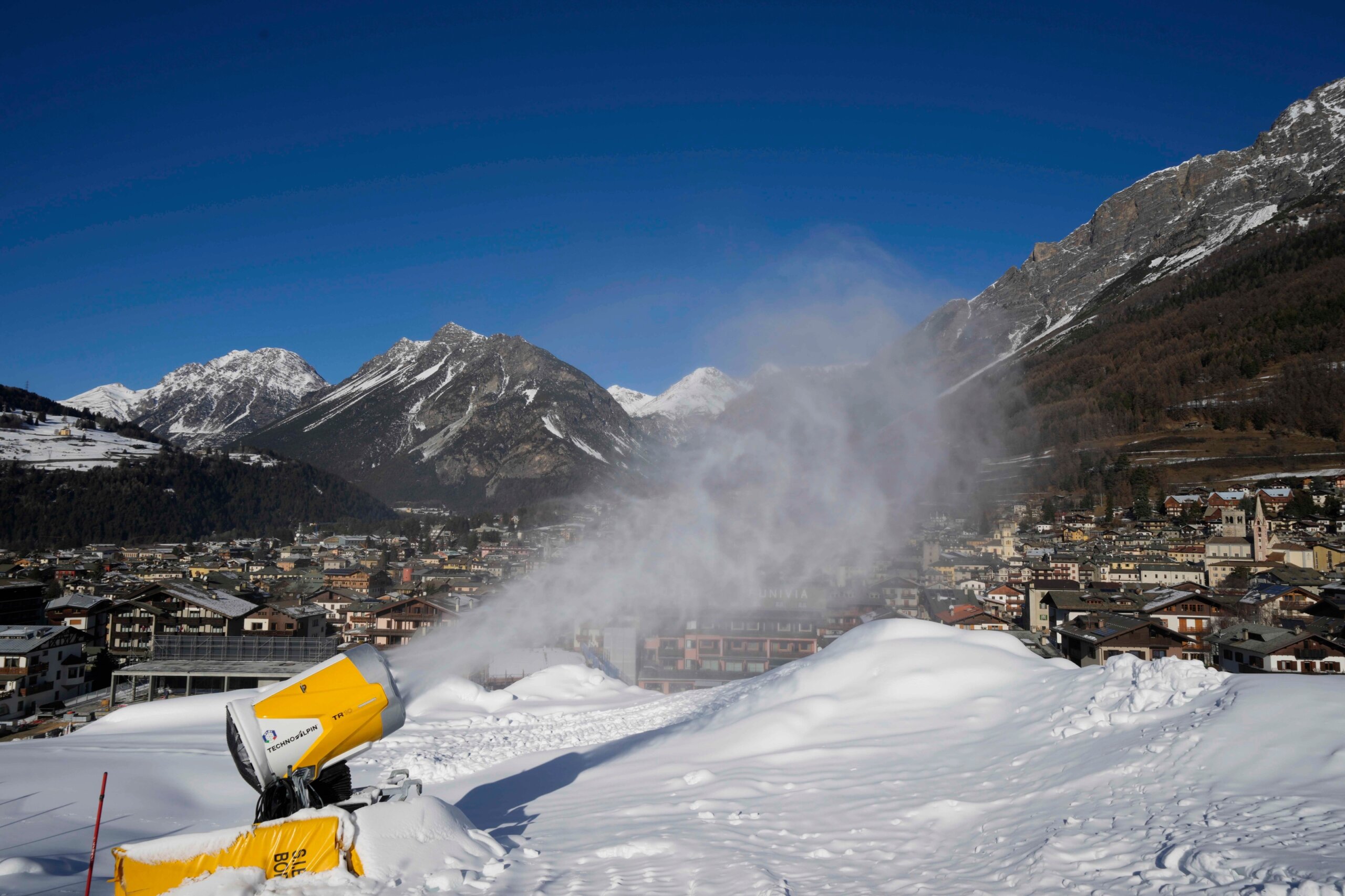
Milan-Cortina 2026: Engineering Snow for Olympic Success
The 2026 Winter Olympics, hosted in Milan and Cortina d’Ampezzo, Italy, are relying heavily on advanced snowmaking technology to ensure optimal conditions for athletes. Organizers are investing in new reservoirs and snow guns to combat the challenges posed by climate change and guarantee fair, safe competitions.
Water Storage and Snow Production
The Games are projected to require approximately 946 million liters (250 million gallons) of water for snowmaking – equivalent to nearly 380 Olympic-sized swimming pools. to meet this demand, significant infrastructure improvements have been undertaken to store water at high elevations.
At the Livigno Snow Park, a new reservoir with a capacity of 200 million liters (53 million gallons) has been constructed, becoming one of the largest on the italian side of the Alps. This reservoir, combined with over 50 snow guns, is expected to produce around 800 million liters (211 million gallons) of snow in approximately 300 hours.
In Bormio, a lake holding 88 million liters (23 million gallons) was built at an elevation of 2,300 meters (2,515 yards). This is supplemented by 75 snow guns dedicated to the alpine skiing and ski mountaineering events. According to those involved in the project, the improvements to the Bormio slope have brought it to a world-class standard.
Ensuring Fair and Safe Competition
Artificial snow allows organizers to meticulously control slope quality and hardness, adhering to the standards set by the international Ski Federation (FIS). This control is crucial for ensuring consistent conditions for all competitors.
Technical snow, being more compact than natural snow, offers increased safety and requires less maintenance. Organizers can inject water deep into the snowpack,creating a stable and durable racing surface. This process minimizes course deterioration and provides a more predictable surroundings for athletes.
“The goal is to deliver better,safer,and fairer courses,” stated those involved in the project. “A consistent course from the first to the last competitor is paramount.”
Advanced Snowmaking Technology
The Milan-Cortina organizing committee is utilizing state-of-the-art sensor technology to monitor snow depth in real-time. This automated system activates snow guns when gaps are detected and deactivates them when sufficient snow coverage is achieved.
This system allows a single operator to manage snow production across the entire mountain. In Bormio, snow groomers are equipped with GPS systems to monitor snow quality and levels, optimizing snow distribution and minimizing water and energy consumption.
The GPS-guided groomers precisely determine where to push snow and how much is needed, ensuring that onyl the minimum amount of snow is produced. This approach represents a significant advancement in resource management.
The Value of Natural Snow
While artificial snow is essential for competition, organizers acknowledge the unique appeal of natural powder. They emphasize that preparing slopes for elite competition differs from maintaining commercial ski areas, where natural snow is highly valued.
“I was born on the mountain,” said one of the project leaders. “I love snow.”
Key Takeaways
- The 2026 Milan-Cortina Winter Olympics will utilize approximately 946 million liters of water for snowmaking.
- New reservoirs have been constructed in Livigno (200 million liters) and Bormio (88 million liters) to support snow production.
- Advanced sensor technology and GPS-guided groomers are being used to optimize snowmaking and minimize resource consumption.
- Artificial snow provides a safer, fairer, and more consistent competition surface than relying solely on natural snow.
___
The Associated Press’ climate and environmental coverage receives financial support from multiple private foundations. AP is solely responsible for all content. Find AP’s standards for working with philanthropies,a list of supporters and funded coverage areas at AP.org.
Copyright © 2026 the Associated Press. All rights reserved. This material may not be published, broadcast, written or redistributed.
Related reading