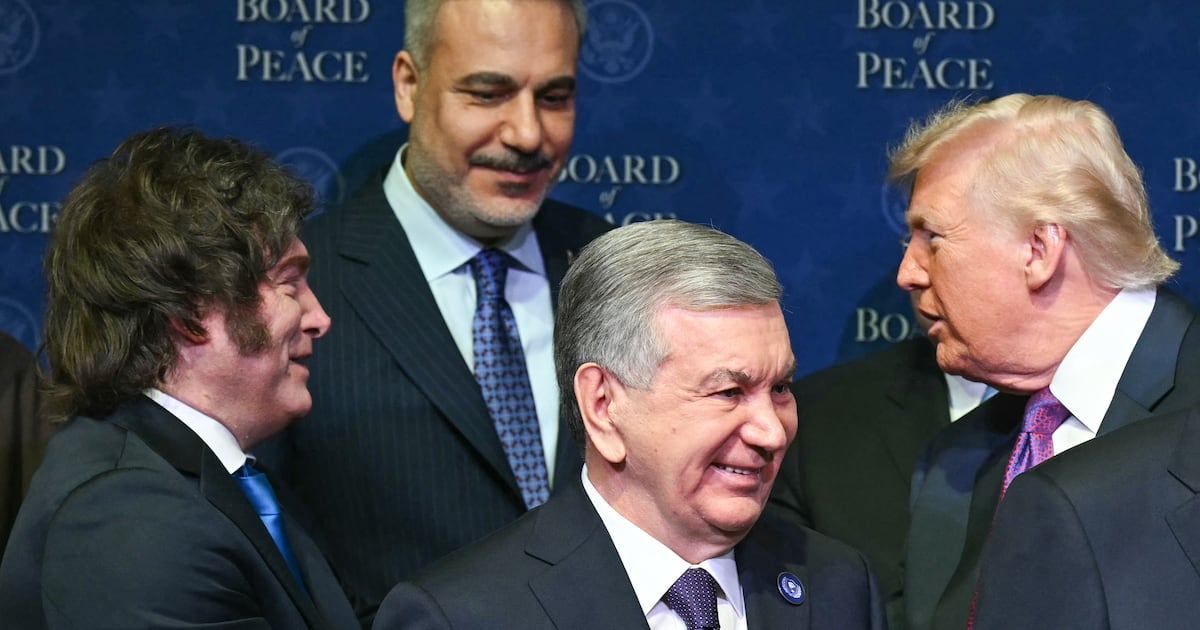
Washington D.C. – The inaugural meeting of the Council for Peace, hosted by former U.S. President Donald Trump, concluded Thursday with a display of international alignment and a notable presence from Argentine President Javier Milei. While the stated aim of the council is to foster dialogue and prevent conflict, particularly in regions like Gaza, the event was largely perceived as a platform for Trump to showcase his continued influence and reaffirm his political alliances. President Milei’s attendance, and the overt support expressed by Trump, underscored a burgeoning relationship that has captivated observers on both sides of the Atlantic.
The Council for Peace, conceived by Trump as a forum for global leaders to address pressing international issues, launched with a focus on de-escalating tensions in Gaza. However, the event quickly became a stage for Trump to highlight his perceived successes in foreign policy and to champion leaders who share his political ideology. The Argentine president’s presence was particularly emphasized, with Trump publicly acknowledging his role in Milei’s electoral victory. “He won by a huge difference, thanks to my support,” Trump stated, according to reports from the event, signaling a clear endorsement of Milei’s libertarian policies and a shared worldview.
Milei Offers Support for Gaza Stabilization, Receives Trump’s Endorsement
During the Council’s opening session, President Milei offered Argentina’s “Cascos Blancos” – White Helmets – for a potential international stabilization mission in Gaza, demonstrating a strong alignment with the initiative championed by Trump following recent peace agreements in the region. This offer, reported by La Nación, signifies a willingness by the Milei administration to actively participate in international peacekeeping efforts, particularly those aligned with U.S. Foreign policy objectives. The Cascos Blancos are Argentina’s humanitarian assistance and disaster relief task force, specializing in search and rescue, medical assistance, and infrastructure support.
The reciprocal praise between Trump and Milei was a defining feature of the event. Trump’s vocal support for Milei’s economic reforms and his acknowledgment of his own influence in the Argentine election were met with gratitude from the Argentine president. This public display of camaraderie builds upon a relationship that began to solidify in February 2024 during the Conservative Political Action Conference (CPAC) in Maryland, where the two leaders shared a widely circulated embrace. That initial meeting, as reported by Ámbito, served as a pivotal moment, signaling a strategic alliance between the two right-leaning leaders.
A Symbolic Alliance: Echoes of “Make Argentina Great Again”
The relationship between Trump and Milei extends beyond mere political alignment. it’s a reflection of shared ideological convictions and a mutual admiration for populist rhetoric. Trump famously adapted his signature campaign slogan, “Make America Great Again,” to “Make Argentina Great Again” during a conversation with Milei at the CPAC summit, a gesture that resonated deeply with the Argentine leader’s supporters. This symbolic act underscored Trump’s belief in Milei’s potential to revitalize Argentina’s economy and restore its global standing.
The Council for Peace event provided another opportunity for this dynamic to play out on an international stage. Beyond the formal discussions on Gaza, the meeting served as a platform for Trump to reaffirm his relevance in global politics and to cultivate relationships with leaders who share his vision. Milei’s attendance, alongside other conservative figures, reinforced the perception of a growing transatlantic alliance of right-wing populists.
Domestic Challenges Amidst International Engagement
President Milei’s trip to the United States occurred amidst significant domestic challenges in Argentina, including a nationwide general strike protesting his government’s austerity measures and economic reforms. Tiempo Argentino reported that this marked Milei’s 14th trip to the United States since assuming office, raising questions about the timing and priorities of his international engagements. The strike, a response to proposed labor reforms and cuts to social programs, highlights the deep divisions within Argentine society and the challenges Milei faces in implementing his radical economic agenda.
Despite the domestic unrest, Milei’s commitment to aligning Argentina with the United States remains steadfast. His offer of support for a potential Gaza stabilization mission, coupled with Trump’s public endorsement, signals a clear shift in Argentina’s foreign policy orientation. This alignment is likely to have significant implications for Argentina’s relationships with other regional powers and its role in international affairs.
A Lighthearted Moment: Milei’s Elvis Impersonation
Adding a touch of levity to the proceedings, President Milei reportedly entertained attendees with a rendition of an Elvis Presley song during a social event associated with the Council for Peace. La Voz del Interior reported that this impromptu performance showcased Milei’s more relaxed side and further endeared him to the assembled guests. The gesture, while seemingly lighthearted, underscored Milei’s willingness to engage with his counterparts on a personal level and to project an image of confidence and charisma.
The Council for Peace, while ostensibly focused on conflict resolution, ultimately served as a platform for political maneuvering and the forging of strategic alliances. The dynamic between Trump and Milei, characterized by mutual admiration and shared ideological convictions, was a central theme of the event. As Argentina navigates its internal challenges, its relationship with the United States, and particularly with figures like Donald Trump, will undoubtedly play a crucial role in shaping its future.
The next key development to watch will be the response from international organizations and other nations to Argentina’s offer of Cascos Blancos for a potential Gaza mission. Further details regarding the scope and parameters of such a mission, as well as the level of international coordination involved, are expected to emerge in the coming weeks. The evolving situation in Gaza and the broader geopolitical landscape will continue to shape the agenda of the Council for Peace and the role of its members in addressing global challenges.
What are your thoughts on the growing alliance between the United States and Argentina? Share your perspectives in the comments below, and don’t forget to share this article with your network.