Revolutionizing Drug Safety: A Human-Relevant Model for Predicting Immune-Related Liver Injury
Idiosyncratic drug-induced liver injury (iDILI) remains a important challenge in pharmaceutical progress. Despite rigorous pre-clinical testing, a small percentage of drugs can trigger severe, unpredictable immune reactions in susceptible individuals, leading too drug withdrawal and serious patient harm.For years, the inability to accurately replicate these complex human immune responses in vitro and in animal models has hampered progress in identifying and mitigating this risk. Now, a groundbreaking new platform developed by researchers at Cincinnati Children’s Hospital’s CuSTOM Accelerator is poised to change that, offering a dramatically more human-relevant approach to drug safety testing.
The Limitations of Current Approaches & The Need for a Human-Centric Solution
Conventional drug safety assessments rely heavily on animal models and standard laboratory techniques. Though, these methods frequently enough fail to predict iDILI due to basic differences in human and animal immune systems, as well as the inherent genetic and immunological diversity within the human population. This gap between pre-clinical predictions and clinical reality necessitates a paradigm shift - one that prioritizes human biology in the drug development process.
Introducing a First-of-Its-Kind Immune-Competent Liver Model
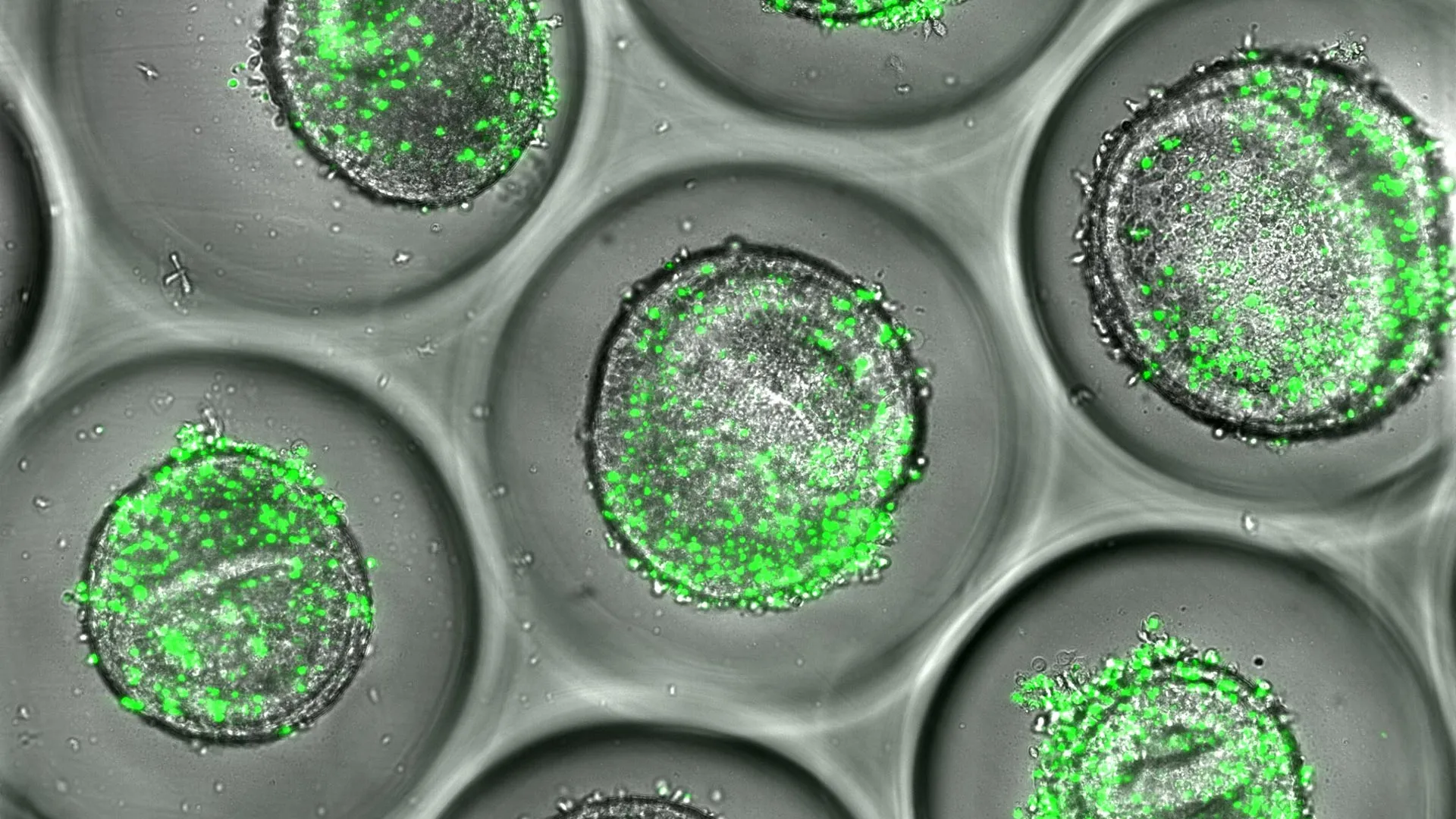
The CuSTOM Accelerator team has achieved this shift by creating a novel platform that combines the power of human liver organoids with patient-specific immune cells. This innovative system utilizes liver organoids generated from induced pluripotent stem cells (iPSCs) – essentially, lab-grown miniature livers - and co-cultures them with CD8⁺ T cells, the immune cells responsible for targeting damaged or infected tissues.
This approach is significant because it creates a fully human, immune-competent system. Crucially, the model incorporates the genetic and immunological variability inherent in real patients, addressing a critical limitation of existing models. This allows researchers to study how individual genetic predispositions, like the HLA-B57:01 gene, influence susceptibility to drug-induced liver injury.
Validation with Flucloxacillin: A Proof of Concept
To demonstrate the platform’s efficacy, the researchers successfully recreated the liver damage caused by the antibiotic flucloxacillin – a drug known to cause iDILI only in individuals carrying the HLA-B57:01 gene. The model accurately mirrored the biological hallmarks of the human immune response, including T cell activation, the release of inflammatory cytokines, and ultimately, liver cell damage. This validation provides strong evidence that the platform can reliably predict which individuals might be at risk of developing iDILI from specific drugs.
A Collaborative Effort Driving innovation
This breakthrough is built upon years of pioneering work in organoid technology, spearheaded by co-author Dr.Takanori Takebe, whose lab developed the methods for generating reliable human liver organoids from iPSCs. The CuSTOM Accelerator team then refined these techniques into a scalable, high-throughput microarray system, transforming a scientific discovery into a practical toxicology tool.
The success of this project was further amplified by a strategic collaboration with Roche,leveraging the hospital’s scientific expertise with Roche’s extensive experience in translational toxicology. “This partnership shows the power of combining academic innovation with industry experience,” notes Dr. Adrian Roth, Principal Scientific Director of Personalized Healthcare Safety at Roche. “Together we’re building predictive human models that can improve patient safety and accelerate the development of new medicines.”
Cincinnati Children’s: A Leader in Organoid Medicine
Cincinnati Children’s has been at the forefront of organoid medicine since 2010, when its scientists created the first functional human intestinal organoids. Under the leadership of Kasendra, the CuSTOM Accelerator continues to translate these scientific advances into tangible solutions for drug safety, precision medicine, and regenerative therapy. This commitment to innovation positions Cincinnati Children’s as a global leader in the field.
Looking Ahead: Towards Personalized Drug Development
The CuSTOM Accelerator team is now focused on automating organoid assays and expanding the platform’s capacity for high-throughput screening across large, genetically diverse donor populations. This next phase will enable researchers to capture the full spectrum of human variability, paving the way for the development of therapies that are more effective, inclusive, and personalized.
“This work reflects the vision of CuSTOM – to turn human organoid science into practical tools that improve health,” says Kasendra. “This is just the beginning – by bridging biology, engineering, and clinical insight, we’re getting closer to predicting how real patients will respond to new treatments before they ever reach the clinic.”
Further Details:
* Learn more about CuSTOM’s ongoing collaboration with Molecular Devices and Danaher: [Collaboration to Develop Liver Organoids for Drug Toxicity Screening — research Horizons](https://www.cincinnatich
Related reading