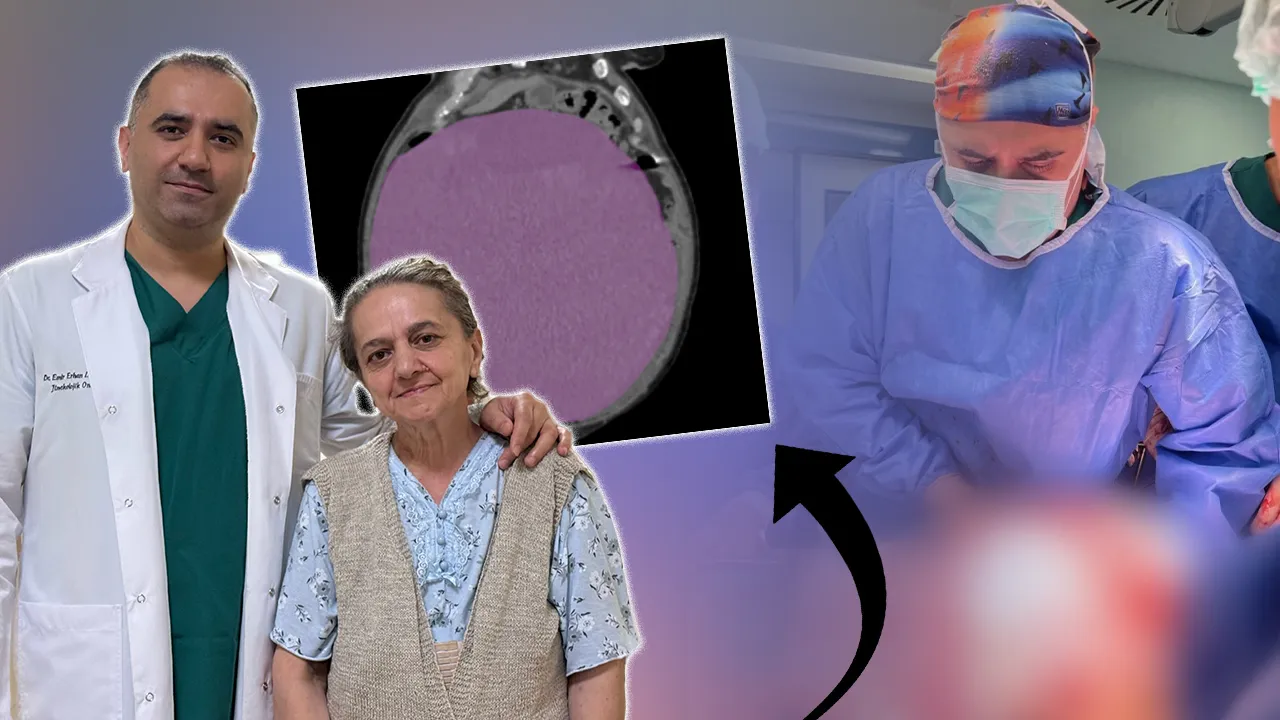
In the realm of internal medicine, there is a recurring and sobering theme: the danger of the “routine” symptom. For many, abdominal bloating or chronic constipation is viewed as a common nuisance—a matter of diet, stress, or age. However, for one woman in Istanbul, what she believed to be a persistent digestive issue was actually a life-threatening medical anomaly that had been growing silently within her for years.
The case of Şükran Samanlı serves as a stark reminder of how insidious certain pathologies can be. After struggling with symptoms she attributed to constipation, Samanlı discovered she was harboring a massive abdominal tumor. The subsequent massive abdominal tumor removal was not merely a surgical success but a dramatic physical transformation, as the sheer scale of the growth had fundamentally altered her body composition.
As a physician and health journalist, I have encountered many cases where diagnostic delays occur because symptoms mimic everyday ailments. In Samanlı’s case, the tumor had grown to such a size that it exerted significant pressure on her internal organs, creating a “mass effect” that mimicked the feeling of gastrointestinal blockage. When the truth finally emerged, the numbers were staggering: the tumor weighed 22 kilograms (approximately 48.5 pounds).
The impact of the surgery was immediate, and visible. Before the operation, Samanlı weighed 79 kilograms. Following the successful extraction of the mass, her weight plummeted to 57 kilograms. This sudden loss of nearly 30% of her total body mass underscores the extraordinary burden her body had been carrying, both physically and physiologically.
The Deceptive Nature of “Silent” Tumors
The most harrowing aspect of this case is the “sinsi” or insidious nature of the disease. Many patients with large abdominal masses do not experience acute, sharp pain in the early stages. Instead, they experience vague discomfort, a feeling of fullness, or changes in bowel habits. Because these symptoms are non-specific, they are frequently dismissed by both patients and primary care providers as functional gastrointestinal disorders.
In the case of Şükran Samanlı, the tumor acted as a space-occupying lesion. As it expanded, it pushed against the colon and other intestinal structures, obstructing the normal passage of waste. This created a feedback loop where the patient sought treatments for constipation, unaware that the “blockage” was not within the bowel itself, but was being caused by an external force compressing the entire system.
This phenomenon is common in cases of soft tissue sarcomas, where tumors can grow to immense sizes before they cause enough pain to trigger an emergency room visit. By the time a patient notices a visible change in their abdominal girth, the tumor may have already displaced several major organs.
Understanding Liposarcoma: The Pathology of Growth
While the specific diagnostic details of every case vary, tumors of this magnitude in the abdominal cavity are frequently identified as liposarcomas. A liposarcoma is a rare type of cancer that originates in the fat cells of the connective tissue. Unlike many other cancers that spread rapidly through the bloodstream in small clusters, some liposarcomas grow as massive, localized masses.
These tumors are particularly dangerous because they can envelop vital structures. In the abdominal cavity, a 22kg mass does not simply sit in one place; it wraps around the intestines, displaces the kidneys, and can compress the inferior vena cava—the body’s largest vein. This compression can lead to secondary complications, such as edema (swelling) in the legs or an increased risk of blood clots.
The surgical removal of such a mass is a high-stakes operation. Surgeons must carefully dissect the tumor away from the surrounding organs without causing permanent damage to the bowel or major blood vessels. For Samanlı, the removal of the 22kg mass required a precise surgical approach to ensure that the surrounding healthy tissue remained intact, allowing her to return to a normal weight and improved health.
The Physical and Psychological Impact of Rapid Weight Loss
The drop from 79 kilograms to 57 kilograms in a single surgical event is a physiological shock. While the loss of a tumor is a positive outcome, the sudden removal of such a significant mass changes the body’s center of gravity and its metabolic demands overnight.
Patients who undergo this type of surgery often experience a period of “re-adjustment.” The abdominal wall, which had been stretched to accommodate a 22kg mass, may lose elasticity, and the internal organs, which had been displaced for years, must shift back into their natural positions. This process can be accompanied by temporary digestive instability as the intestines regain their normal mobility.
Psychologically, the realization that one has been carrying a “hidden” weight for years can be overwhelming. There is often a mix of relief and trauma—relief that the threat is gone, but trauma from the realization of how close the situation came to being fatal. The transition from feeling “heavy” and “constipated” to suddenly being 22kg lighter is a profound shift in identity and physical presence.
Diagnostic Vigilance: When to Seek Further Testing
The lesson for the general public and healthcare providers is the necessity of diagnostic vigilance. When “routine” treatments for constipation or bloating fail to produce results, We see imperative to move beyond symptomatic treatment and toward diagnostic imaging.
If you or a loved one experience the following, a consultation with a specialist and imaging (such as a CT scan or MRI) is warranted:
- Unexplained Abdominal Girth: An increase in waist size that is not consistent with weight gain in other parts of the body.
- Persistent Bloating: A feeling of fullness or pressure that does not resolve with dietary changes or over-the-counter medications.
- Refractory Constipation: Bowel irregularities that do not respond to fiber, hydration, or laxatives.
- Palpable Mass: Any firm lump or hardness felt during a self-examination of the abdomen.
Early detection is the primary factor in the success of sarcoma treatment. When these tumors are caught while they are small, the surgical margins are easier to manage, and the risk of organ damage is significantly reduced. In Samanlı’s case, the surgery was successful, but the size of the tumor made the procedure far more complex than it would have been if detected years earlier.
The Role of Specialized Surgical Oncology
The successful removal of a 22kg tumor requires a multidisciplinary team. This typically includes surgical oncologists, anesthesiologists skilled in managing high-risk abdominal cases, and radiologists to map the tumor’s boundaries.
In modern surgical oncology, the goal is “R0 resection”—the complete removal of the tumor with clear margins, meaning no cancer cells are left at the edge of the removed tissue. For a mass as large as the one found in Istanbul, achieving R0 resection is challenging because the tumor often adheres to the peritoneal lining or the muscle wall of the abdomen.
Following the surgery, patients typically require a period of intensive monitoring to ensure there is no recurrence. Because liposarcomas can sometimes leave behind microscopic cells, regular imaging and follow-up appointments are essential to maintain the patient’s long-term health.
Key Takeaways for Patients
- Don’t Ignore “Minor” Symptoms: Chronic constipation or bloating that doesn’t respond to treatment can be a sign of an underlying mass.
- Imaging is Essential: A physical exam is not always enough; CT scans or MRIs are necessary to visualize deep abdominal structures.
- Trust Your Body: If you feel an unusual change in your abdominal shape or feel a “hardness” internally, seek medical attention immediately.
- Specialized Care: Large tumors require surgical oncologists who specialize in soft tissue sarcomas to ensure complete removal and organ preservation.
The story of Şükran Samanlı is one of survival and the triumph of medical intervention over a silent enemy. It highlights the critical intersection of patient intuition and medical expertise. While the physical weight she lost was 22 kilograms, the emotional weight lifted—the removal of a hidden, growing threat—is immeasurable.
The next step for patients in similar recovery phases is typically a structured rehabilitation program focusing on core strength and nutritional recovery to help the body adapt to its new weight and internal configuration. We will continue to monitor advancements in the early detection of rare sarcomas to prevent such extreme cases in the future.
Do you have experience with rare medical diagnoses or questions about abdominal health? Share your thoughts in the comments below or share this article to help others recognize the warning signs of silent tumors.