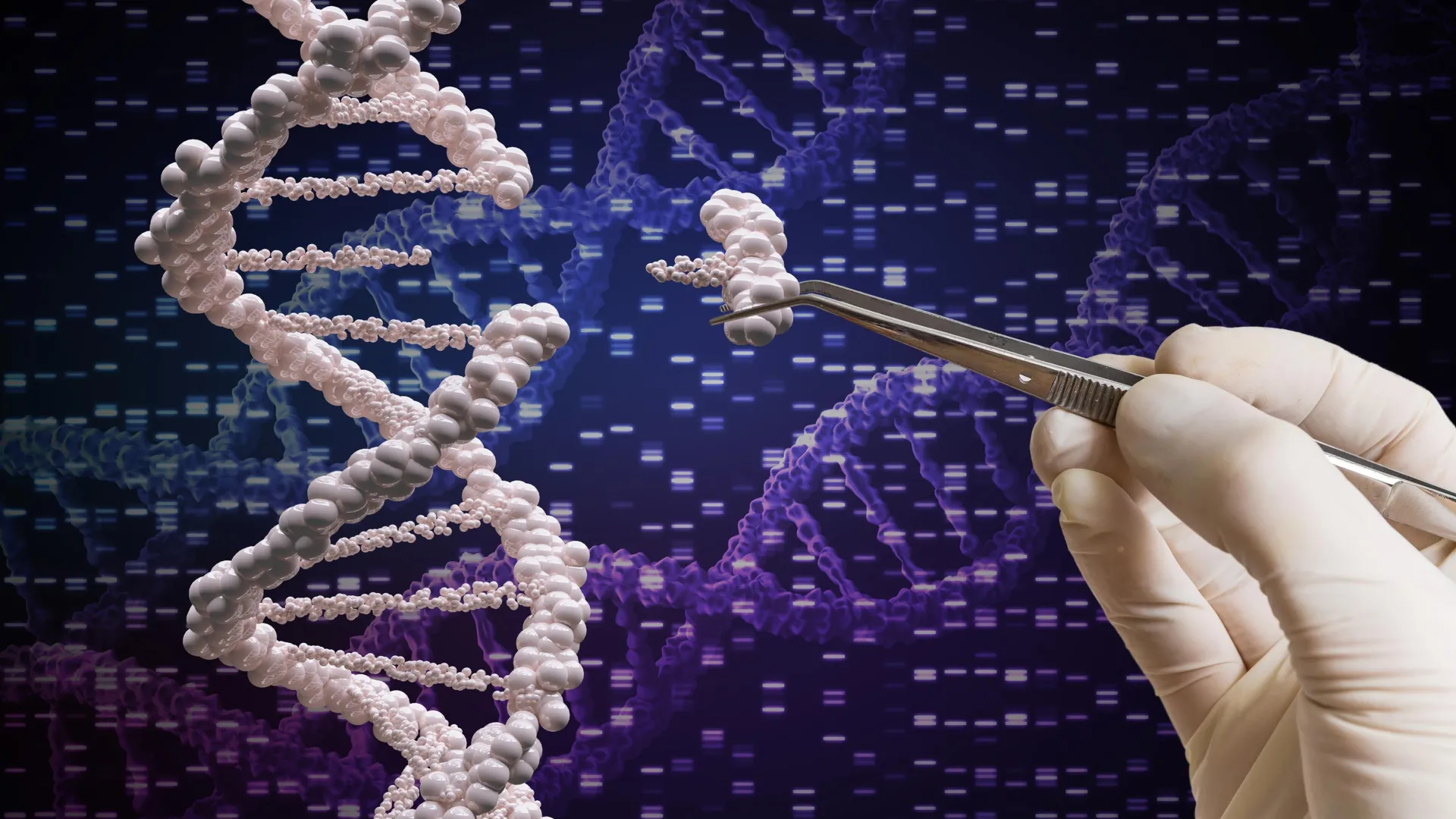
Revolutionizing Gene Editing: new Advances dramatically Improve Precision and Safety of Prime Editing
For decades, the promise of correcting genetic defects at their source has driven biomedical research.While early gene therapy approaches faced meaningful hurdles, the advent of CRISPR-Cas9 technology offered a revolutionary new path. Now, a next-generation gene editing tool called prime editing is poised too overcome many of CRISPR’s limitations, and recent breakthroughs are dramatically enhancing its precision and safety, bringing the potential for curative therapies closer to reality.
From CRISPR to Prime Editing: A Leap Forward in Genomic control
CRISPR-Cas9, often described as “molecular scissors,” allows researchers to cut DNA at specific locations. This capability has been adapted to remove faulty DNA sequences or insert corrected ones, utilizing an RNA template to guide the process. However,CRISPR’s reliance on double-stranded DNA breaks can sometimes lead to unintended consequences,including off-target effects and unpredictable genomic rearrangements.
Prime editing, introduced in 2019 by scientists at the Broad institute of MIT and Harvard, represents a significant advancement. It offers a more precise and controlled approach. Unlike CRISPR, prime editing doesn’t require severing both strands of the DNA helix. Instead, it employs a modified Cas9 enzyme that makes a single-strand nick, creating a small flap where a new, corrected DNA sequence can be inserted. this new sequence is dictated by a guide RNA delivered alongside the prime editor.
This gentler approach has already shown promise in treating genetic diseases.Notably, prime editing was recently used successfully to treat a patient suffering from chronic granulomatous disease (CGD), a rare immune deficiency. As Dr. Chauhan explains, “In principle, this technology could eventually be used to address many hundreds of genetic diseases by correcting small mutations directly in cells and tissues.”
addressing the challenge of Editing Errors
Despite its advantages, prime editing isn’t without its challenges. A key concern has been the potential for errors during the editing process. When the corrected sequence is added, the original DNA strand can sometimes reattach incorrectly, leading to unintended insertions or deletions.While most of these errors are harmless, a small risk exists of contributing to tumor growth or other health issues. Early prime editing systems exhibited error rates ranging from approximately one in seven to one in 121 edits, depending on the specific editing parameters.
Recognizing this limitation, a team at MIT embarked on a research program to substantially reduce these error rates.Their work,building on a 2023 study,focused on exploiting natural variations in the Cas9 enzyme. Thay discovered that certain mutated versions of Cas9 exhibit a “relaxed” cutting behavior,occasionally making their cut one or two bases away from the intended target.
A Breakthrough in Accuracy: Introducing vPE
This seemingly minor shift in cutting location proved to be remarkably beneficial. The researchers found that this relaxed cutting behavior destabilized the original DNA strand, promoting its degradation and facilitating the accurate incorporation of the new sequence.
Through meticulous screening and engineering, the MIT team identified Cas9 mutations that reduced the error rate to 1/20th of its original value.further optimization, combining pairs of these mutations, lowered the error rate even further, to 1/36th.
But they didn’t stop there. To maximize accuracy, they integrated these improved Cas9 proteins into a prime editing system enhanced with an RNA binding protein that stabilizes the RNA template.This final iteration, dubbed vPE (for very precise prime editing), achieved an astounding error rate of just 1/60th of the original, ranging from one in 101 to one in 543 edits. These results were consistently observed in both mouse and human cells.
The Future of Prime Editing: Therapeutic Potential and Research Applications
These advancements represent a major step forward in the field of gene editing. The MIT team is now focused on further enhancing the efficiency of prime editors, refining both the Cas9 enzyme and the RNA template. A critical ongoing challenge is developing effective methods for delivering these editors to specific tissues within the body – a crucial requirement for triumphant gene therapy.
Beyond therapeutic applications, the researchers anticipate widespread adoption of vPE in basic research. Genome editors are already invaluable tools for investigating fundamental biological processes, including tissue growth, cancer evolution, and drug response. As Dr. Chauhan notes, “Genome editors are used extensively in research labs. So the therapeutic aspect is exciting, but we are really excited to see how people start to integrate our editors into their research workflows.”
Expert Perspective & Trustworthiness
The development of prime editing and its subsequent refinement,as demonstrated by the MIT team’s work,underscores the rapid pace of innovation in genomic medicine. While challenges remain, the dramatic reduction in error rates achieved with vPE significantly enhances the safety and feasibility of this powerful technology