
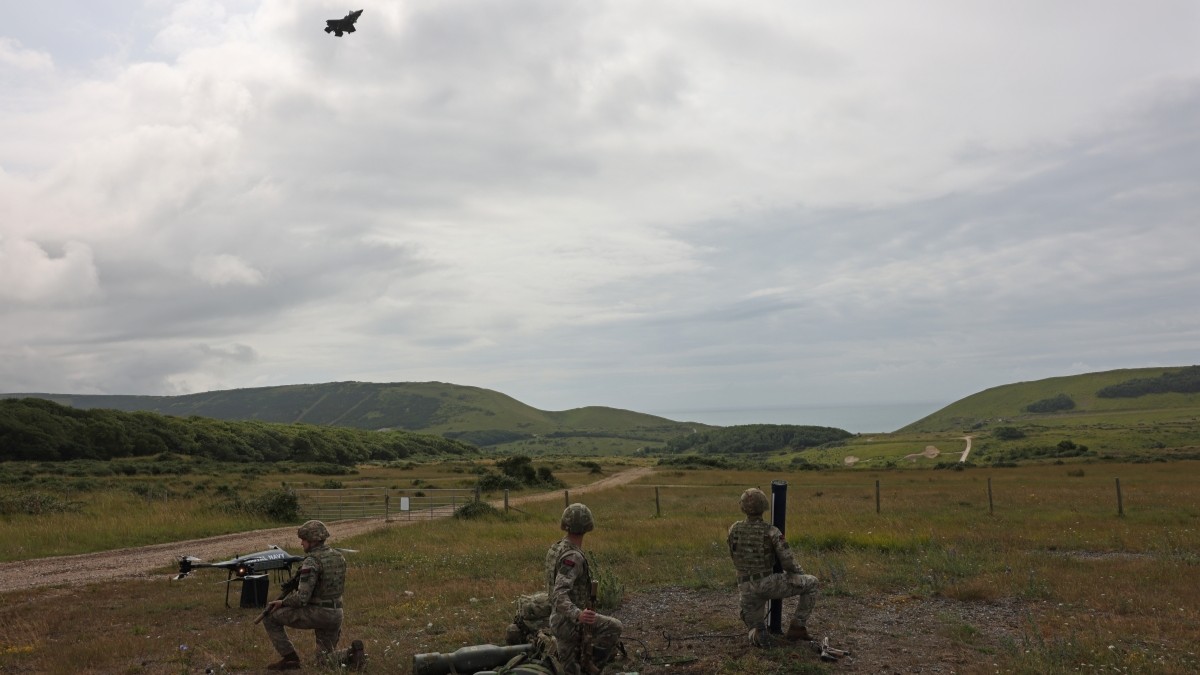
Navigating the Future Battlefield: Adaptation,Technology,and the Human Element in Modern Warfare
The character of warfare is undergoing a rapid and basic shift.We’re moving into an era defined by pervasive surveillance, drone saturation, and increasingly elegant autonomous systems – a “clear” and relentlessly lethal battlespace. This presents a significant challenge for NATO: how do we adapt to fight effectively rather than simply being overwhelmed? The answer, as history demonstrates, lies not just in technology, but in a fundamental shift in mindset and organizational culture.
Echoes of the Past: Learning from Previous Transformations
This isn’t the first time militaries have faced a disruptive technological leap.Similar challenges arose during the advent of trench warfare in World War I and the nuclear standoff of the Cold war. In both cases, success wasn’t about simply acquiring new weapons, but about developing new concepts of operation – concepts born from iterative experimentation and a willingness to embrace change.
todays situation demands a similar approach. We must move beyond reacting to new technologies and proactively shape how we will fight in this new environment.
The varied Landscape of Modern Conflict
It’s crucial to recognize that a “one-size-fits-all” approach won’t work. Operational concepts must be tailored to specific theaters.
* The intense, drone-focused close combat seen in Ukraine won’t directly translate to a conflict in the Indo-Pacific.
* Facing China’s advanced anti-access/area denial (A2/AD) systems requires a different strategy than fighting in the close quarters of Taiwan or Korea.
Each scenario demands a unique understanding of the environment and the adversary.
Culture: The Cornerstone of Real Change
In my experience, lasting military transformation always begins with culture.The AirLand Battle doctrine of the 1980s, a pivotal shift in NATO strategy, wasn’t just about new equipment. It required a cultural overhaul:
* Empowering Initiative: Mission command, trusting subordinates to make decisions on the ground.
* Accepting Calculated Risk: Encouraging bold maneuvers and realistic training scenarios.
* Learning from Failure: Treating mistakes as opportunities for growth and adaptation.
* Cultivating Adaptability: Developing the ability to outthink and outmaneuver the enemy.
Technology enabled this change, but culture was the driving force.
The Imperative of experimentation with Autonomous Systems
To prepare for the future, we need to rapidly field software-defined and autonomous systems – and learn from them. This isn’t about deploying perfect solutions; it’s about:
* Testing Assumptions: Seeing how our current doctrines hold up under the pressures of modern warfare.
* Understanding limitations: identifying the real-world constraints of these new technologies.
* Integrating lessons Learned: Incorporating these insights into evolving operational concepts.
This requires a systematic process, guided by a leadership culture that embraces experimentation and continuous improvement.
The Enemy’s Vote: Acknowledging the Adversary’s Agency
Ultimately, the direction of this change won’t be steadfast by us alone. Our adversaries are also innovating, seeking to exploit the same technologies.
We can expect a divergence in approaches:
* Attrition-Focused Strategies: Some will advocate for leveraging technology to simply overwhelm the enemy with firepower.
* Maneuver-Based Approaches: Others will prioritize agility, deception, and exploiting vulnerabilities.
NATO will likely need a blend of both. However, as democracies, we must acknowledge our comparatively lower tolerance for casualties. Therefore, defining how we want to fight – prioritizing efficiency, minimizing risk to our personnel – is the most critical first step.
The future battlefield demands not just technological superiority, but a fundamental rethinking of how we wage war. It requires a culture of adaptation, a commitment to experimentation, and a clear understanding of our own values and limitations. Only then can we navigate this complex landscape and ensure the continued security of the West.
Gen. (ret.) Nick Carter is a distinguished visiting fellow at the Hoover Institution. He served for 45 years in the British military, culminating in his roles as Chief of the General Staff (2014-2018) and Chief of the Defense Staff (2018-2021).
[Image: Cpl Tim Hammond via U.K. ministry of defence](https://www.


