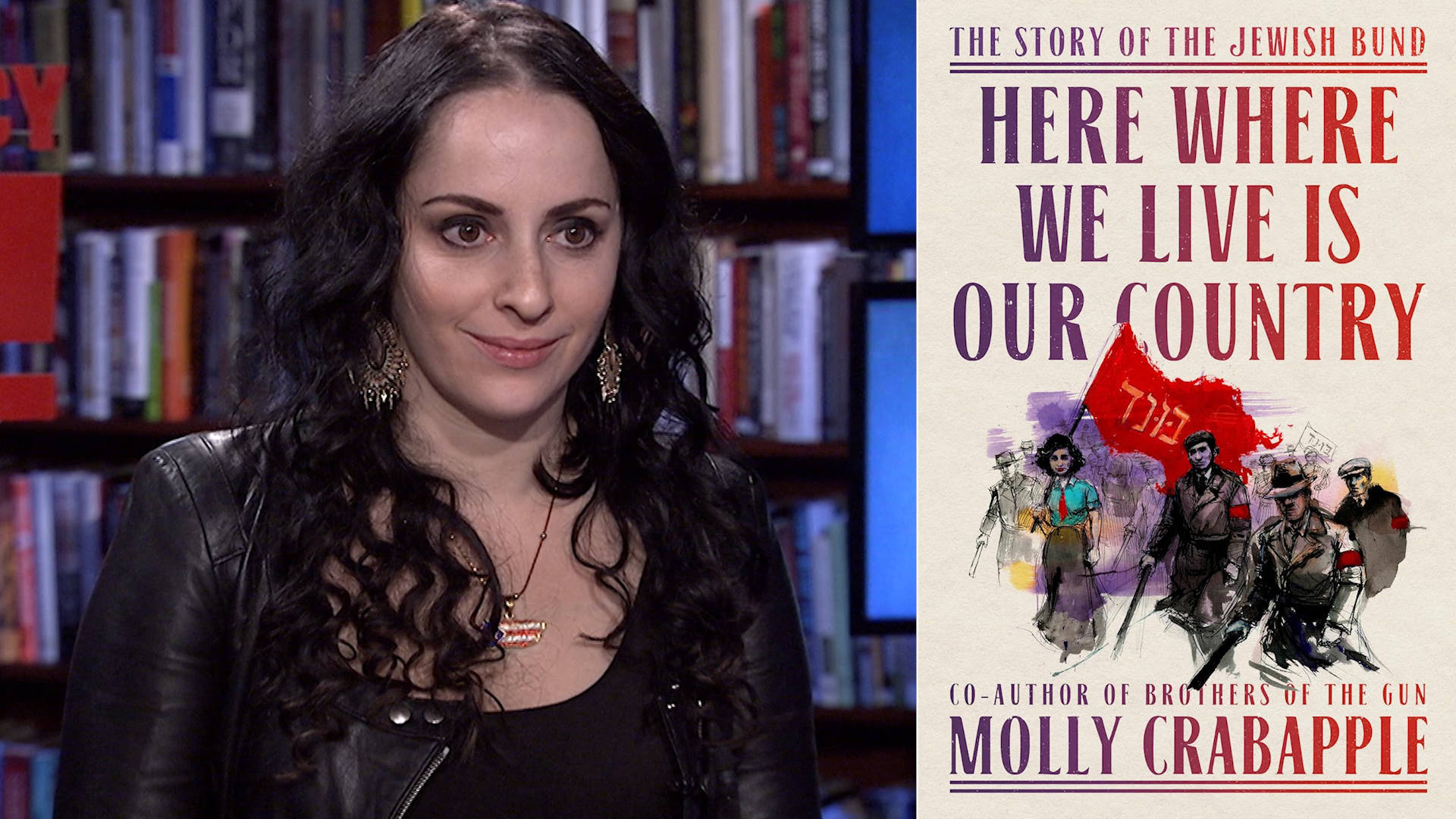
History has a way of burying the movements that challenge the prevailing narratives of their time. For decades, the story of the Jewish experience in Eastern Europe was often framed as a binary choice: the endurance of persecution or the migration toward a promised homeland. However, a powerful third path once existed—a secular, socialist, and revolutionary vision of dignity that sought justice not in a distant land, but exactly where people stood.
In her latest work, Here Where We Live Is Our Country, acclaimed artist and author Molly Crabapple resurfaces the history of the Jewish Labor Bund. This movement, once a dominant political force in the Russian Empire and Poland, advocated for a radical brand of solidarity that rejected the necessity of an ethnostate, insisting instead that Jews should fight for their rights and equality within the diverse societies they already inhabited.
The book, published on April 7, 2026, serves as both a historical recovery and a personal journey. Crabapple’s exploration is sparked by the “memory paintings” of her great-grandfather, Sam Rothbort, whose art captured the vibrancy and defiance of a world nearly erased by the Holocaust. Through these images and a deep dive into Yiddish archives, Crabapple reconstructs the world of the Bundists—poets, rebels, and organizers who believed that the struggle for liberation was a universal human endeavor.
The Philosophy of Doikayt: Rejecting the Ethnostate
At the heart of the Jewish Labor Bund’s ideology was the concept of Doikayt, a Yiddish term meaning “hereness.” While the Zionist movement gained momentum in the late 19th century with the goal of establishing a Jewish homeland in Palestine, the Bundists viewed this as a capitulation. To them, the idea of leaving Europe was a concession to the very antisemites who wanted Jews gone.
Founded in 1897, the General Jewish Workers’ Bund in Lithuania, Poland and Russia was not merely a political party but a comprehensive cultural movement. They promoted Yiddish—the language of the Jewish working class—as a tool of liberation and identity, contrasting it with the elite’s preference for Hebrew or the languages of the ruling empires. By centering their struggle on “hereness,” the Bundists argued that the only way to truly defeat antisemitism was to transform the societies where it existed through class struggle and international solidarity.
For the Bundists, the fight for Jewish dignity was inseparable from the fight for the rights of all workers. They envisioned a future where Jews were integrated citizens of a socialist Europe, fighting side-by-side with non-Jewish laborers to dismantle the oppressive structures of the Russian Empire. This vision of a multi-ethnic, secular democracy stood in stark opposition to the nationalist currents that were sweeping across Europe at the turn of the century.
From the Russian Empire to the Holocaust
The trajectory of the Bund was mirrored by the volatility of the region it called home. Operating in an atmosphere of intense state-sponsored antisemitism and violent pogroms, the movement became a lifeline for thousands of Jewish workers. They established schools, libraries, and self-defense units, creating a “state within a state” that provided education and social security to those discarded by the empire.
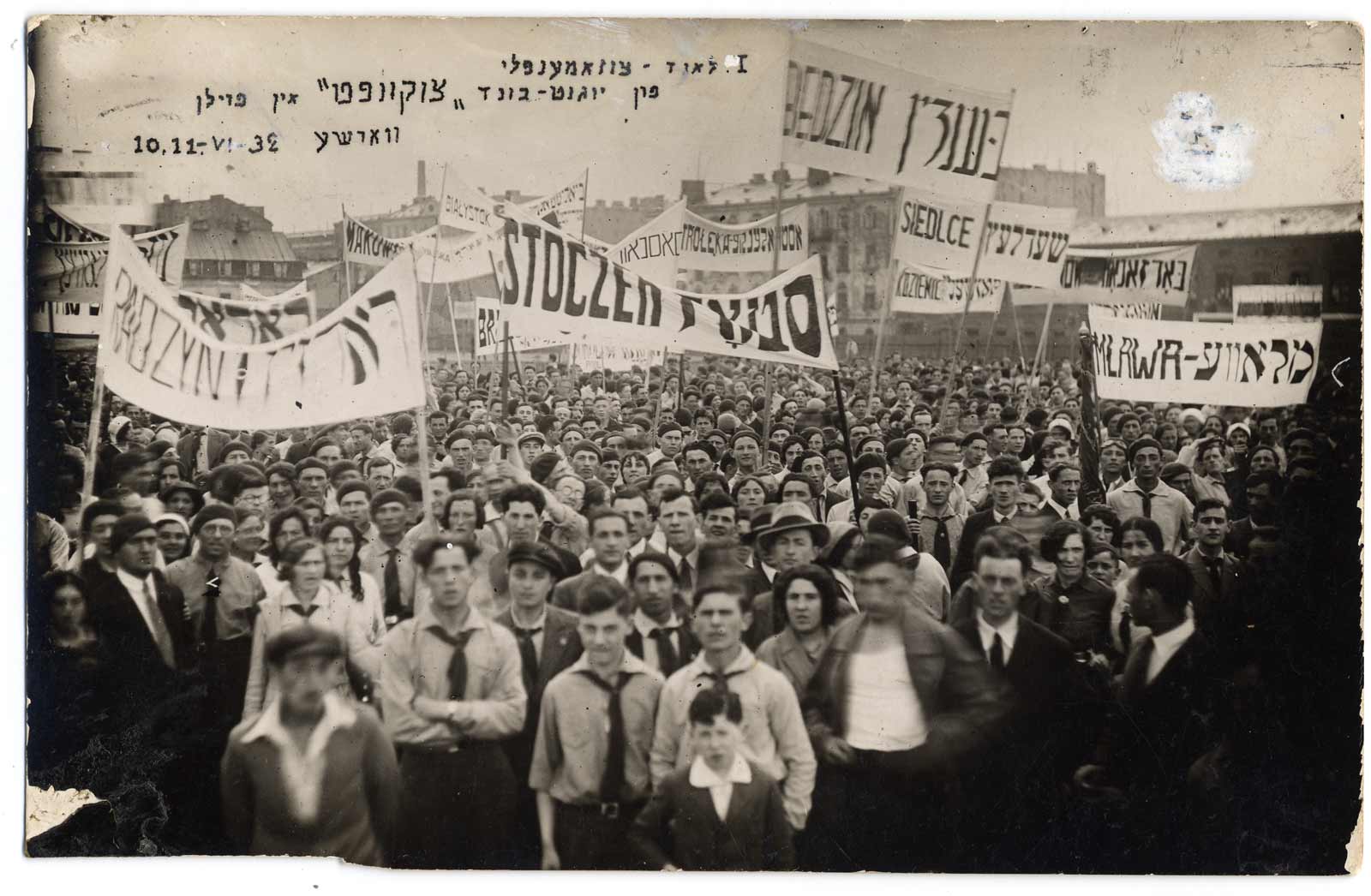
The Bundists navigated the collapse of the Russian Empire and the chaos of World War I, maintaining their commitment to socialist principles even as the political landscape shifted toward totalitarianism. However, the movement faced its ultimate catastrophe during the Holocaust. The systematic murder of European Jewry did more than destroy a population; it decimated the Yiddish-speaking culture and the political infrastructure that the Bund had spent decades building.
The destruction was so absolute that the history of the Bund became a footnote in many historical accounts, often eclipsed by the narrative of the Holocaust as a tragedy of victims rather than a story of active political resistance. Crabapple’s work seeks to restore that agency, highlighting the Bundists not as passive casualties, but as insurgent intellectuals and revolutionaries who fought for a world based on human solidarity.
Art as Archive: The Legacy of Sam Rothbort
The impetus for Crabapple’s research was deeply personal. Her great-grandfather, Sam Rothbort, was a Bundist who survived the upheavals of the early 20th century. After the Holocaust, Rothbort created a series of “memory paintings” to resurrect the vanished world of his childhood shtetl. These paintings were not mere nostalgia; they were political documents.
One painting in particular—depicting a girl in a sky-blue dress hurling a rock through a window—became a portal for Crabapple. This image of “Itka the Bundist” represented the spirit of the movement: youthful, defiant, and uncompromising. By connecting her own artistic practice with her ancestor’s records, Crabapple demonstrates how art can function as a repository for histories that official archives often ignore or erase.
To fully engage with the source material, Crabapple learned Yiddish, allowing her to access the original pamphlets, poems, and letters of the Bundists. This linguistic journey reveals a movement that was as much about poetry and art as it was about politics. The Bundists believed that cultural liberation was a prerequisite for political liberation, and their commitment to Yiddishism was a way of asserting that Jewish life was valid and vibrant in its own right, without needing to be transplanted to another continent.
Why a Forgotten History Matters Today
The resurgence of the Bund’s history is more than an academic exercise in genealogy or sociology. In an era of increasing polarization and the rise of ethnonationalism globally, the philosophy of Doikayt offers a provocative alternative. It asks a fundamental question: Is the solution to persecution to retreat into a separate, protected enclave, or to fight for a world where no one needs to retreat?
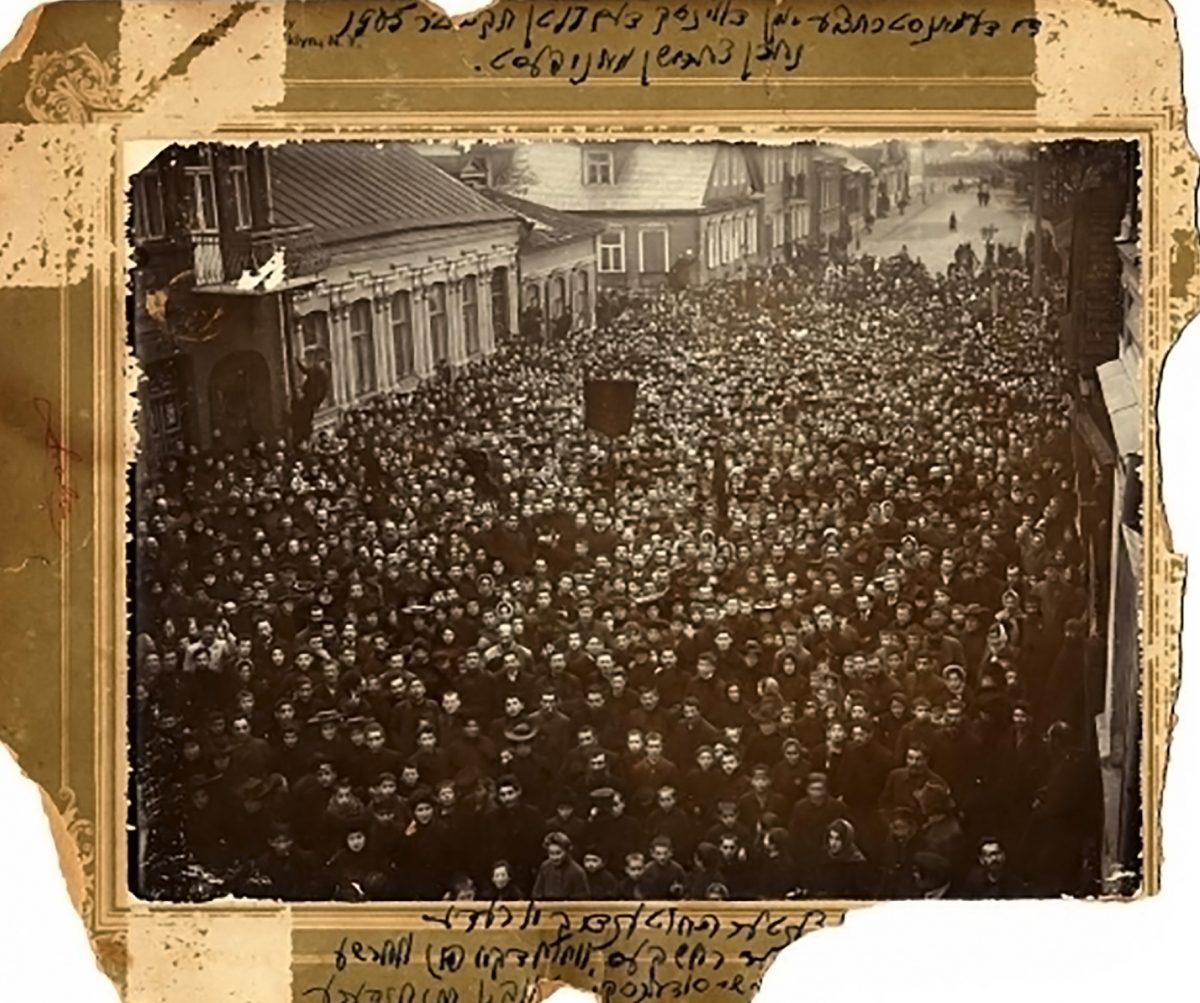
By framing the Bund’s history as a “history that belongs to all rebels,” Crabapple suggests that the lessons of the Bund are universal. The movement’s insistence on solidarity across ethnic and religious lines speaks to contemporary struggles for human rights and social justice. It challenges the notion that identity must be tied to a specific piece of land or a nationalist project, proposing instead that belonging is found in shared struggle and mutual aid.
The story of the Jewish Labor Bund serves as a reminder that the history of the Jewish people is not monolithic. There have always been diverse visions of what it means to be Jewish and how to achieve safety and dignity. Recovering the voice of the anti-Zionist, socialist Jew provides a more complete understanding of the complexities of the 20th century and provides a historical precedent for those seeking a path of intersectional solidarity today.
For those interested in exploring the intersection of art, memory, and political history, Here Where We Live Is Our Country provides a comprehensive map of a vanished world. It encourages readers to look at their own surroundings—their own “hereness”—and consider what it means to build a community based on justice rather than exclusion.
As the global conversation around identity and nationalism continues to evolve, the records of the Bund remain a vital resource. The next phase of this historical recovery will likely involve further digitization of Yiddish archives and a growing scholarly interest in the secular Jewish movements of Eastern Europe.
World Today Journal encourages readers to share this story and join the conversation in the comments below: Do you believe the concept of “hereness” is still applicable in today’s political climate?