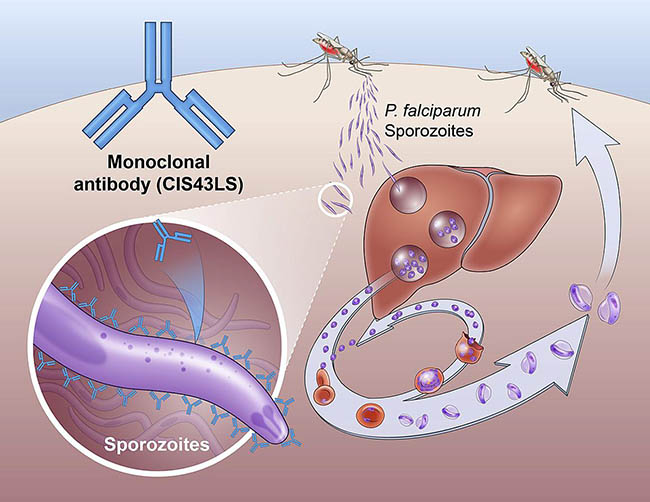
Malaria continues to exact a heavy toll on global health, particularly in sub-Saharan Africa where Plasmodium falciparum transmission remains intense and perennial. Despite decades of progress in vector control, chemoprevention, and vaccination, the disease persists as a leading cause of illness and death among young children. Monoclonal antibodies have emerged as a promising complementary strategy for malaria prevention, offering a recent avenue to target the parasite at critical stages of its lifecycle.
The potential of antibody-based interventions lies in their ability to provide immediate, passive immunity—unlike vaccines, which rely on stimulating the body’s own immune response over time. Monoclonal antibodies (mAbs) are laboratory-produced molecules designed to mimic the immune system’s ability to fight off harmful pathogens. In the case of malaria, researchers have focused on antibodies that target the circumsporozoite protein (CSP) of Plasmodium falciparum, a key antigen expressed on the surface of sporozoites—the form of the parasite injected by mosquitoes during a bite.
Recent advances in single-cell antibody cloning technologies have enabled scientists to isolate and characterize human monoclonal antibodies with potent neutralizing activity against P. Falciparum. These antibodies work by blocking the parasite’s ability to invade hepatocytes, the first cells it infects after entering the human body. By interrupting this pre-erythrocytic stage, mAbs can prevent infection before symptoms develop, offering a prophylactic approach that complements existing tools like insecticide-treated nets and seasonal malaria chemoprevention.
One of the most studied candidates is CIS43LS, a modified version of a naturally occurring antibody identified from a volunteer who received an experimental whole-sporozoite vaccine. Through amino acid substitution, researchers extended its half-life, enhancing its durability in the bloodstream. Early clinical trials have shown that a single intravenous dose of CIS43LS can provide protection against controlled human malaria infection for several months. This prolonged efficacy raises the possibility of using mAbs in settings where seasonal or perennial transmission makes frequent dosing impractical.
In areas of intense, year-round malaria transmission—such as parts of Burkina Faso, Mali, and western Kenya—the need for long-lasting preventive interventions is especially acute. Children in these regions experience multiple infectious bites per year, and despite access to bed nets and antimalarial drugs, breakthrough infections remain common. Monoclonal antibodies could offer a valuable addition to the prevention toolkit, particularly for vulnerable populations like infants and young children who are at highest risk of severe disease and death.
However, challenges remain in scaling mAb-based prevention for widespread use in low-resource settings. Unlike oral medications or vaccines, monoclonal antibodies typically require intravenous or subcutaneous administration by trained health workers. Their production involves complex biomanufacturing processes, and cold-chain storage is often necessary to maintain stability. Cost is another significant barrier. while prices are expected to decline with improved manufacturing and market competition, current estimates place the cost per dose significantly higher than that of seasonal chemoprevention or routine vaccination.
Nonetheless, ongoing research is exploring ways to overcome these hurdles. Scientists are engineering next-generation antibodies with even longer half-lives, aiming for protection that lasts six months or more with a single dose. Alternative delivery methods, such as intramuscular injections or potentially even topical formulations, are under investigation to simplify administration. Efforts are underway to identify broadly neutralizing antibodies that could be effective across diverse strains of P. Falciparum, reducing the risk of immune escape.
The World Health Organization has not yet issued specific guidelines on the use of monoclonal antibodies for malaria prevention, as the technology remains primarily in the clinical development phase. However, several mAb candidates are advancing through early-phase trials in both endemic and non-endemic countries. Researchers emphasize that any future deployment would need to be carefully integrated into existing malaria control programs, rather than replacing proven interventions like vector control or artemisinin-based combination therapies.
As scientific understanding of anti-malaria antibodies deepens, so too does appreciation for the complexity of the human immune response to Plasmodium falciparum. Studies have shown that naturally acquired immunity develops slowly and incompletely, requiring repeated exposure over years. Monoclonal antibodies offer a way to shortcut this process, providing immediate, high-level protection that could bridge the gap during early childhood—the period of highest vulnerability.
Looking ahead, the success of antibody-based malaria prevention will depend not only on scientific innovation but also on equitable access and sustainable delivery models. Partnerships between pharmaceutical companies, public health agencies, and nonprofit organizations will be essential to ensure that these tools reach the communities that need them most. Clinical trial sites in Africa are increasingly involved in early-stage research, helping to build local capacity and ensure that interventions are tested under real-world conditions.
For now, monoclonal antibodies remain a promising but experimental approach to malaria prevention. Their ultimate role will be determined by ongoing trials assessing safety, efficacy, durability, and cost-effectiveness in diverse transmission settings. As researchers continue to refine these biologics and explore novel targets—including antigens involved in liver-stage development and blood-stage invasion—the hope is that one day, a long-acting antibody injection could join the roster of tools working toward malaria elimination.
To stay informed about the latest developments in malaria research and prevention strategies, readers can follow updates from the World Health Organization’s Global Malaria Programme and the National Institute of Allergy and Infectious Diseases, which regularly publish findings from clinical trials and epidemiological studies.
We welcome your thoughts and experiences on emerging health innovations. Share your perspective in the comments below, and facilitate spread awareness by sharing this article with others interested in global health progress.
Worth a look
- Health Benefits of Wearing Silk Pajamas: Why Silk is Good for Your Skin and Sleep
- How Age-Related Hearing Loss Affects Sound Processing in Noisy Environments
- China-Africa Trade Hits Record $208B Driven by Zero-Tariff Policy (time.news)
- Run Hide Fight: Trailer, Release Date, and Jonathan Majors Update (archyde.com)