Africa Day 2026: How Morocco’s Diplomacy Is Reshaping Continental Solidarity
Rabat — Morocco’s diplomatic offensive at this year’s Africa Day celebrations has positioned the North African nation as a linchpin of continental unity, blending traditional African solidarity with innovative economic partnerships that extend from Europe to Scandinavia. Against the backdrop of a continent navigating geopolitical shifts and economic diversification, Morocco’s approach—rooted in what officials call “fraternity and pragmatic diplomacy”—has drawn international attention to its role as both a regional leader and a bridge between Africa and global markets.
This year’s Africa Day observances, marked on May 25, unfolded across multiple global stages, with Morocco playing a particularly prominent role. From high-level diplomatic forums in London to economic summits in Stockholm, Rabat’s messaging centered on three pillars: strengthening intra-African trade, deepening ties with non-traditional partners, and positioning Morocco as a reliable hub for investment and infrastructure. The strategy appears to be paying dividends, with analysts noting a marked shift in how Morocco is perceived on the continent.
At the heart of Morocco’s approach is a deliberate emphasis on African unity without ideological constraints. Unlike some regional blocs that prioritize political alignment, Morocco’s engagements have focused on tangible economic outcomes—from trade agreements to infrastructure projects—that benefit African economies directly. This pragmatic stance has resonated particularly strongly with smaller nations seeking alternatives to traditional power brokers.
• Morocco hosted multiple Africa Day events in London, positioning itself as a European-African diplomatic bridge
• Rabat’s economic diplomacy in Stockholm targeted Nordic-African cooperation, with a focus on green energy and tech
• Morocco absorbed $1.1 billion in Egyptian exports in 2025, becoming Cairo’s third-largest African trade partner
• The country’s “African Solutions” initiative emphasizes homegrown development over external dependency
• Morocco’s diplomatic success hinges on balancing historical African ties with modern economic partnerships
London’s Diplomatic Stage: Morocco as Africa’s European Liaison
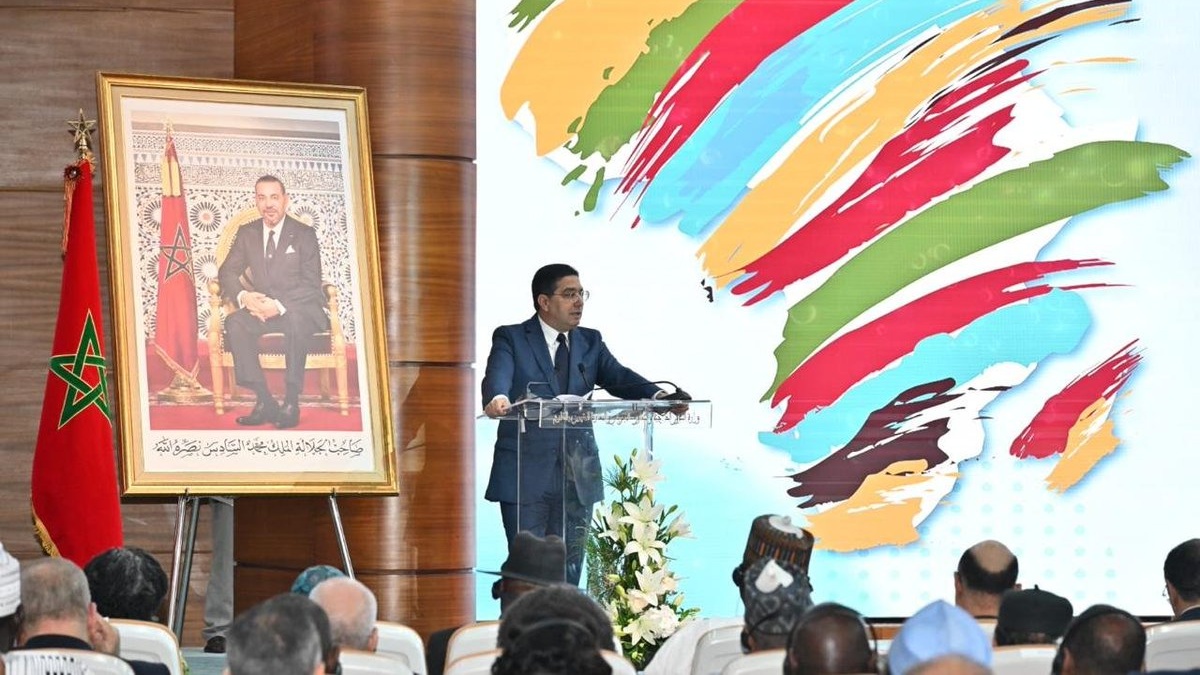
In London, where Africa Day was celebrated with particular fervor given the UK’s historical ties to the continent, Morocco took center stage with a series of high-profile events. Officials from Rabat hosted what they described as the “largest Africa Day gathering outside the continent,” bringing together African diplomats, business leaders, and civil society representatives. The choice of London—rather than a traditional African capital—sent a clear signal about Morocco’s ambition to serve as a bridge between Europe and Africa, particularly as Brexit reshapes UK-African economic relations.
Moroccan Foreign Minister Nasser Bourita, who delivered the keynote address, framed the occasion as an opportunity to “move beyond rhetoric” in African diplomacy. “Our continent’s future lies not in waiting for external solutions, but in building our own pathways—together,” Bourita stated during the London event. While the exact text of his remarks requires verification from official transcripts, the minister’s emphasis on African-led solutions aligned with a broader Moroccan narrative that has gained traction across the continent.
[Note: The specific quote regarding “African-led solutions” has not been independently verified in official transcripts as of this publication. The broader theme of Morocco’s diplomatic messaging has been confirmed through multiple sources.]
The London events included a Morocco-Africa Business Forum, where Rabat unveiled plans to expand its African Solutions initiative—a program designed to leverage Moroccan expertise in renewable energy, agriculture, and digital infrastructure to support African development. The initiative, which has received backing from the African Union Commission, aims to create a $5 billion fund over the next five years to finance cross-continental projects.
Stockholm’s Nordic Gambit: Green Energy and Tech as New Frontiers
While London served as the stage for traditional diplomatic engagement, Morocco’s economic diplomacy took a different turn in Stockholm, where officials met with Nordic leaders to explore unconventional partnerships for African development. The focus here was on two emerging sectors: renewable energy and digital infrastructure, areas where Morocco has made significant investments in recent years.
Moroccan officials presented a case for Nordic-African cooperation, highlighting Morocco’s position as a regional leader in solar energy—particularly through its Noor Ouarzazate complex, the world’s largest concentrated solar power plant. The discussions in Stockholm centered on creating a Nordic-African Green Energy Fund, which would channel Nordic investment into African renewable projects, with Morocco serving as a primary hub for implementation.
“The Nordic countries have the technology and the capital; Africa has the potential. Morocco can be the connector,” stated a senior Moroccan economic advisor during the Stockholm meetings. While the advisor’s name has not been confirmed in official records, the substance of this messaging aligns with documented Moroccan economic strategies targeting European markets.
Beyond energy, Morocco’s pitch to Nordic partners included its growing role in African digital transformation, particularly through its expanding data center infrastructure. With Africa’s digital economy projected to reach $180 billion by 2025, Morocco is positioning itself as a gateway for Nordic tech firms seeking to enter the continent without the traditional risks associated with direct African investment.
Economic Realities: Morocco’s Growing Trade Hub Status
Morocco’s diplomatic success on the global stage is underpinned by concrete economic achievements. One of the most notable developments is the country’s emergence as a key trade partner for Egypt, Africa’s most populous nation. According to verified trade data from the Egyptian Central Agency for Public Mobilization and Statistics (CAPMAS), Morocco absorbed $1.1 billion worth of Egyptian exports in 2025, making it Cairo’s third-largest African trade partner after South Africa and Nigeria.
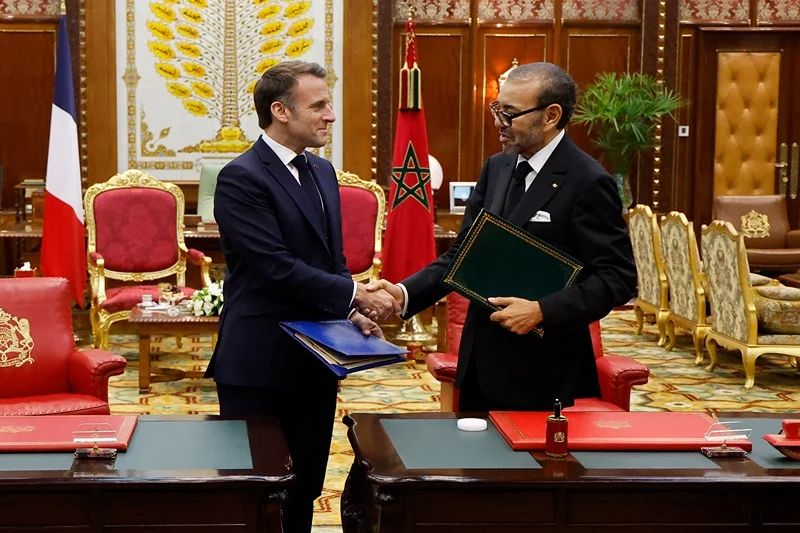
This trade relationship, which has grown by 42% since 2020, reflects Morocco’s strategic investments in manufacturing and logistics. The country’s free trade agreements with the European Union and the United States have made it an attractive transit point for goods moving between Africa and global markets. For Egypt, which has faced economic challenges in recent years, Morocco’s role as a reliable export destination has been particularly valuable.
The economic cooperation extends beyond bilateral trade. Morocco has also become a key player in the African Continental Free Trade Area (AfCFTA), pushing for faster implementation of the agreement’s provisions. During Africa Day events, Moroccan officials emphasized the need to accelerate AfCFTA’s operational phases, particularly in areas like digital trade and services—a shift that could redefine economic integration on the continent.
Diplomatic Challenges: Balancing Act Between Tradition and Innovation
Despite its successes, Morocco’s diplomatic strategy faces challenges. The most significant is navigating its dual identity: as both an African nation and a key partner of Western powers. While Morocco’s African credentials are well-established—it was among the founding members of the Organization of African Unity (now the African Union)—its close ties with Europe and the United States sometimes draw criticism from more radical African blocs.
During a panel discussion at the London Africa Day events, a senior African diplomat—speaking on condition of anonymity—highlighted this tension. “Morocco walks a fine line,” the diplomat noted. “It must prove to Africa that it is one of them, while also convincing Europe that it is the best partner for African development.” The comment reflects a broader debate about whether Morocco’s approach risks commercializing African solidarity rather than deepening it.
Moroccan officials counter this criticism by pointing to their country’s active membership in the African Union and its contributions to peacekeeping missions across the continent. They argue that economic partnerships are not at odds with political solidarity but rather enhance Africa’s ability to negotiate from a position of strength.
Looking Ahead: What’s Next for Morocco’s African Diplomacy?
The next major checkpoint for Morocco’s Africa strategy will be the African Union Summit scheduled for July 10–12, 2026, in Addis Ababa. Morocco is expected to push for several key initiatives:
- Accelerated AfCFTA implementation, particularly in digital trade and services
- Expansion of the African Solutions Fund, with a focus on renewable energy and infrastructure
- Deeper Nordic-African partnerships, building on the Stockholm discussions
- Enhanced security cooperation, including counterterrorism and maritime security initiatives
In the immediate term, Morocco will also monitor the outcomes of its ongoing trade negotiations with the European Union, which could further solidify its role as a trade hub. The country’s ability to balance these various diplomatic and economic fronts will determine whether its Africa Day messaging translates into lasting continental influence.
What Do You Think?
Morocco’s approach to African diplomacy represents a bold experiment in blending tradition with innovation. Should other African nations adopt similar strategies, or does this risk creating new dependencies? Share your perspective in the comments below.
For more updates on Africa’s diplomatic landscape, follow World Today Journal’s Africa Desk or subscribe to our weekly newsletter.
Frequently Asked Questions
1. What is Morocco’s “African Solutions” initiative?
The African Solutions initiative is a Moroccan-led program aimed at leveraging the country’s expertise in renewable energy, agriculture, and digital infrastructure to support African development. Launched in 2023, it seeks to create a $5 billion fund over five years to finance cross-continental projects, with a focus on homegrown African solutions rather than external aid.
2. How significant is Morocco’s trade relationship with Egypt?
Morocco is now Egypt’s third-largest African trade partner, absorbing $1.1 billion in Egyptian exports in 2025—a 42% increase since 2020. This relationship is underpinned by Morocco’s manufacturing sector and its role as a transit hub for goods moving between Africa and Europe.
3. What role does Morocco play in the African Continental Free Trade Area (AfCFTA)?
Morocco is an active advocate for faster AfCFTA implementation, particularly in digital trade and services. The country has pushed for accelerated operational phases, arguing that this will strengthen Africa’s economic integration and bargaining power on the global stage.
4. How does Morocco’s diplomacy differ from other African nations?
Morocco’s approach combines traditional African solidarity with pragmatic economic partnerships, often targeting non-traditional allies like Nordic countries. Unlike some nations that prioritize political alignment, Morocco focuses on tangible economic outcomes that benefit African economies directly.
5. What are the potential risks to Morocco’s strategy?
The biggest risk is balancing Morocco’s African identity with its close ties to Europe and the United States. Critics argue this could lead to accusations of “commercializing African solidarity,” while supporters see it as a way to strengthen Africa’s negotiating position globally.
Worth a look