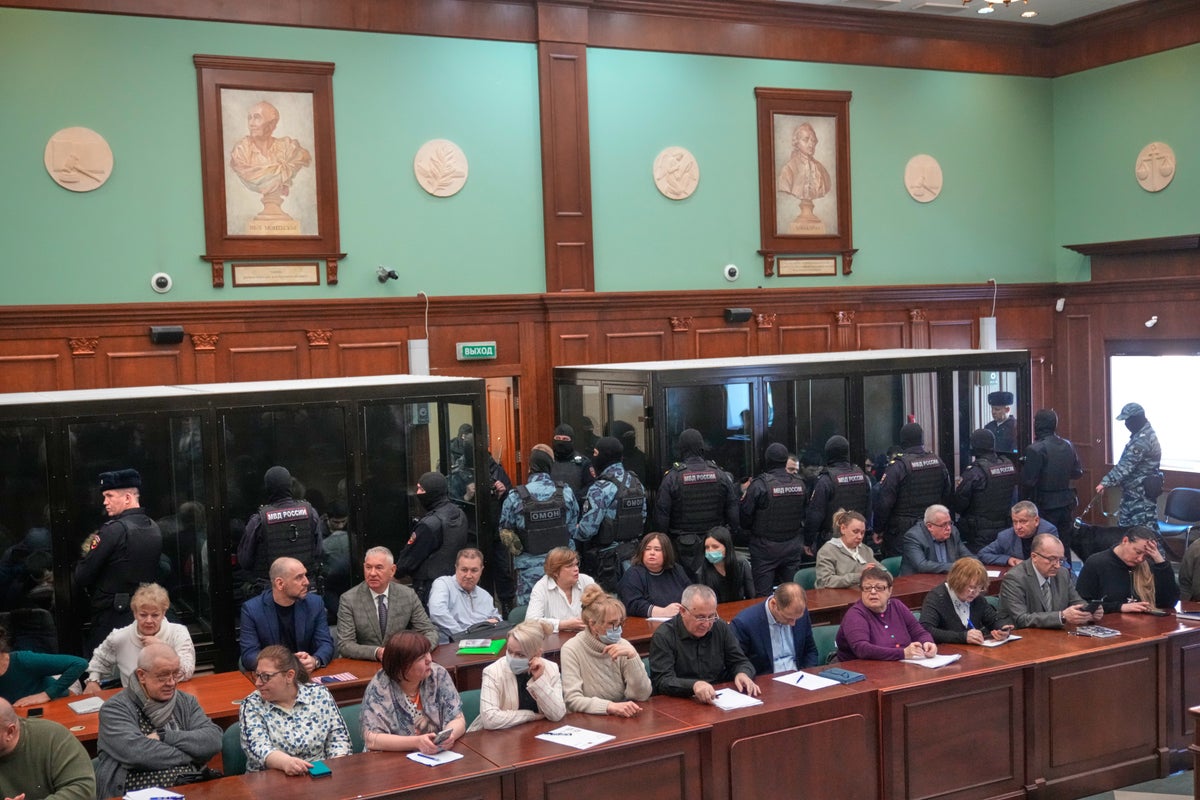
Russia Convicts 19 in Connection with Crocus City Hall Attack
A Moscow court has convicted 19 individuals on charges related to the March 2024 terrorist attack at the Crocus City Hall concert venue, a tragedy that claimed the lives of 149 people and injured over 600 others. The sentencing, handed down on March 12, 2026, reflects the culmination of a trial that began in August 2025 and was conducted behind closed doors, citing security concerns. Fifteen of those convicted received life sentences, while others were sentenced to lengthy prison terms ranging from 19 years and 11 months to 22 and a half years. The attack, one of the deadliest in Russia in recent years, prompted a large-scale investigation and a wave of arrests.
The Islamic State (ISIS) group claimed responsibility for the attack, releasing a statement through its affiliated channels shortly after the event. The attack unfolded as concertgoers were gathering to observe the Russian rock band Picnic. Gunmen opened fire on the crowd before setting the venue ablaze, creating a scene of chaos and devastation. The swift claim of responsibility by ISIS, though, was immediately met with skepticism and alternative narratives from Russian officials, who alleged Ukrainian involvement without providing concrete evidence. This has added a layer of geopolitical complexity to the aftermath of the tragedy.
Details of the Trial and Convictions
The trial, held in a military court – standard procedure for terrorism-related cases in Russia – was largely closed to the public. According to reports, the 19 defendants included the four individuals directly involved in the shooting and arson, as well as 15 others accused of providing logistical support or having connections to the attackers. Specifically, three individuals were convicted for selling a vehicle used by the attackers, one for renting them an apartment, and ten others for alleged terrorist ties, as reported by the independent Russian news site Mediazona.
Reports following the arrests indicated that the four gunmen, identified as citizens of Tajikistan, were apprehended hours after the attack while allegedly attempting to flee towards Ukraine. Images circulating in the media at the time showed the suspects with visible injuries, raising concerns about potential mistreatment during their detention. These concerns have been amplified by human rights organizations monitoring the case.
Geopolitical Implications and Allegations of Ukrainian Involvement
In the wake of the attack, Russian President Vladimir Putin and other high-ranking officials publicly asserted, without presenting supporting evidence, that Ukraine played a role in the tragedy. These claims have been vehemently denied by Ukrainian authorities, who have characterized them as baseless attempts to deflect responsibility and escalate the ongoing conflict. The Investigative Committee of Russia, the country’s primary criminal investigation agency, stated that the attack was “planned and carried out in the interests of the current leadership of Ukraine in order to destabilize the political situation in our country.” Ukraine continues to maintain its innocence and has accused Russia of using the attack as a pretext for further aggression.
The allegations of Ukrainian involvement have been widely disputed by international observers and intelligence agencies. While ISIS has a history of operating in the region and has claimed responsibility for numerous attacks, the Russian government’s insistence on Ukrainian complicity has fueled speculation about ulterior motives. The timing of the accusations, coinciding with heightened tensions between Russia and Ukraine, has raised concerns that the attack is being exploited for political purposes. The lack of publicly available evidence supporting the Russian claims has further intensified these doubts.
The Islamic State’s Claim of Responsibility
The Islamic State group’s claim of responsibility for the Crocus City Hall attack was made through its official media channels, including the Telegram messaging app. The group released a statement asserting that its fighters had carried out the attack, providing details that aligned with the events as they unfolded. ISIS has been active in Russia’s North Caucasus region for years, and its affiliates have previously claimed responsibility for attacks within the country. The group’s motives for targeting Russia are rooted in its broader campaign against countries it perceives as enemies of Islam.
ISIS’s claim of responsibility has been largely accepted by international counterterrorism experts, who point to the group’s established presence in the region and its history of similar attacks. However, the Russian government’s continued focus on Ukrainian involvement has overshadowed the ISIS claim and raised questions about the Kremlin’s agenda. The attack serves as a stark reminder of the ongoing threat posed by extremist groups and the challenges of combating terrorism in a complex geopolitical landscape. The group’s ability to inspire or direct attacks remains a significant concern for security agencies worldwide.
Looking Ahead: Further Investigations and Potential Ramifications
The convictions of the 19 individuals represent a significant step in the Russian investigation into the Crocus City Hall attack. However, questions remain about the full extent of the network involved and the potential for further attacks. Russian authorities have vowed to continue their investigation and to bring all those responsible to justice. The attack is likely to have far-reaching consequences for Russia’s security policies and its relationship with neighboring countries.
The ongoing geopolitical tensions between Russia and Ukraine are expected to be further exacerbated by the attack and the subsequent accusations. The incident could also lead to increased security measures at public events and a tightening of border controls. The long-term impact of the attack on Russia’s internal political dynamics and its foreign policy remains to be seen. Further developments in the investigation and any potential appeals by the convicted individuals will be closely monitored by the international community.
As of March 12, 2026, Russian authorities have not announced any further arrests or investigations related to the attack. The focus now shifts to the sentencing phase for the remaining defendants and the implementation of measures to prevent future acts of terrorism. The international community continues to call for a thorough and transparent investigation into the attack, as well as a commitment to addressing the root causes of extremism.
We will continue to follow this developing story and provide updates as they become available. Your thoughts and perspectives are valued. Please share your comments below and engage in a respectful discussion about this essential event.
Worth a look