
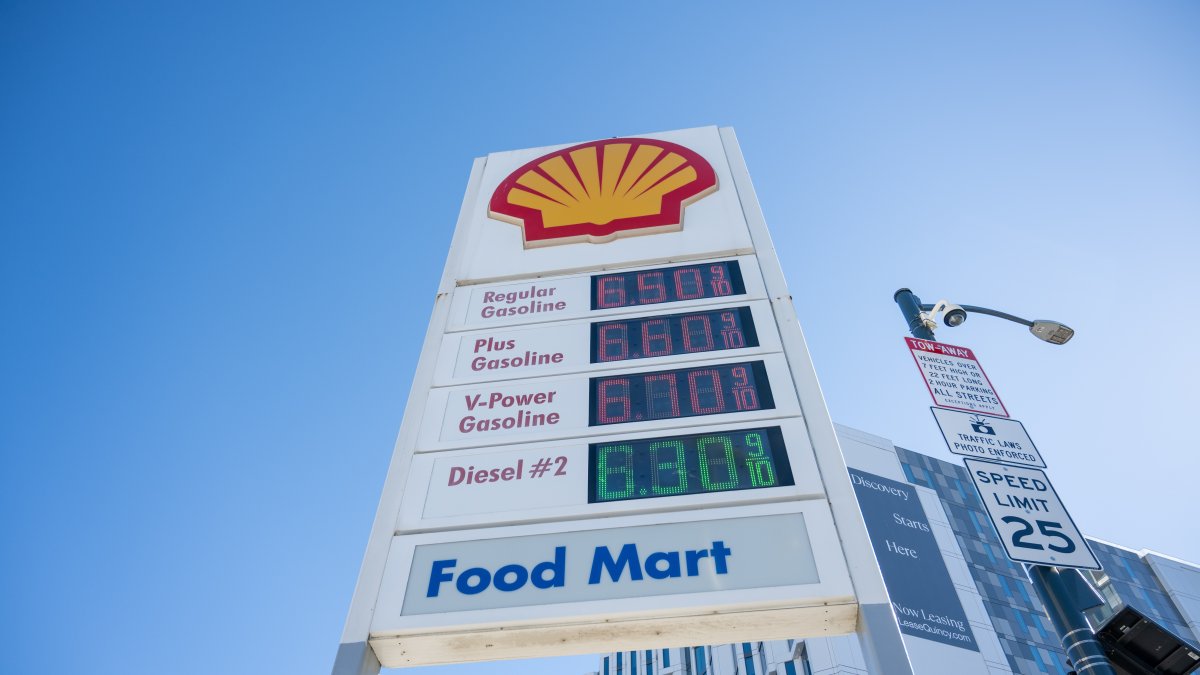
California drivers are facing a challenging economic landscape as the average price of gasoline in the state approaches $6 per gallon. This upward trend is particularly acute in the San Francisco Bay Area, where fuel costs have already surpassed that threshold, placing a significant financial burden on commuters and residents alike.
The volatility of energy costs continues to be a focal point for those living in the region, as the gap between state averages and local Bay Area pricing widens. For many, the daily commute has become a primary driver of monthly household expenses, reflecting broader trends in regional fuel pricing and availability.
Among the locations frequently noted for high costs in the Bay Area is a Chevron station located at 1399 Willow Rd, Menlo Park, CA 94025. This specific site, which operates 24 hours a day, serves a high-traffic corridor near the Dumbarton Bridge and the corporate offices of Meta (formerly Facebook), contributing to its status as one of the more expensive fueling points in the area.
The Impact of Fuel Costs in the Bay Area
The surge in gasoline prices across the Bay Area is not an isolated event but part of a larger pattern of price fluctuations within California’s unique energy market. When the average price of gasoline in California nears $6 per gallon, the impact is felt most heavily by low-to-middle-income workers who rely on personal vehicles for transport in regions where public infrastructure may not fully meet the demand.
In Menlo Park, the Chevron station at 1399 Willow Road is a prominent example of the regional pricing dynamics. As a facility that provides both fuel and an ExtraMile convenience store, it caters to a demographic of commuters and local professionals. The station’s location is strategically positioned for those traversing the peninsula, which often correlates with higher premiums at the pump compared to more rural or less congested parts of the state.
Operational Details of High-Traffic Stations
For consumers navigating these price hikes, the availability of services often dictates where they choose to fuel. The Chevron station in Menlo Park provides several amenities to attract drivers despite the high costs, including a car wash and 24-hour access. According to customer feedback on Yelp, the car wash is viewed as a helpful utility, though its operating hours can be inconsistent.
The convenience of a 24-hour operation, as listed for the 1399 Willow Rd location, ensures that drivers have access to fuel at any hour, but this accessibility often comes with the trade-off of higher per-gallon costs. This is a common trend in the Bay Area, where convenience and location—such as proximity to major tech hubs—can influence the final price seen on the pump.
Understanding Regional Price Disparities
The discrepancy between the statewide average and the Bay Area’s prices highlights the fragmented nature of fuel distribution. While the rest of California may be approaching the $6 mark, the Bay Area’s crossing of that line indicates a localized pressure point. Factors contributing to these disparities typically include local taxes, transportation costs, and the high demand associated with dense urban centers.

The Chevron ExtraMile station in Menlo Park serves as a case study in this regionality. By offering a combination of gas, snacks, and automotive services, the station positions itself as a one-stop shop for the “on-the-go” consumer. Though, for the budget-conscious driver, the premium charged at such high-visibility locations can be a significant deterrent.
Key Takeaways on Bay Area Fuel Trends
- California’s statewide average gasoline price is nearing $6 per gallon.
- The San Francisco Bay Area has already exceeded the $6 per gallon mark.
- High-traffic locations, such as the Chevron at 1399 Willow Rd in Menlo Park, are often cited among the most expensive in the region.
- Proximity to major transit arteries like the Dumbarton Bridge and major employers increases the demand and potential cost at local stations.
As residents continue to monitor these costs, the reliance on real-time pricing data and consumer reviews becomes essential for finding the most competitive rates. The ongoing trend suggests that fuel costs will remain a volatile element of the cost of living in Northern California for the foreseeable future.
For those seeking the most current pricing or operational status of specific stations, official store locators such as the Chevron ExtraMile Station Finder provide verified location data.
We welcome our readers to share their experiences with regional fuel pricing in the comments below. Please share this report with others who may be affected by the rising costs of commuting in the Bay Area.