
NASA’s Artemis II mission has reached a historic milestone, sending humans farther into space than any previous voyage in history. The crew of four, traveling aboard the Orion spacecraft, has officially surpassed the distance record set during the Apollo 13 mission, marking a critical leap forward in humanity’s return to the lunar vicinity.
The crew reached the lunar sphere of influence—the region where the Moon’s gravity exerts more pull on the spacecraft than Earth’s—as they prepared for a high-stakes flyby of the lunar surface. On Monday, April 7, 2026, the mission achieved its maximum distance from Earth, reaching 252,760 statute miles according to reports from NPR.
This 10-day mission, which launched on April 1, 2026, serves as the first crewed flight of the Space Launch System (SLS) rocket and the Orion spacecraft via NASA. By looping around the Moon, the Artemis II crew is testing deep space systems and demonstrating the capabilities necessary for future long-term lunar habitation and eventual missions to Mars.
The mission’s trajectory took the astronauts behind the Moon, where they ventured into the lunar far side. This phase of the journey is particularly challenging, as the bulk of the Moon blocks direct radio communications with Earth, leading to a planned 40-minute blackout period while the vehicle circles the far side per NPR.
Breaking the Apollo 13 Distance Record
For over five decades, the farthest distance humans had traveled from Earth was established by the crew of Apollo 13, who reached 248,655 statute miles. The Artemis II crew eclipsed this record at 1:57 p.m. ET on April 6, 2026 via NPR.
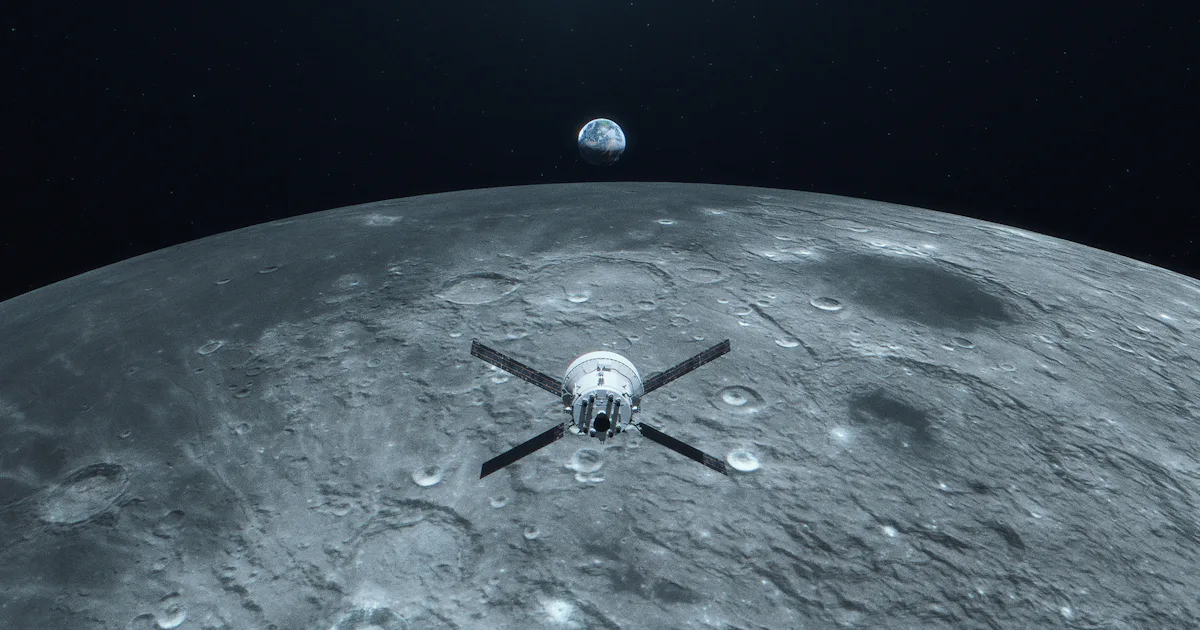
This achievement is not merely a record-breaking feat but a validation of the Orion spacecraft’s ability to sustain a crew in deep space. The spacecraft is designed to carry and sustain astronauts on missions to the Moon and return them safely to Earth, acting as the primary exploration vehicle for the Artemis program via NASA.
The mission’s timeline included a series of precision maneuvers, including a correction burn on Flight Day 5 to ensure the spacecraft remained on the correct trajectory for the flyby via NASA. During this period, the crew also conducted demonstrations of their space suits to ensure readiness for the lunar environment.
The Lunar Flyby and Scientific Observations
The core of the Artemis II mission is the crewed lunar flyby, where the spacecraft loops approximately 4,000 miles from the lunar surface via NPR. This trajectory allows the crew to make critical observations of the lunar surface and test the spacecraft’s performance in the lunar sphere of influence.
Observations of the Moon’s surface began at 2:45 p.m. ET on April 6, 2026 via NPR. The crew’s role as photographers and observers is central to the mission’s goal of paving the way for future lunar surface missions. By capturing imagery and data from the far side and the near side of the Moon, NASA is gathering essential information for future landings.
Mission Timeline and Key Milestones
| Event | Date/Time | Detail |
|---|---|---|
| Launch | April 1, 2026 | Launched via SLS rocket from Kennedy Space Center via NASA |
| Distance Record Broken | April 6, 1:57 p.m. ET | Surpassed Apollo 13’s record of 248,655 miles via NPR |
| Maximum Distance | April 6, 7:02 p.m. ET | Reached 252,760 statute miles from Earth via NPR |
| Flyby Conclusion | April 6, 9:20 p.m. ET | Completed the lunar loop and began return journey via NPR |
| Planned Splashdown | April 10, 8:07 p.m. ET | Scheduled arrival in the Pacific Ocean off San Diego, Calif. via NPR |
Paving the Way for Mars and Beyond
The Artemis II mission is a direct successor to the uncrewed Artemis I mission of 2022, which tested the SLS and Orion systems without a crew via NASA. The successful execution of this 10-day flyby demonstrates that NASA can safely transport a crew of four to deep space and bring them back.
The implications of this mission extend beyond the Moon. NASA has explicitly stated that the Orion spacecraft is a crucial step toward eventually sending crews to Mars via NASA. The ability to manage long-duration life support, navigate the lunar sphere of influence, and execute precise correction burns in deep space are all prerequisites for interplanetary travel.
The mission’s reliance on the Space Launch System (SLS), NASA’s new heavy-lift rocket, underscores the agency’s commitment to developing the infrastructure needed for a long-term return to the Moon. This infrastructure will support future lunar surface missions, where astronauts will once again walk on the lunar soil for the first time in over 50 years.
The next confirmed checkpoint for the mission is the planned splashdown in the Pacific Ocean off the coast of San Diego, California, scheduled for Friday, April 10, 2026, at 8:07 p.m. ET via NPR.
We invite our readers to share their thoughts on this historic achievement in the comments below. How do you feel about humanity’s return to deep space?