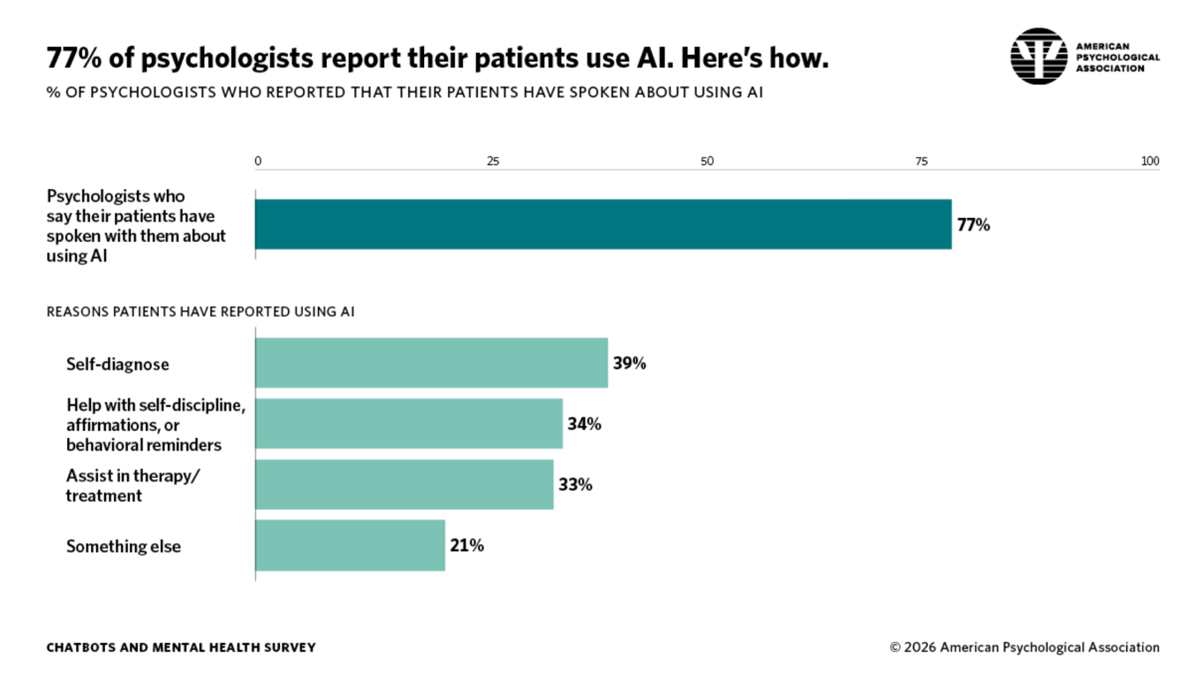
As artificial intelligence tools become increasingly integrated into daily life, a majority of licensed psychologists report that their patients are now utilizing AI for mental health support. A survey conducted by the American Psychological Association (APA) in April 2026 found that 75% of surveyed psychologists have had patients disclose their use of AI-driven chatbots for concerns ranging from self-diagnosis and behavioral reminders to acting as a supplementary tool during therapy sessions. This trend marks a shift in how individuals seek and manage mental health care, often bypassing traditional clinical channels to engage with automated systems.
The APA study, which gathered insights from 1,242 licensed practitioners across the United States, highlights a growing divide between patient adoption and clinician confidence. While the digital tools offer a new point of access for mental health resources, the overwhelming majority of psychologists expressed significant reservations regarding the safety, clinical validity, and potential for unintended harm associated with these technologies. As the mental health field adapts to these advancements, the role of human oversight remains the primary focus of professional guidelines.
Clinical Concerns Over AI-Driven Mental Health Tools
The rapid adoption of chatbots has prompted widespread concern among mental health professionals regarding the potential for patient harm. According to the APA survey data, 97% of psychologists believe that chatbots may inadvertently reinforce negative behaviors or dysfunctional beliefs, while 94% express concern that current AI models lack the necessary nuance to treat complex psychological conditions effectively. The risk of emotional detachment is also a significant issue, with 93% of clinicians fearing that AI-provided companionship could negatively influence a user’s real-world social engagement.

Perhaps most concerning to the professional community is the potential for crisis escalation. The survey indicates that 89% of psychologists worry that chatbots could inadvertently encourage self-harm. These clinical fears are compounded by the observation that 15% of patients have exhibited signs of distorted thinking or delusions linked to their interactions with AI systems. Furthermore, one-third of the psychologists surveyed reported concerns about patients developing a psychological dependency on a chatbot, while one-fourth noted that some patients struggle to maintain healthy boundaries with their digital counterparts.
The Evolving Role of Technology in Therapeutic Practice
Despite the risks, some practitioners recognize potential utility in AI, particularly for patients who lack access to traditional care. Approximately 40% of the surveyed psychologists expressed optimism that chatbots could provide meaningful support when a licensed human professional is unavailable. This perspective aligns with the idea that digital tools can serve as a bridge to care, provided they are used under the guidance of a clinician. However, skepticism remains high regarding the competency of these models; 85% of psychologists explicitly stated they do not believe AI will ever be a substitute for human therapy, largely due to concerns over chatbots posing as licensed professionals without the necessary qualifications or ethical grounding.

Data gathered by industry analysts further illustrates the informal nature of these interactions. Among the 35% of psychologists who reported that their patients are actively using AI to augment their treatment, the motivations for engagement varied widely. One-third of these clinicians noted that their patients engage with chatbots primarily “for fun,” while 22% cited “friendship” as a primary driver. A smaller but notable 13% of patients reported using AI tools to facilitate what they perceived as an “intimate relationship.” These figures underscore the challenge clinicians face in distinguishing between casual digital engagement and behaviors that may signal deeper psychological distress or unmet interpersonal needs.
Recommendations for Safe AI Integration
The APA emphasizes the necessity of maintaining “humans in the loop” as the standard for any digital mental health intervention. This model advocates for AI to function strictly as a supplement to, rather than a replacement for, traditional, human-led therapy. By keeping a licensed mental health professional involved, the patient can benefit from the accessibility of AI-driven behavioral reminders or daily support while ensuring that a qualified expert is available to monitor for signs of distress, dependency, or clinical deterioration.

The American Psychological Association continues to update its guidance on the use of digital health technologies, and patients are encouraged to consult the official APA website for comprehensive resources on identifying safe, evidence-based AI tools. As the industry moves toward further integration, the focus remains on standardizing the quality of these interactions and ensuring that technology serves to enhance the therapeutic alliance rather than erode it. Future updates from the APA regarding the regulation and ethical application of these tools are expected as longitudinal data on patient outcomes becomes available.
The intersection of technology and mental health remains a developing field. Readers are encouraged to share their experiences or questions in the comments section below as we continue to track the latest developments in digital healthcare policy and practice.
Keep reading