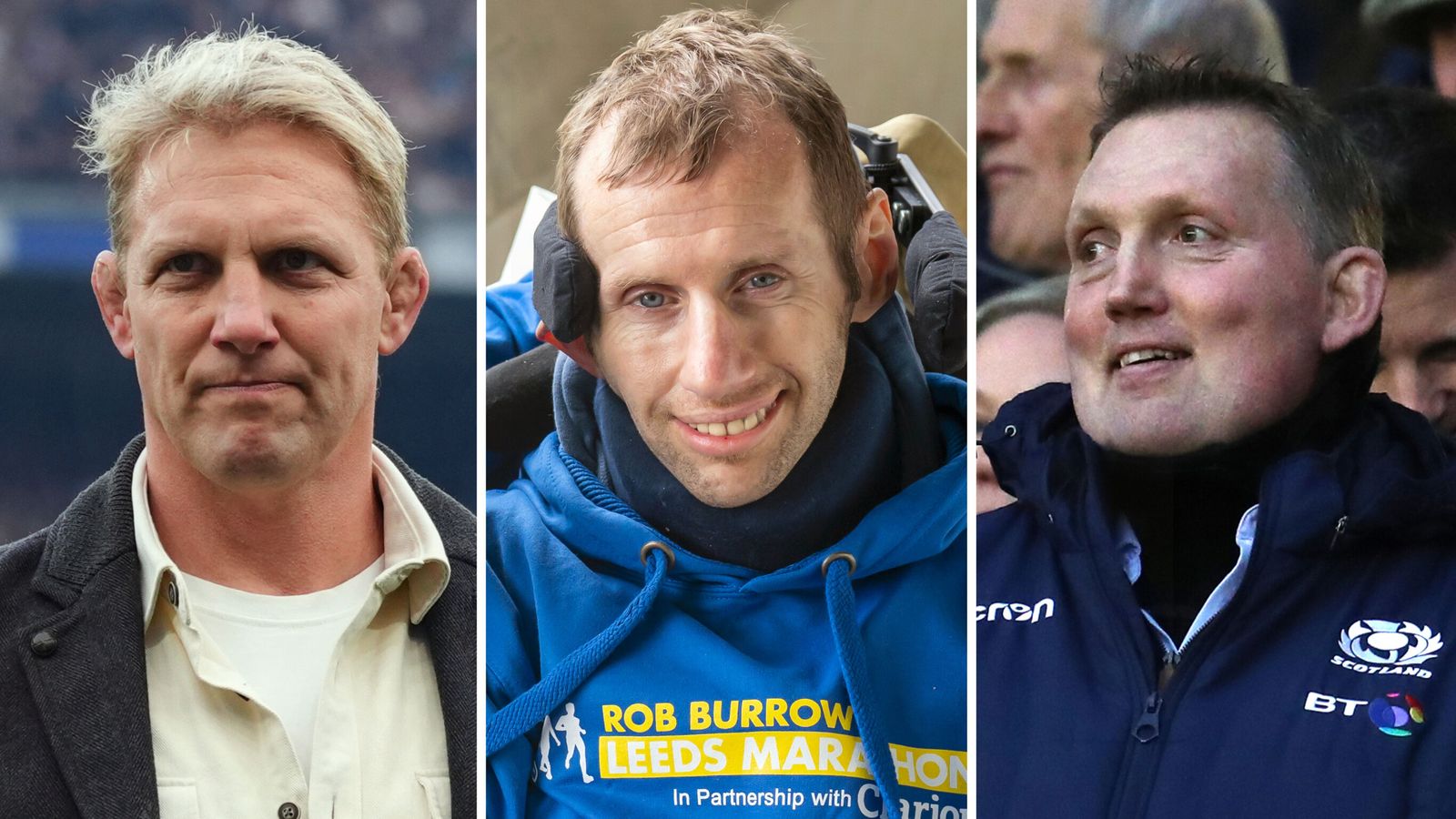
The contrast could not be more jarring: the peak of human physical capability versus a condition that systematically dismantles it. In the world of professional sports, we celebrate the mastery of the body—the explosive power of a sprinter, the precision of a midfielder, the endurance of a marathoner. But for those diagnosed with motor neurone disease (MND), the body becomes a stranger, and the very muscles that once defined their careers or passions begin to fail.
As a sports editor, I have spent over a decade analyzing the mechanics of victory and the resilience of athletes. However, few challenges are as daunting as the one posed by MND. It is a condition that does not discriminate by age or athletic prowess, yet it has gained significant visibility through the courage of sports figures who have used their platforms to turn a devastating diagnosis into a global catalyst for research.
Understanding motor neurone disease requires looking past the tragedy of the diagnosis to the science of the nervous system. While it is often viewed as a rare condition, its impact is profound, affecting not only the individual but their families and the broader community. For the sporting world, the link to MND is often one of visibility and advocacy, but it also raises critical questions about neurological health and the long-term wellbeing of athletes.
The fight against MND is currently in a pivotal era. We are moving from a period of limited intervention to one of targeted genetic therapies and precision medicine. While the road remains long, the intersection of high-profile advocacy and scientific breakthrough is creating a genuine sense of hope that was absent only a decade ago.
What Exactly is Motor Neurone Disease?
At its core, motor neurone disease is a group of progressive neurological disorders that destroy motor neurons. These are the specialized nerve cells in the brain and spinal cord that control skeletal muscle activity—the movements we take for granted, such as walking, speaking, swallowing, and breathing. When these neurons degenerate and die, the brain can no longer send signals to the muscles, leading to inevitable muscle atrophy and wasting.
The most common form of MND is amyotrophic lateral sclerosis (ALS), though the umbrella term also encompasses conditions such as progressive bulbar palsy, primary lateral sclerosis, and spinal muscular atrophy. The disease is generally classified by whether it is sporadic—occurring without a family history—or inherited, usually caused by a mutation in a single gene. According to the National Institute of Neurological Disorders and Stroke, these diseases are characterized by the loss of both upper motor neurons (in the brain) and lower motor neurons (in the brain stem and spinal cord).
The progression of MND typically follows a cruel trajectory. It often begins with subtle signs: a slight weakness in a limb, a stumble while walking, or a change in speech patterns. As the lower motor neurons fail, muscles begin to twitch—a phenomenon known as fasciculations—and eventually shrink. When upper motor neurons are affected, the result is often muscle stiffness, known as spasticity, and overactive reflexes, making voluntary movement slow and difficult.
Over time, the loss of function spreads. The most critical stage occurs when the muscles controlling the diaphragm and chest wall weaken, leading to respiratory insufficiency. This is a feature of most MND variants and is the primary cause of mortality, as the lungs eventually lose the ability to properly take in oxygen or expel carbon dioxide.
The Complex Link Between MND and Sport
There is a recurring question in sports medicine: is there a direct link between high-level athletics and the development of motor neurone disease? The visibility of MND in the sporting world is high, partly because athletes are often the first to notice the subtle loss of motor control that signals the onset of the disease. For a professional athlete, a slight loss of coordination or a sudden drop in strength is not just a nuisance; it is a career-ending red flag.

While some have hypothesized that the physical trauma associated with contact sports—such as the repetitive head impacts in rugby, American football, or boxing—could contribute to neurodegenerative processes, the scientific consensus remains complex. There is no definitive, universal evidence that playing sports causes MND. However, the sporting community has become the most powerful engine for MND awareness. The resilience required to compete at an elite level often translates into a fierce determination to fight the disease and fund its cure.
The impact of figures like Rob Burrow in the UK has transformed how the public perceives the condition. By documenting his journey with transparency and courage, Burrow shifted the narrative from one of inevitable decline to one of active resistance and fundraising. This “athlete’s approach” to the disease—treating the search for a cure as a high-stakes competition—has accelerated the funding of clinical trials and the development of support networks for patients.
the sporting world provides a unique lens through which to study the disease. The physiological data available from elite athletes can sometimes provide researchers with insights into muscle degradation and neurological efficiency, though this is a niche area of study compared to general population research.
Why There is Genuine Hope for the Future
For decades, the prognosis for MND was bleak, with treatment focusing almost entirely on palliative care and symptom management. However, the current landscape is fundamentally different. The shift toward genetic sequencing has allowed scientists to identify specific mutations that drive the disease in certain patients, opening the door to “precision medicine.”
One of the most significant breakthroughs has been the development of antisense oligonucleotide (ASO) therapies. These are designed to “silence” the faulty genes that produce toxic proteins, which in turn kill motor neurons. A landmark example is the approval of Tofersen (marketed as Qalsody), a treatment specifically for patients with a mutation in the SOD1 gene. While this mutation only accounts for a small percentage of ALS cases, it proves the concept: People can now target the genetic root of the disease rather than just treating the symptoms.

Beyond genetics, there is a surge in research regarding neuroinflammation. Scientists are investigating how the immune system’s response to neuron damage might actually accelerate the disease. By developing drugs that modulate this inflammatory response, researchers hope to slow the progression of MND for a wider range of patients, including those with sporadic forms of the disease.
The role of technology also cannot be overstated. Brain-computer interfaces (BCIs) are evolving rapidly, allowing patients who have lost the ability to speak or move to communicate through thought-controlled cursors or synthesized speech. While this does not cure the disease, it restores the most fundamental human need: connection. This technological bridge provides a quality of life that was unimaginable twenty years ago.
Finally, the sheer volume of funding has reached an inflection point. The intersection of celebrity advocacy and government grants has fueled a global network of research hubs. When funding increases, the pace of clinical trials accelerates, and the likelihood of finding a “cocktail” of treatments—combining genetic therapy, anti-inflammatories, and physical rehabilitation—becomes much more probable.
Navigating the Path Forward
For those currently living with MND or supporting a loved one, the most critical step is early diagnosis and a multidisciplinary approach to care. Because the symptoms can mimic other neurological issues, seeking a specialist in neuromuscular disorders is critical. Modern care now involves a team of neurologists, respiratory therapists, speech-language pathologists, and nutritionists working in tandem to preserve function for as long as possible.
The global community is also seeing a rise in patient-led registries. By contributing their genetic data to open-access databases, patients are directly speeding up the discovery of new drug targets. This collaborative spirit—much like a team sport—is proving to be the most effective weapon against a disease that thrives on isolation and silence.
While we are not yet at the stage of a universal cure, the trajectory is clear. We have moved from ignorance to understanding, and from understanding to intervention. The transition from treating MND as a “death sentence” to treating it as a “manageable condition” is the goal of the next decade of research.
The next major milestone for the community will be the results of several ongoing large-scale Phase 3 clinical trials focusing on non-genetic forms of ALS, which are expected to provide more data on the efficacy of new neuroprotective agents in the coming year. These results will determine whether the breakthroughs seen in genetic subsets can be scaled to the broader population of MND patients.
If this article provided you with a deeper understanding of MND or offered a glimmer of hope, please share it with your network. Raising awareness is the first step toward funding the cure. We invite you to share your thoughts or experiences in the comments below.
Worth a look