
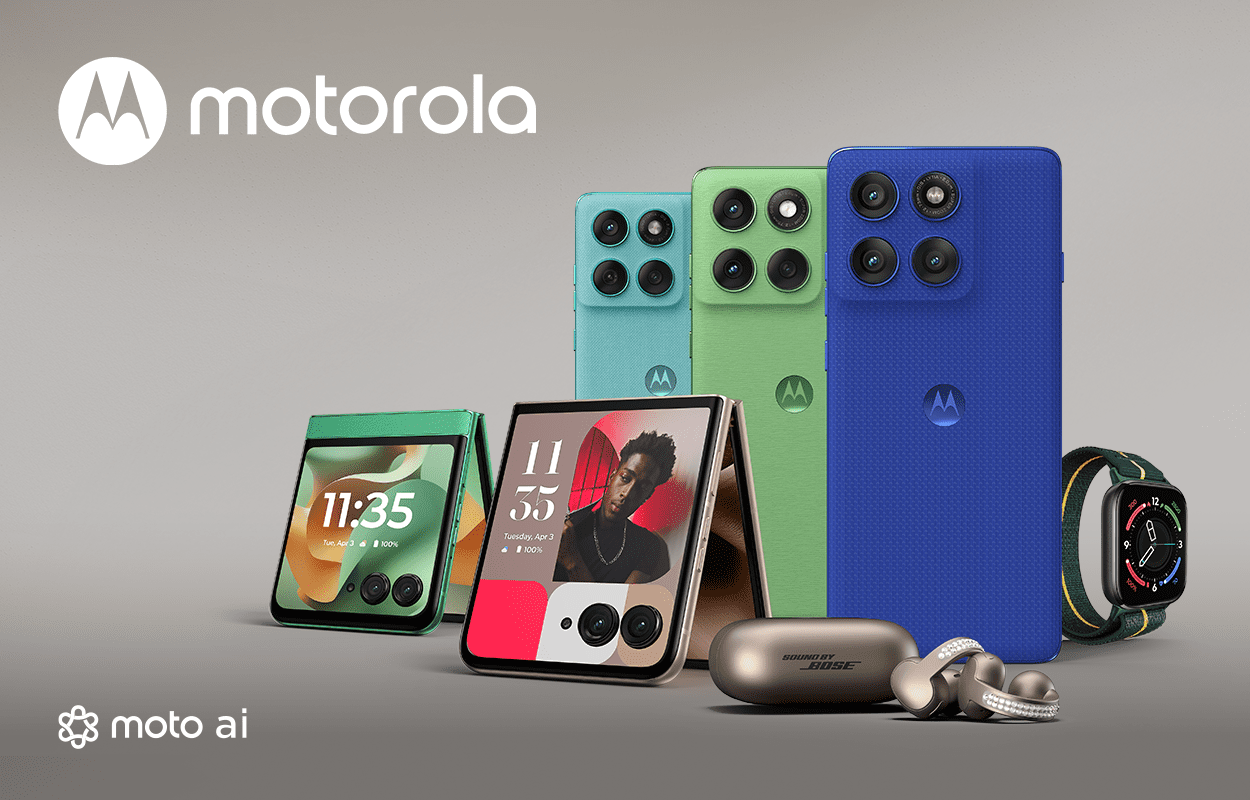
Motorola has begun expanding its 2026 mobile lineup, targeting the mid-range and endurance-focused smartphone markets with devices featuring high-capacity 7,000 mAh batteries and reinforced chassis designs. While global pricing strategies vary by region, early reports indicate competitive entry points for these models, starting at approximately 5.8 million Vietnamese Dong (VND) in select Southeast Asian markets, according to Motorola’s official regional product disclosures.
The move represents a shift toward addressing consumer demand for extended battery life in portable electronics, a segment often dominated by specialized rugged devices. By integrating higher energy density cells into standard form factors, the company aims to differentiate its 2026 hardware portfolio from traditional flagship offerings that prioritize slim profiles over longevity. These specifications, including the 7,000 mAh capacity, have been verified through recent product certification filings, which provide a baseline for what consumers can expect from the upcoming hardware refresh.
Understanding the 7,000 mAh Battery Standard
The primary draw for the latest Motorola devices is the integration of a 7,000 mAh battery, a significant increase over the industry-standard 4,500 to 5,000 mAh capacity found in most contemporary smartphones. From a technical perspective, a battery of this magnitude is intended to support heavy usage scenarios, including high-refresh-rate gaming, 5G connectivity, and extended video playback without necessitating mid-day charging, as documented in industry hardware analysis reports.
Managing a battery of this size requires sophisticated power management software to ensure that the device does not suffer from excessive thermal output or slow charging speeds. Motorola has indicated that its proprietary power management integrated circuits (PMICs) are designed to handle the increased load, optimizing the discharge rate to maintain system stability. For the end user, this translates to a device that is physically thicker than its predecessors to accommodate the increased lithium-ion volume, a common trade-off in high-capacity mobile engineering.
Durability Standards and Market Positioning
Beyond internal hardware, the 2026 lineup emphasizes structural integrity, with Motorola incorporating design elements often categorized as “military-grade” durability. In the consumer electronics context, this usually refers to compliance with MIL-STD-810H testing protocols, which evaluate a device’s resistance to drops, vibration, humidity, and extreme temperature fluctuations, according to U.S. Army Test and Evaluation Command guidelines regarding standard environmental testing.
While the term “military-grade” is a marketing descriptor, it signifies that the chassis has been reinforced with impact-resistant materials, such as high-density polymers or reinforced aluminum frames. This is particularly relevant for users operating in demanding environments. However, consumers should note that such ratings do not equate to an “indestructible” device, and IP-rated water and dust resistance remains a separate certification entirely dependent on the specific model’s sealing mechanisms.
Pricing Trends and Regional Availability
The reported starting price of 5.8 million VND—roughly equivalent to $230 USD depending on current exchange rates—positions these devices firmly in the mid-range category. This pricing strategy reflects an attempt to capture market share in regions where battery longevity is a critical purchasing factor, such as Southeast Asia and parts of Latin America, where power grid reliability can vary, as discussed in global technology market analysis.
It is important to differentiate between the base models and the “Pro” or “Plus” variants within the 2026 series. While the base model focuses on the battery and durability, higher-tier variants are expected to include advanced camera sensors and faster charging capabilities, which will adjust the final retail price accordingly. Potential buyers should monitor official Motorola regional websites for localized pricing, as import duties and local taxes often lead to significant price fluctuations between markets.
What Happens Next for Motorola Consumers
As the 2026 rollout continues, the next major checkpoint for consumers will be the formal release of regional availability maps and the publication of detailed technical manuals by the manufacturer. These documents will clarify which specific models support the 7,000 mAh capacity and which adhere to the full MIL-STD-810H testing suite. Furthermore, third-party teardowns and independent battery life benchmarks are expected to appear in the coming months, providing a more objective measure of performance versus the manufacturer’s claims.
/filters:format(webp)/pcq/media/media_files/2026/01/07/motorola-edge-2026-series-2026-01-07-09-25-53.jpg "What Happens Next for Motorola Consumers")
Prospective buyers are encouraged to verify specific model numbers against local retailer listings to avoid confusion between regional variants. For further updates on hardware specifications and official launch dates, users can consult the Motorola support portal or subscribe to official company announcements. We invite readers to share their experiences or questions regarding these new models in the comments section below.
Worth a look