
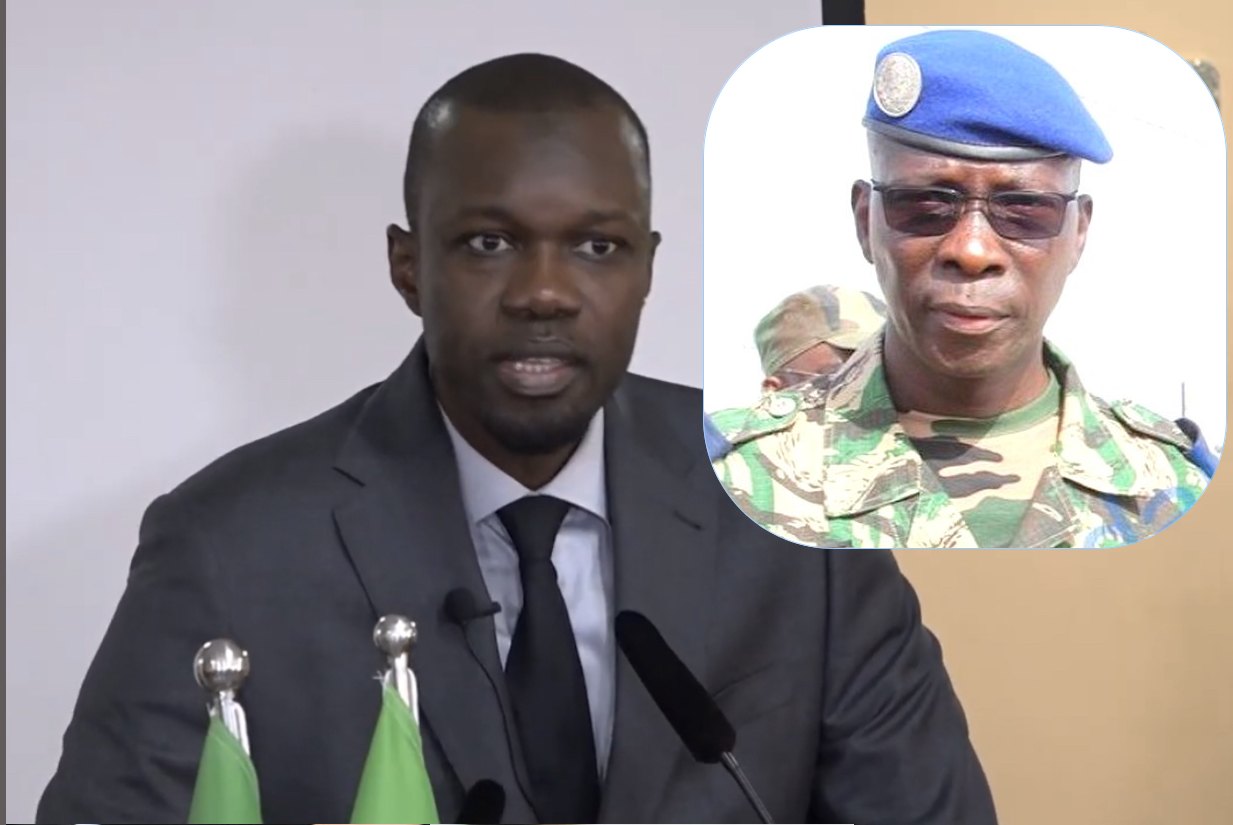
Senegal’s APTE Coalition Signals Readiness to Back Ousmane Sonko for Higher Office
In a move that could reshape Senegal’s political landscape ahead of the 2027 presidential election, the Coalition APTE has publicly declared its preparedness to rally behind Ousmane Sonko, the country’s current Prime Minister and a polarizing figure in West African politics. The statement, delivered by Moussa Ba Général, a prominent leader within the coalition, underscores the growing momentum behind Sonko’s potential presidential bid and the strategic alliances forming to support it. Although the coalition’s remarks do not yet constitute a formal endorsement, they signal a significant shift in the country’s political dynamics, where Sonko’s Pastef party has already demonstrated its influence through recent electoral successes and grassroots mobilization.
Sonko, a former tax inspector turned opposition leader, has long been a thorn in the side of Senegal’s political establishment. His rise to prominence was fueled by his anti-corruption rhetoric, populist policies, and uncompromising stance against what he describes as the country’s “elite capture” of state institutions. Appointed as Prime Minister in March 2026 following a contentious electoral process, Sonko has since navigated a delicate balance between governing and maintaining his opposition credentials. The APTE Coalition, a broad alliance of civil society groups, opposition parties, and youth movements, has emerged as a key player in this equation, positioning itself as a kingmaker in the lead-up to the next presidential race.
The coalition’s declaration comes at a time of heightened political tension in Senegal. Just weeks ago, Sonko hinted at the possibility of withdrawing Pastef from the governing coalition, a move that would have significant implications for the stability of President Bassirou Diomaye Faye’s administration. While Sonko has not yet acted on this threat, his comments have fueled speculation about his long-term political ambitions and the potential for a rift within the government. The APTE Coalition’s statement suggests that, rather than fracturing, Sonko’s support base may be consolidating behind a shared vision for his future leadership.
For global observers, the developments in Senegal offer a case study in the evolving nature of political coalitions in Africa. Unlike traditional party-based alliances, groups like APTE represent a latest model of political organization—one that blends formal party structures with grassroots activism, digital mobilization, and issue-based advocacy. This hybrid approach has proven effective in countries like Nigeria and Kenya, where similar coalitions have played decisive roles in recent elections. In Senegal, where youth unemployment hovers around 20% and economic inequality remains a pressing concern, Sonko’s message of economic reform and anti-corruption has resonated deeply with younger voters, who craft up a significant portion of the electorate.
The APTE Coalition: Who Are They and What Do They Desire?
The APTE Coalition (Alliance pour la Transformation Économique, or Alliance for Economic Transformation) is a relatively new but increasingly influential political force in Senegal. Formed in late 2025, the coalition brings together a diverse array of stakeholders, including opposition parties, labor unions, student groups, and civil society organizations. Its stated mission is to advocate for economic reforms, social justice, and transparent governance—a platform that aligns closely with Ousmane Sonko’s own political agenda.
Moussa Ba Général, the coalition’s spokesperson, is a former military officer turned political activist. His background in the Senegalese armed forces has lent him a degree of credibility among both security-focused voters and those disillusioned with the country’s traditional political class. In a recent video statement, Ba Général emphasized the coalition’s commitment to Sonko’s leadership, stating, “We must be ready to carry Ousmane Sonko to the highest office in this country. His vision for Senegal is our vision—a nation where the people, not the elites, decide our future.” While the coalition has not yet released a formal manifesto outlining its policy priorities, its public statements suggest a focus on economic diversification, youth employment, and reducing the influence of foreign multinational corporations in key sectors like agriculture and mining.
The coalition’s emergence reflects broader trends in African politics, where traditional party structures are increasingly being supplemented—or even supplanted—by issue-based movements. In Senegal, this shift has been driven in part by the country’s demographic realities. With a median age of just 18 years old, Senegal’s youth population is both a political force and a challenge for the government. High unemployment rates, limited access to higher education, and a lack of economic opportunities have fueled discontent, creating fertile ground for movements like APTE to gain traction.
Ousmane Sonko’s Political Trajectory: From Opposition Firebrand to Prime Minister
Ousmane Sonko’s political career has been defined by his willingness to challenge Senegal’s political establishment. A former tax inspector, Sonko first gained national attention in 2016 when he was dismissed from his position at the Directorate General of Taxes and Domains after accusing senior officials of corruption. His dismissal sparked protests and catapulted him into the national spotlight, positioning him as a champion of anti-corruption efforts.

In 2019, Sonko founded the Pastef party (Patriotes du Sénégal pour le Travail, l’Éthique et la Fraternité, or Patriots of Senegal for Work, Ethics, and Fraternity), which quickly became a vehicle for his presidential ambitions. His 2019 presidential campaign, though ultimately unsuccessful, garnered significant support, particularly among young voters. Sonko’s platform centered on economic nationalism, opposition to foreign debt, and a crackdown on corruption—issues that resonated deeply in a country where many sense left behind by the benefits of economic growth.
Sonko’s political fortunes took a dramatic turn in 2024 when he was arrested on charges of “disturbing public order” following mass protests against the government of then-President Macky Sall. The arrest sparked widespread unrest, with demonstrators accusing the government of using the legal system to silence opposition figures. Sonko was later released, and the charges were eventually dropped, but the episode solidified his status as a martyr for the opposition and further galvanized his support base.
In March 2026, Sonko was appointed Prime Minister by President Bassirou Diomaye Faye, a move that surprised many political observers. Faye, a former ally of Sonko, had been elected president earlier that year on a platform of reform and anti-corruption. Sonko’s appointment was widely seen as a strategic move to consolidate opposition support and bring a popular but divisive figure into the government. However, the arrangement has been fraught with tension, with Sonko frequently clashing with other members of the administration over policy and political strategy.
The 2027 Presidential Election: What’s at Stake?
With the next presidential election still more than a year away, Senegal’s political landscape is already heating up. The APTE Coalition’s declaration of support for Sonko is the latest indication that the 2027 race will be one of the most closely watched in Africa. For Sonko, the coalition’s backing could provide a critical boost, particularly if he decides to challenge President Faye for the ruling party’s nomination. While Faye has not yet indicated whether he will seek re-election, his administration has faced criticism for its handling of the economy and its perceived inability to deliver on key campaign promises.
The stakes are high not just for Sonko and Faye, but for Senegal as a whole. The country has long been seen as a beacon of stability in West Africa, a region plagued by coups, insurgencies, and political instability. However, recent years have seen a rise in social unrest, with protests over economic conditions, corruption, and perceived government overreach becoming increasingly common. The 2027 election will be a test of whether Senegal’s democratic institutions can withstand these pressures and deliver a peaceful transfer of power.
For international investors and partners, the election also carries significant implications. Senegal is one of Africa’s fastest-growing economies, with a GDP growth rate of 5.3% in 2025, driven by sectors like agriculture, mining, and renewable energy. However, the country’s economic potential has been hampered by corruption, bureaucratic inefficiency, and a lack of infrastructure investment. Sonko’s economic nationalism—particularly his opposition to foreign debt and his calls for greater local control over key industries—has raised concerns among some investors, who fear that a Sonko presidency could lead to policy unpredictability.
At the same time, Sonko’s emphasis on economic reform and anti-corruption has resonated with many Senegalese, who see him as a leader capable of delivering tangible improvements in their daily lives. His supporters argue that his policies could help reduce inequality, create jobs, and ensure that the benefits of economic growth are more evenly distributed. The APTE Coalition’s endorsement suggests that this message is gaining traction beyond Sonko’s traditional base, potentially broadening his appeal ahead of the election.
What Happens Next?
The coming months will be critical for both Sonko and the APTE Coalition. Key developments to watch include:
- Sonko’s Relationship with President Faye: Tensions between Sonko and Faye have been simmering for months, with reports of disagreements over policy and political strategy. If Sonko decides to challenge Faye for the ruling party’s nomination, it could trigger a split within the government and set the stage for a contentious primary process.
- The APTE Coalition’s Formal Endorsement: While the coalition has signaled its support for Sonko, it has not yet issued a formal endorsement. Such a move would carry significant weight, particularly if it includes commitments of financial and logistical support for Sonko’s campaign.
- Policy Announcements: Both Sonko and the APTE Coalition are expected to release detailed policy platforms in the coming months. These documents will provide clearer insight into their plans for economic reform, governance, and social policy, and could shape the contours of the 2027 election.
- Opposition Response: Senegal’s traditional opposition parties, including the Parti Démocratique Sénégalais (PDS) and the Rewmi party, are likely to respond to Sonko’s rising profile with their own strategies. Whether they choose to challenge him directly or seek to form alliances will be a key factor in the election’s outcome.
The next major checkpoint will be the National Consultations on Economic Reform, scheduled to initiate in June 2026. The consultations, which will bring together government officials, civil society leaders, and business representatives, are expected to produce a set of policy recommendations that could shape the government’s economic agenda for the remainder of Faye’s term. Sonko’s role in these consultations—and his ability to influence their outcomes—will be closely watched as a barometer of his political influence.
Why This Matters for Senegal and Beyond
Senegal’s political developments are being closely watched not just within the country, but across Africa and beyond. The country’s democratic resilience has long been a point of pride for the region, but recent challenges—including social unrest, economic inequality, and political polarization—have raised questions about its future stability. The 2027 election will be a critical test of whether Senegal can navigate these challenges and maintain its status as a model of democratic governance in West Africa.

For global businesses and investors, the election also carries significant implications. Senegal’s economy is one of the most dynamic in the region, with a young and growing population, abundant natural resources, and a strategic location on the Atlantic coast. However, the country’s political climate has become increasingly unpredictable, with policy shifts and regulatory changes posing risks for foreign investors. A Sonko presidency could bring both opportunities and challenges, depending on how his economic policies are implemented and whether they succeed in addressing the country’s structural challenges.
For Senegalese citizens, the stakes are even higher. With youth unemployment remaining stubbornly high and economic opportunities limited, many are looking to the 2027 election as a chance for meaningful change. Sonko’s message of economic reform and anti-corruption has resonated deeply with these voters, but his ability to deliver on these promises remains untested. The APTE Coalition’s support could provide him with the political capital he needs to push through his agenda, but it could also raise expectations to unsustainable levels.
As Senegal prepares for what promises to be a pivotal election, one thing is clear: the country’s political landscape is undergoing a profound transformation. The rise of movements like the APTE Coalition and the growing influence of figures like Ousmane Sonko reflect a broader shift in African politics, where traditional party structures are giving way to new forms of political organization. Whether this shift will lead to greater stability and prosperity—or to further polarization and unrest—remains to be seen. What is certain, however, is that the world will be watching.
Key Takeaways
- The APTE Coalition’s Support: The coalition’s declaration of readiness to back Ousmane Sonko signals a potential consolidation of support for his presidential ambitions ahead of the 2027 election.
- Sonko’s Political Journey: From opposition firebrand to Prime Minister, Sonko’s career has been marked by his anti-corruption rhetoric and populist policies, which have resonated with Senegal’s youth population.
- Economic and Political Stakes: The 2027 election will test Senegal’s democratic resilience and could have significant implications for the country’s economic trajectory and regional stability.
- Investor Concerns: Sonko’s economic nationalism has raised questions among international investors about policy predictability and the potential for regulatory changes.
- Next Steps: Key developments to watch include Sonko’s relationship with President Faye, the APTE Coalition’s formal endorsement, and policy announcements leading up to the election.
For the latest updates on Senegal’s political developments, follow World Today Journal’s Africa coverage. Join the conversation in the comments below and share this article to retain others informed.