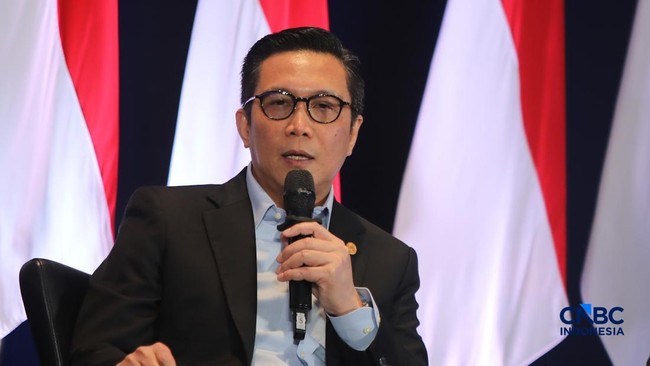
Indonesia’s financial authorities are taking concrete steps to address concerns raised by MSCI regarding the transparency of the country’s stock market, with the goal of maintaining the relevance of the Jakarta Composite Index (JCI) on the global stage. Following a virtual meeting held on February 2, 2026, between the Financial Services Authority (OJK), the Indonesia Stock Exchange (IDX), and MSCI, OJK outlined a three-part plan designed to improve disclosure standards and strengthen investor confidence in Indonesian equities.
The meeting, led by Hasan Fawzi, Deputy Commissioner and Acting Head of Capital Market, Derivative Finance, and Carbon Exchange Supervision at OJK, focused specifically on MSCI’s concerns about the transparency of ownership structures in Indonesian stocks. Hasan stated that the regulator has a plan to address all related issues and will provide periodic public updates on implementation to enhance market transparency.
The core of OJK’s response involves three main measures. First, the regulator will disclose shareholder ownership data for investors holding more than 1 percent of shares in listed companies, significantly improving transparency beyond the current disclosure threshold of 5 percent. Second, investor classification data will be expanded from the current nine main types into 27 sub-categories to provide greater clarity and credibility in reporting beneficial ownership. Finally, OJK has proposed gradually raising the minimum free float requirement from 7.5 percent to 15 percent, in coordination with market participants.
These measures come after MSCI previously temporarily suspended the rebalancing of Indonesian stocks in its indices, citing investor concerns over the transparency of ownership structures. The suspension highlighted ongoing challenges for Indonesia’s market to meet the stringent governance and transparency standards required for inclusion in major global benchmarks like the MSCI Indonesia Index, which covers approximately 85% of the Indonesian equity universe across 17 constituents.
Hasan Fawzi emphasized that OJK and MSCI will hold technical-level discussions following the February 2 meeting, with MSCI pledging to guide the regulator on its methodology and calculation process. He expressed hope for receiving confirmation of acceptance of the proposed measures at a future date, underscoring the collaborative nature of the effort to align Indonesia’s market practices with international expectations.
The Indonesia Stock Exchange (IDX) has also been actively engaged in the process, working alongside OJK to respond to MSCI’s feedback. IDX’s involvement reflects the shared responsibility between the exchange and the regulator in maintaining market integrity and ensuring that Indonesian equities remain attractive to both domestic and international investors.
Market analysts note that improving transparency around ownership structures is particularly key for emerging markets like Indonesia, where complex ownership patterns can obscure the true nature of corporate control and pose challenges for foreign investors seeking to assess risk accurately. By enhancing disclosure requirements, OJK aims to address these concerns while fostering a more credible and accessible investment environment.
The proposed increase in the minimum free float requirement to 15 percent represents a significant shift from the current 7.5 percent threshold. Free float, which refers to the portion of a company’s shares that are readily available for trading by the public, is a key metric used by index providers like MSCI to determine the investable weight of securities in their benchmarks. A higher free float requirement typically indicates greater liquidity and lower concentration of ownership, factors that are viewed favorably by global institutional investors.
OJK’s plan to break down investor classifications into 27 sub-categories marks a substantial expansion from the current nine main types. This granular approach is intended to provide a more detailed picture of who owns Indonesian stocks, distinguishing between various types of institutional investors, retail investors, and other categories that may have different investment behaviors and objectives.
The disclosure of shareholdings above the 1 percent threshold represents a notable lowering of the reporting bar compared to the existing 5 percent requirement. This change would capture a broader range of significant shareholders, potentially revealing ownership patterns that were previously undisclosed and providing market participants with more comprehensive information about influential stakeholders in listed companies.
Hasan Fawzi confirmed that OJK will provide periodic public updates on the implementation of these commitments, ensuring that market participants can track progress toward greater transparency. This commitment to ongoing communication is designed to build trust and demonstrate the regulator’s responsiveness to international feedback.
The technical discussions between OJK and MSCI will focus on aligning Indonesia’s market practices with MSCI’s methodology for calculating free float and assessing ownership transparency. MSCI’s guidance is expected to help OJK refine its approach to ensure that the proposed measures effectively address the specific concerns raised by the index provider.
For Indonesia, maintaining relevance in global indices like the MSCI Indonesia Index is crucial for attracting foreign capital and supporting the development of its capital markets. Inclusion in such benchmarks often serves as a quality signal to international investors and can lead to increased passive investment flows through exchange-traded funds and other index-linked products.
The February 2, 2026 meeting between OJK, IDX, and MSCI represents a concrete step in Indonesia’s ongoing efforts to enhance market transparency and governance standards. By addressing MSCI’s concerns through specific, measurable actions, Indonesian authorities aim to strengthen the foundation for sustainable growth in the country’s equity market while preserving its appeal to a diverse base of investors.
Market participants will be watching closely for the outcomes of the upcoming technical-level discussions between OJK and MSCI, as well as for the periodic public updates promised by the regulator on the implementation of the three-part transparency plan. The success of these initiatives will play a key role in determining Indonesia’s standing in global equity indices and its ability to compete for international investment on equal footing with other emerging markets.
As Indonesia continues to refine its market infrastructure and disclosure practices, the collaboration between regulators, the stock exchange, and international index providers like MSCI highlights the interconnected nature of today’s global financial system. Achieving alignment with international transparency standards is not merely a technical exercise but a fundamental requirement for participating fully in the global capital markets.
The developments following the February 2 meeting underscore Indonesia’s commitment to evolving its market practices in response to global expectations. By taking proactive steps to address MSCI’s concerns, OJK and IDX are working to ensure that the Indonesian stock market remains a credible and accessible destination for investment in the years ahead.
For the latest official updates on OJK’s transparency initiatives and market regulations, interested parties can refer to the Financial Services Authority’s website and announcements. The Indonesia Stock Exchange also provides regular disclosures related to listing requirements and market operations that are relevant to these ongoing efforts.
Stay informed about developments in Indonesia’s capital markets and global financial trends by following reputable financial news sources and official regulatory channels. Share your perspective on how transparency measures impact emerging market investments in the comments below.