Police Intervene as Apeldoorn Asylum Seeker Protests Turn to Riots
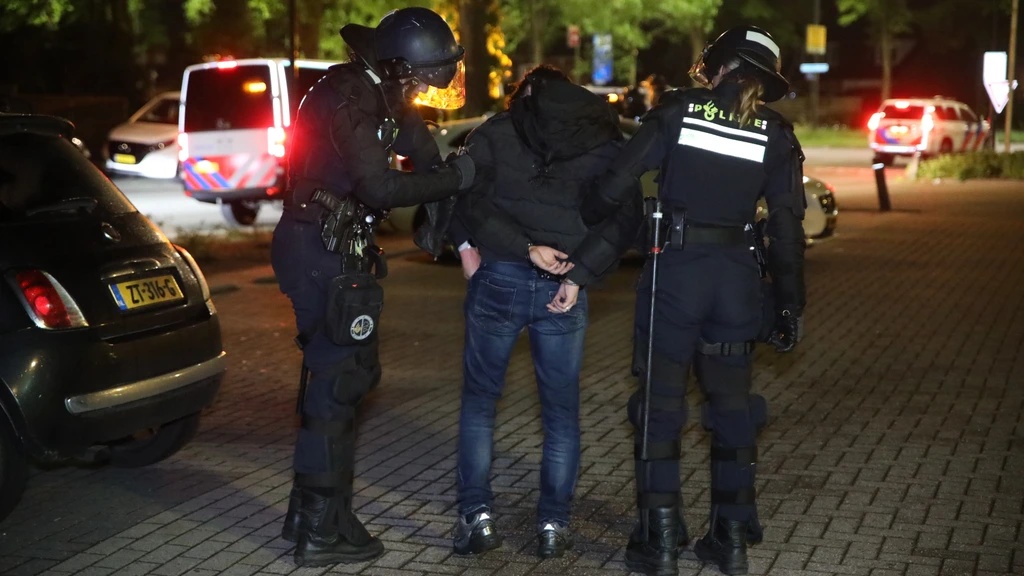
Authorities in the Dutch town of Apeldoorn have made 12 arrests following a third consecutive night of unrest at the site of a proposed asylum seekers’ refuge. The demonstrations, which centered on a planned housing facility in the De Maten district, saw protesters occupy a local roundabout and engage in actions that required the intervention of riot police.
According to police reports, the arrests made during the most recent incident included one individual held for insulting a police officer, while the remaining 11 were detained for breaching the peace. All 12 individuals were issued fines before being released.
The unrest is centered on a former school building in the De Maten district, where the local council intends to house 240 asylum seekers. While the demonstration had been officially authorized until 8:00 p.m., the situation escalated when many participants refused to disperse. As demonstrators marched into other parts of the Gelderland town, riot police were deployed to restore order and manage the crowd.
Escalation in the De Maten District
The recent arrests follow a weekend of significant volatility in Apeldoorn. Police confirmed that 32 people were arrested during similar demonstrations on Saturday and Sunday, during which officers were pelted with fireworks. The recurring nature of these protests underscores the growing tension surrounding the allocation of asylum seeker housing in the region.
The protests have not been limited to single-issue demonstrations. Earlier on Saturday, a “march for women and children” took place in Apeldoorn. Reports indicate that this event was attended by former Members of Parliament from the farmers’ party (BBB), Mona Keijzer, as well as members of the nationalist group Voorpost.
The presence of political figures and extremist groups has added a layer of complexity to the local demonstrations, as the community grapples with the decision to repurpose local infrastructure for refugee housing.
The “Spreading Law” and Municipal Tensions
The conflict in Apeldoorn is a localized manifestation of a broader national struggle in the Netherlands regarding the “spreading law.” This legal mandate requires every municipality to accept a proportionate share of refugees to ensure the national asylum system remains functional.

Under this law, municipalities are tasked with finding temporary shelters to accommodate the influx of asylum seekers. However, the implementation of these mandates has met with significant local resistance, often resulting in the types of civil unrest currently seen in Gelderland.
As municipalities struggle to find viable solutions and face public opposition, the Dutch government has prepared to take more direct action. Asylum Minister Bart van den Brink has stated that he is prepared to exercise his legal powers to allocate shelters directly. This measure would allow the central government to bypass local councils if they are unable to provide adequate housing solutions themselves.
Parallel Unrest: Explosion in Den Bosch
The instability surrounding asylum seeker housing is not confined to Apeldoorn. Law enforcement officials are also investigating an explosion that occurred at a building on an industrial estate in Den Bosch.
The incident in Den Bosch is linked to a separate municipal plan to house 50 teenage refugees of both sexes. While the investigation is ongoing, police believe the explosion, which damaged a window in the building, was caused by powerful fireworks.
The occurrence of an explosion in Den Bosch, alongside the rioting in Apeldoorn, highlights the volatile environment currently surrounding the deployment of refugee housing across various Dutch municipalities.
Key Takeaways: Asylum Housing Unrest
- Apeldoorn Arrests: 12 people were detained following a third night of rioting at a proposed refuge in the De Maten district.
- Planned Capacity: The Apeldoorn site, a former school, is intended to house 240 asylum seekers.
- Weekend Volatility: 32 arrests were recorded over the preceding Saturday and Sunday during similar demonstrations.
- National Mandate: The “spreading law” requires municipalities to take a proportionate share of refugees, a move facing intense local resistance.
- Government Intervention: Asylum Minister Bart van den Brink has signaled his intent to use powers to allocate shelters if local councils fail to comply.
- Den Bosch Incident: An explosion, suspected to be caused by fireworks, hit a building in Den Bosch intended for 50 teenage refugees.
As the situation develops, the focus remains on whether the central government will move forward with direct allocation of shelters to resolve the impasse between national mandates and local opposition.

Next Update: Monitor official statements from the Ministry of Asylum and Migration regarding the potential implementation of direct shelter allocation powers.
What are your thoughts on the balance between national mandates and local municipal control? Share your views in the comments below and share this report with your network.