Uganda‘s progress: Museveni Outlines Infrastructure, Education, and Economic Growth in Bugisu Region
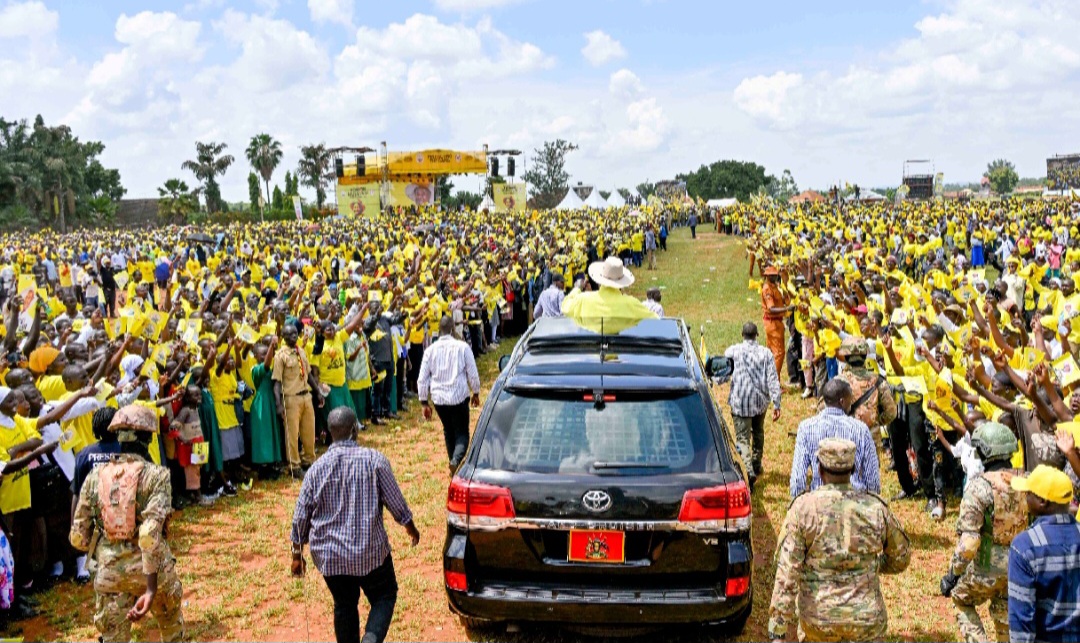
President Yoweri Museveni recently concluded a campaign visit to the Bugisu sub-region, delivering a thorough address outlining Uganda’s ongoing development and future economic plans.His message centered on a clear vision: consolidating peace, fostering wealth creation, expanding educational opportunities, generating employment, and continuing infrastructure improvements.
The President highlighted meaningful progress in infrastructure, specifically referencing the ongoing rehabilitation of the Tororo- Mbale- Kampala- Gulu- Pakwach railway line. This project is crucial for enhancing transport efficiency and bolstering regional trade.Investing in robust infrastructure is foundational for sustained economic growth.
On the education front, Museveni emphasized the expansion of public schools as a key achievement of the National Resistance Movement (NRM). He noted a dramatic increase in school availability, citing the example of Mbale, which now boasts 21 government secondary schools compared to limited options during his school days in 1961. This expansion directly supports access to education for a wider population.
Despite commitment to free education, the president acknowledged challenges with implementation, attributing some setbacks to actions by headteachers. He announced plans to establish skilling hubs across the country, designed to provide young people with practical, employable skills in just six months. These hubs aim to reduce reliance on imports and cultivate a skilled domestic workforce.
Museveni drew a critical distinction between national development – represented by public infrastructure – and individual wealth – the income and prosperity of households.While the government is focused on building the foundation for growth,he stressed that wealth creation is ultimately the responsibility of individual families.
To support this, the government is actively implementing initiatives like the Parish Development Model (PDM) and Emyooga.These programs are designed to empower citizens to participate in the money economy. Further support will include an additional Shs15 million per parish under PDM, alongside dedicated funds for cultural groups, religious organizations, unemployed graduates, and youth in urban areas.
The Ugandan economy is demonstrating resilience, even in the face of external pressures. Museveni pointed to continued strong economic growth despite the withdrawal of foreign aid following uganda’s stance on certain social issues. This demonstrates a growing independence and self-reliance.
Looking ahead, the anticipated commencement of oil production next year is expected to catalyze a “qualitative leap” in both infrastructure development and service delivery.This represents a significant prospect for Uganda’s economic advancement.
Crucially, Museveni reassured citizens of continued peace and stability, both during and after upcoming elections. He affirmed a firm commitment to protecting the gains made and ensuring a secure future for the nation. Maintaining stability is paramount for attracting investment and fostering sustainable development.
The President’s visit concluded with a call to action for the people of Mbale: to consolidate existing gains, embrace commercial agriculture, and safeguard the stability that has enabled regional growth.
Local NRM leaders, including Vice Chairperson for Eastern Region Calvin Echodu and Mbale Chairperson Moses Wambogo, expressed gratitude for the President’s ongoing support and cautioned against divisive tribal sentiments, emphasizing the importance of national unity.
Have a story or opinion to share? Email us at [email protected]
Related reading