
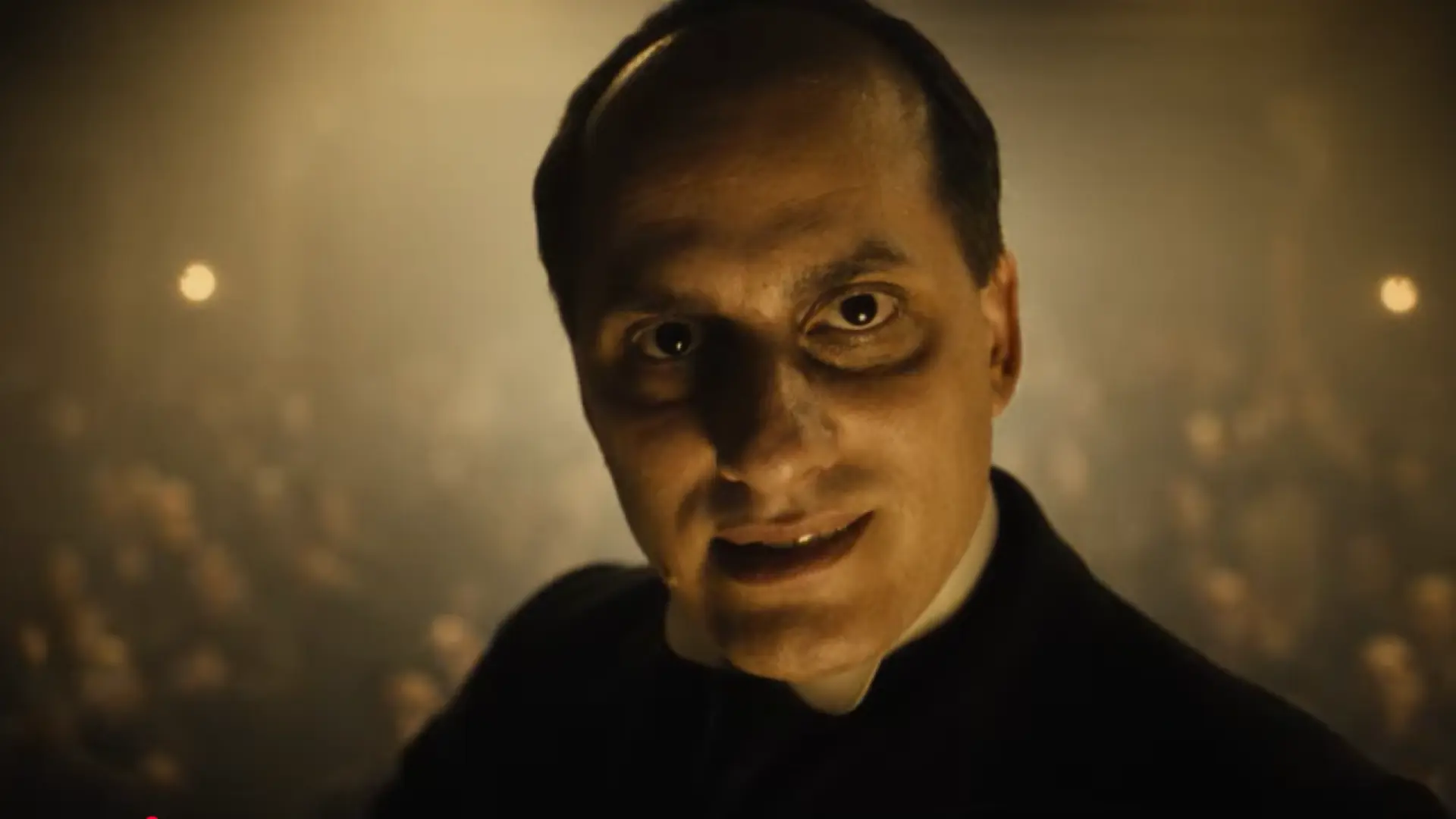
When acclaimed Spanish novelist Arturo Pérez-Reverte recently recommended a television series about Benito Mussolini’s rise to power, he did so with uncommon enthusiasm. Calling the eight-part drama “magnífica,” he pointed his social media followers toward a production that has sparked renewed interest in how fascism emerged in 20th-century Europe. The recommendation carries weight not only because of Pérez-Reverte’s stature as a bestselling author of historical fiction but as well because it reflects a broader trend: public intellectuals using their platforms to guide audiences toward complex historical narratives amid growing concerns about democratic backsliding.
The series in question, titled Mussolini: Son of the Century (marketed in some regions simply as M), is based on the acclaimed literary trilogy by Antonio Scurati, whose first volume won Italy’s prestigious Strega Prize in 2019. Directed by Joe Wright, known for films such as Darkest Hour and Atonement, the series stars Luca Marinelli in a transformative portrayal of the future dictator. Available on streaming platforms including SkyShowtime and Movistar Plus+ in select markets, the show traces Mussolini’s journey from socialist activist to architect of Italy’s Fascist regime, culminating in the early years of his dictatorship.
What distinguishes this adaptation is its commitment to historical texture. Rather than presenting Mussolini as a caricature, the series immerses viewers in the turbulent social and economic conditions of post-World War I Italy—widespread unemployment, veterans’ disillusionment and a liberal state perceived as incapable of restoring order. These conditions, historians agree, created fertile ground for extremist movements. By focusing on the period between 1919 and 1925, the series captures not just the man but the moment when democracy faltered and authoritarianism took root.
This approach aligns with recent scholarly emphasis on understanding fascism not as an aberration but as a product of specific historical crises. As historian Robert Paxton noted in his seminal work The Anatomy of Fascism, fascist movements gain traction when they successfully exploit national humiliation, promise national renewal, and mobilize masses through spectacle and violence. The series reflects this framework, depicting how Mussolini’s early militias—known as the Blackshirts—used street violence to disrupt socialist and liberal gatherings, gradually weakening democratic institutions before seizing power through the 1922 March on Rome.
Pérez-Reverte’s endorsement arrives at a time when historical literacy faces new challenges. Surveys indicate declining awareness of 20th-century totalitarian regimes among younger Europeans. A 2023 study by the Bertelsmann Foundation found that only 47% of Germans aged 18 to 29 could correctly identify the time period of Nazi rule, while similar gaps exist in Italy regarding Fascist-era knowledge. Accessible yet rigorous historical dramatizations serve an educational function, offering entry points for audiences who might not engage with academic texts.
The production itself involved extensive collaboration with Italian historians to ensure fidelity to documented events. Scurati, whose trilogy draws from parliamentary records, police reports, and personal correspondence, served as a creative consultant. Wright has stated in interviews that he aimed to avoid both demonization and myth-making, instead seeking to understand how a charismatic leader could exploit institutional weaknesses. “The danger isn’t that we’ll see another Mussolini,” Wright told The Guardian in 2023, “but that we’ll fail to recognize the conditions that allow such figures to emerge.”
Luca Marinelli’s performance has drawn particular attention for its physical and psychological transformation. To embody Mussolini, the actor gained weight, altered his posture, and studied archival footage to replicate the leader’s distinctive gestures and vocal cadence. Marinelli has spoken openly about the emotional toll of the role, describing moments of discomfort during filming, particularly when portraying scenes of violence. In interviews with La Repubblica and Vanity Fair Italia, he emphasized that portraying such figures responsibly requires acknowledging their humanity without excusing their actions—a balance the series attempts to strike.
The series’ release strategy reflects evolving patterns in how historical content reaches global audiences. While it premiered in Italy on Sky Italia in late 2023, international distribution followed through partnerships with SkyShowtime and regional partners like Movistar Plus+ in Spain and Hispanoamérica. This staggered rollout is common for European productions seeking to maximize reach while navigating complex licensing arrangements. As of early 2024, the series remains unavailable on major global platforms like Netflix or Amazon Prime in most territories, limiting accessibility despite critical acclaim.
Critical reception has been largely positive, with praise directed at the series’ visual ambition and narrative ambition. The Hollywood Reporter noted its “operatic scale” and “unflinching gaze at the mechanics of power,” while Variety highlighted Marinelli’s “mesmerizing” central performance. Some critics have questioned whether the series risks aestheticizing violence through its lavish cinematography, a concern raised in reviews by The Guardian and Screen Daily. These debates underscore the ongoing tension in historical drama between artistic expression and ethical representation.
Beyond its artistic merits, the series invites reflection on contemporary political discourse. Scholars warn against direct historical equivalences but acknowledge that studying past authoritarian transitions can illuminate present vulnerabilities. As historian Ruth Ben-Ghiat explains in her work Strongmen: Mussolini to the Present, authoritarian leaders often follow predictable patterns: they undermine elections, attack the press, promote cults of personality, and promise to restore national greatness through decisive action. Recognizing these patterns, she argues, is essential for democratic resilience.
For viewers seeking to deepen their understanding, several reputable resources complement the series. The United States Holocaust Memorial Museum offers comprehensive online modules on the rise of Fascist Italy, including primary sources and timelines. The Italian Parliamentary Archives have digitized numerous documents from the Mussolini era, accessible through their online portal. The journal Totalitarian Movements and Political Religions publishes peer-reviewed research on fascism’s ideological foundations, much of it available through academic databases like JSTOR.
As discussions about democracy’s fragility continue across continents, cultural works that engage with tough history play a vital role. Pérez-Reverte’s recommendation, while personal, taps into a collective need for historical clarity in uncertain times. Whether through literature, film, or television, confronting the past—not as a distant spectacle but as a cautionary tale embedded in the present—remains one of the most important tasks facing informed citizens today.
The next episode of Mussolini: Son of the Century is not applicable, as the full eight-episode season was released in its entirety. However, viewers interested in similar historical dramas may wish to monitor announcements from Sky Studios regarding upcoming projects. Official updates on future releases are typically shared via the studio’s press office and verified social media channels.
If you found this analysis informative, consider sharing it with others interested in history, media, or civic engagement. Thoughtful discussions about how we remember—and learn from—the past help strengthen our collective ability to navigate the complexities of the present.