
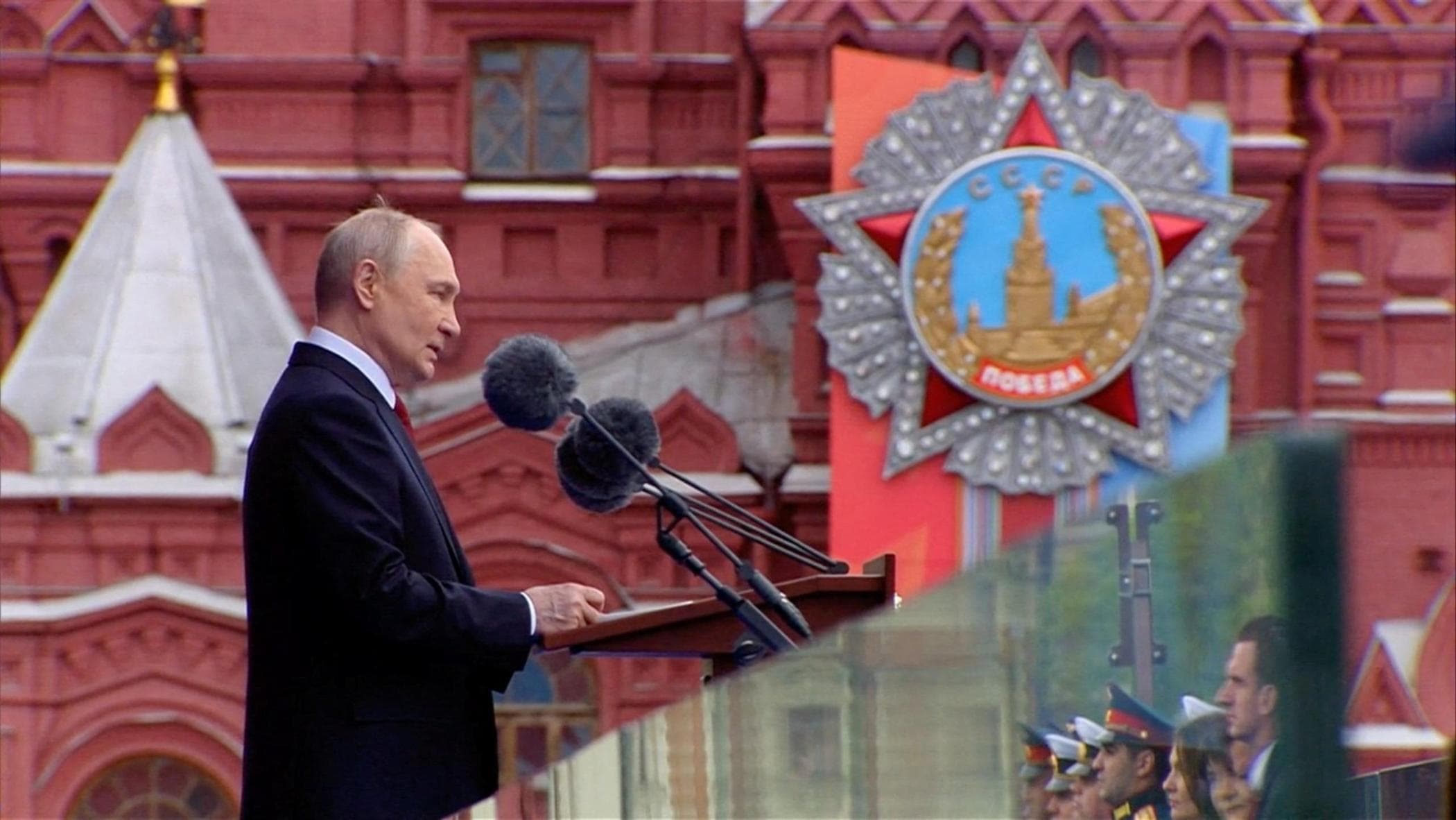
The rhythmic thunder of heavy treads and the sight of intercontinental ballistic missiles have long been the defining hallmarks of Moscow’s May 9 celebrations. However, the 2026 Russia Victory Day parade 2026 presented a starkly different image, marked by a conspicuous absence of the military hardware that typically projects the Kremlin’s strength to the world.
Presided over by President Vladimir Putin in Red Square, this year’s commemoration of the Soviet Union’s victory over Nazi Germany was the most pared-back in nearly two decades. The usual display of armored vehicles and strategic weaponry was entirely omitted, replaced by a heavily secured gathering of military personnel and a series of digital presentations.
This shift in tradition comes at a moment of extreme volatility. The event took place against the backdrop of a fragile three-day ceasefire between Russia and Ukraine, an agreement announced on Friday by US President Donald Trump. While the ceasefire was intended to lower tensions, the atmosphere in Moscow remained tense, with celebrations curtailed for security reasons amid persistent fears of Ukrainian strikes.
A Departure from Tradition: Digital Assets Over Heavy Armor
For the first time in almost twenty years, no armored vehicles or ballistic missiles featured in the Moscow parade. Instead of the physical roar of engines, the Red Square screens broadcast a series of slick, pre-produced videos. According to state media, these recordings were captured from the frontlines of the conflict, showcasing Russia’s drone capabilities and air defense forces.

These digital displays also highlighted strategic assets that were absent from the square, including nuclear-capable submarines and long-range bombers. The decision to forgo the traditional show of force was a marked departure from previous years, appearing to prioritize security over the usual projection of military might following intensified Ukrainian strikes deep inside Russian territory.
The Fragile Ceasefire and Accusations of Breach
The scaled-back nature of the festivities coincided with a temporary truce. The three-day ceasefire, brokered under the announcement of US President Donald Trump, was meant to provide a brief window of stability. However, the peace proved short-lived in the eyes of the Kremlin.
Following the conclusion of the parade, the Russian defense ministry accused Ukraine of breaking the ceasefire agreement. While the ministry did not provide specific details regarding the nature of the breach, the accusation underscores the deep mistrust and the precarious nature of diplomatic efforts to halt the fighting as reported by the BBC. Ukraine did not immediately comment on these specific allegations.
Putin’s Rhetoric: Linking the ‘Special Military Operation’ to World War II
Despite the muted celebrations, President Vladimir Putin used his annual speech to maintain a hardline stance, framing the current war in Ukraine—which the Kremlin refers to as the “special military operation”—as a continuation of the struggle seen during World War II. Putin explicitly connected the sacrifices of the “victorious generation” of Soviet soldiers to the current Russian forces.
In his address to hundreds of military personnel, Putin described the conflict as a “just” war. He characterized Ukraine as an “aggressive force” that is being “armed and supported by the whole bloc of Nato,” claiming that Russian soldiers are confronting a coalition backed by the entire alliance. “And yet, our heroes march forward,” Putin stated, asserting that the feat of previous generations continues to inspire current troops.
Beyond the military focus, the Russian leader also took the opportunity to celebrate the domestic war effort. He highlighted the contributions of various civilian sectors, specifically mentioning the roles of scientists, inventors, doctors, teachers, and military correspondents in supporting the nation’s goals.
Key Context: Why the 2026 Parade Differed
| Feature | Traditional Parade | 2026 Parade |
|---|---|---|
| Military Hardware | Tanks, missiles, and heavy armor | None (first time in nearly 20 years) |
| Visual Displays | Live equipment marches | Pre-recorded frontline videos |
| Security Posture | Standard high security | Tightened due to strike fears |
| Diplomatic Context | Annual commemoration | Three-day ceasefire (Trump-announced) |
The 2026 celebrations serve as a barometer for the current state of the conflict. The transition from a physical display of power to a digital one suggests a shift in how the Kremlin manages security risks during high-profile national holidays. By removing high-value targets from the Red Square, Russian authorities reduced the potential impact of any potential aerial or drone-based attacks during the event.
As the three-day ceasefire window closes, the international community remains focused on whether the temporary lull in fighting will lead to a sustained diplomatic breakthrough or if the accusations of ceasefire breaches will signal a return to intensified hostilities.
The next confirmed checkpoint for the region is the expiration of the three-day ceasefire agreement. All eyes will be on the frontline and diplomatic channels to see if any further agreements are reached or if the conflict resumes its previous intensity.
Do you think the shift to digital displays in Moscow signals a change in Russian military strategy or simply a temporary security measure? Share your thoughts in the comments below and share this report with your network.