
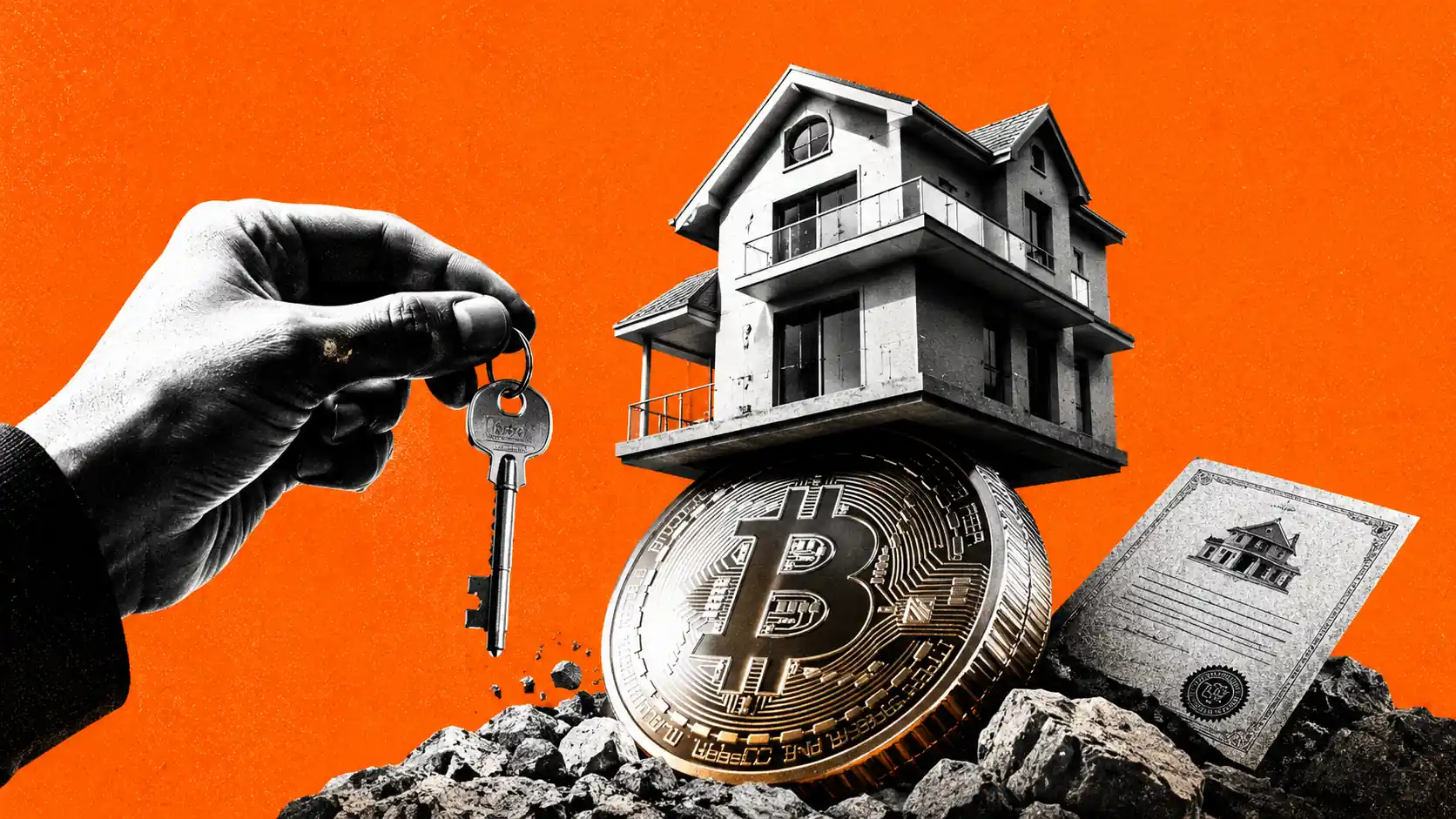
U.S. mortgage lender Better has integrated with cryptocurrency exchange Coinbase to allow home buyers to use their digital asset holdings as verified assets during the loan application process. The partnership streamlines the “proof of funds” requirement, enabling applicants to link their Coinbase accounts directly to their mortgage application to demonstrate financial liquidity.
This integration addresses a long-standing friction point for cryptocurrency investors who previously had to provide manual statements or liquidate assets to satisfy traditional underwriting standards. While the move simplifies asset verification, the underlying collateral for these mortgages remains the physical real estate, adhering to the strict guidelines set by the Federal Housing Finance Agency (FHFA) and government-sponsored enterprises (GSEs) like Fannie Mae.
The shift reflects a broader trend in the U.S. financial sector to recognize digital assets as legitimate components of a borrower’s net worth, provided they can be verified through secure, institutional channels. By using API-driven verification, lenders reduce the risk of fraudulent documentation and accelerate the approval timeline for high-net-worth individuals with significant crypto exposure.
How the Better and Coinbase Integration Works
The partnership allows borrowers to connect their Coinbase accounts to the Better platform via a secure interface. This provides the lender with real-time, verified data regarding the borrower’s cryptocurrency balance, eliminating the need for PDF statements or manual screenshots that are susceptible to alteration.

Under traditional underwriting, lenders require “seasoning” of funds, meaning assets must be held in an account for a specific period—usually 60 to 90 days—to ensure they are not undocumented loans. According to guidelines followed by most U.S. lenders, cryptocurrency is typically treated as a non-liquid asset unless it is converted to cash or held in a recognized exchange that can provide institutional verification.
By integrating directly with Coinbase, Better can verify the existence and value of these assets instantaneously. However, because of the high volatility of Bitcoin and other digital assets, lenders often apply a “haircut” to the value of the crypto. This means a lender may only count a percentage of the current market value—for example, 50% to 70%—toward the borrower’s total assets to protect against a sudden market crash during the closing process.
The Role of FHFA and Fannie Mae Guidelines
Despite the ease of verification, there is a critical distinction between using Bitcoin as “proof of assets” and using it as “collateral.” Current regulations from the Federal Housing Finance Agency (FHFA), which oversees Fannie Mae and Freddie Mac, do not permit cryptocurrency to serve as the primary collateral for a government-backed mortgage.
Fannie Mae’s selling guides require the collateral for a conforming loan to be the residential property itself. The loan-to-value (LTV) ratio is calculated based on the appraised value of the home. While a borrower may use cryptocurrency to fund their down payment, those assets must generally be liquidated into U.S. dollars before the funds are wired for closing, unless the lender has a specific internal policy allowing for digital asset transfers.
The FHFA’s primary mandate is to maintain the stability of the secondary mortgage market. Allowing highly volatile assets like Bitcoin to serve as a guarantee for millions of mortgages would introduce systemic risk that the agency is currently not equipped to manage. Consequently, while the process of applying for a loan is becoming more crypto-friendly, the structure of the mortgage remains rooted in traditional real estate equity.
Why Asset Verification Matters for Crypto Holders
For years, cryptocurrency investors faced a “liquidity paradox” during home purchases. To prove they had the money for a down payment, they often had to sell their Bitcoin, triggering a taxable event and potentially losing out on future gains. If they didn’t sell, some underwriters refused to count the crypto as a valid asset because they could not independently verify the ownership or the source of the funds.
The Better-Coinbase integration removes this hurdle by creating a digital paper trail. This is particularly important for “crypto-native” borrowers whose primary wealth is held in digital wallets rather than traditional savings accounts. When a lender can verify assets through a trusted third party like Coinbase, the risk profile of the borrower decreases in the eyes of the underwriter.
This development also signals a shift in how the U.S. housing market views digital wealth. As a larger percentage of the millennial and Gen Z populations enter the home-buying market, the demand for financial tools that recognize non-traditional assets is increasing. Lenders who fail to integrate these verification tools risk losing a growing segment of affluent borrowers.
Comparing Crypto-Verification vs. Crypto-Collateral
To understand the current state of the U.S. mortgage market, it is necessary to distinguish between the different ways cryptocurrency interacts with home loans.
| Feature | Crypto-Verification (Current) | Crypto-Collateral (Niche/Private) |
|---|---|---|
| Purpose | Proving wealth/down payment ability | Securing the loan against digital assets |
| Collateral | The physical home | The Bitcoin/Ethereum holdings |
| Regulation | Follows FHFA/Fannie Mae rules | Private contracts/Non-GSE loans |
| Risk | Market volatility during closing | Margin calls and forced liquidation |
| Availability | Increasing via fintech (e.g., Better) | Limited to specialized private lenders |
Challenges and Market Risks
The primary obstacle to a fully “crypto-integrated” mortgage system is volatility. If a borrower uses Bitcoin to prove they have a $100,000 down payment, but the market drops 20% before the loan closes, the borrower may no longer meet the minimum asset requirements. This creates a “closing risk” that traditional lenders are hesitant to assume.
Furthermore, the regulatory environment remains fragmented. While the SEC and CFTC continue to debate the classification of various digital assets, mortgage lenders must adhere to strict Anti-Money Laundering (AML) and Know Your Customer (KYC) laws. The use of a regulated exchange like Coinbase helps mitigate these risks, as the exchange has already performed the necessary identity and source-of-wealth checks.
There is also the issue of “margin calls” in private crypto-backed loans. In the niche market of non-GSE loans where crypto is used as collateral, borrowers must maintain a specific loan-to-value ratio. If the price of the cryptocurrency falls below a certain threshold, the lender may automatically liquidate the borrower’s Bitcoin to cover the loan, a risk that does not exist in traditional home equity mortgages.
What Happens Next for Digital Assets in Real Estate
The integration of asset verification is likely the first step in a longer evolution. Industry analysts suggest that the next phase could involve the “tokenization” of real estate, where home equity is represented by digital tokens on a blockchain. This would allow for more fluid borrowing against home equity without the need for a traditional refinance process.

However, any systemic move toward allowing cryptocurrency as primary collateral for government-backed loans would require a formal policy shift from the Fannie Mae and Freddie Mac boards, likely following a period of extreme price stabilization in the crypto markets.
For now, the focus remains on efficiency. By removing the manual labor from the application process, firms like Better are betting that the convenience of digital verification will attract a new generation of homeowners who view their digital wallets as their primary savings vehicle.
The next major checkpoint for this sector will be the upcoming quarterly updates to the FHFA’s supervisory guidance, which may provide further clarity on how GSEs should treat digital assets in borrower qualification profiles.
Do you believe cryptocurrency should be accepted as primary collateral for home loans, or is the volatility too great a risk for the housing market? Share your thoughts in the comments below.