
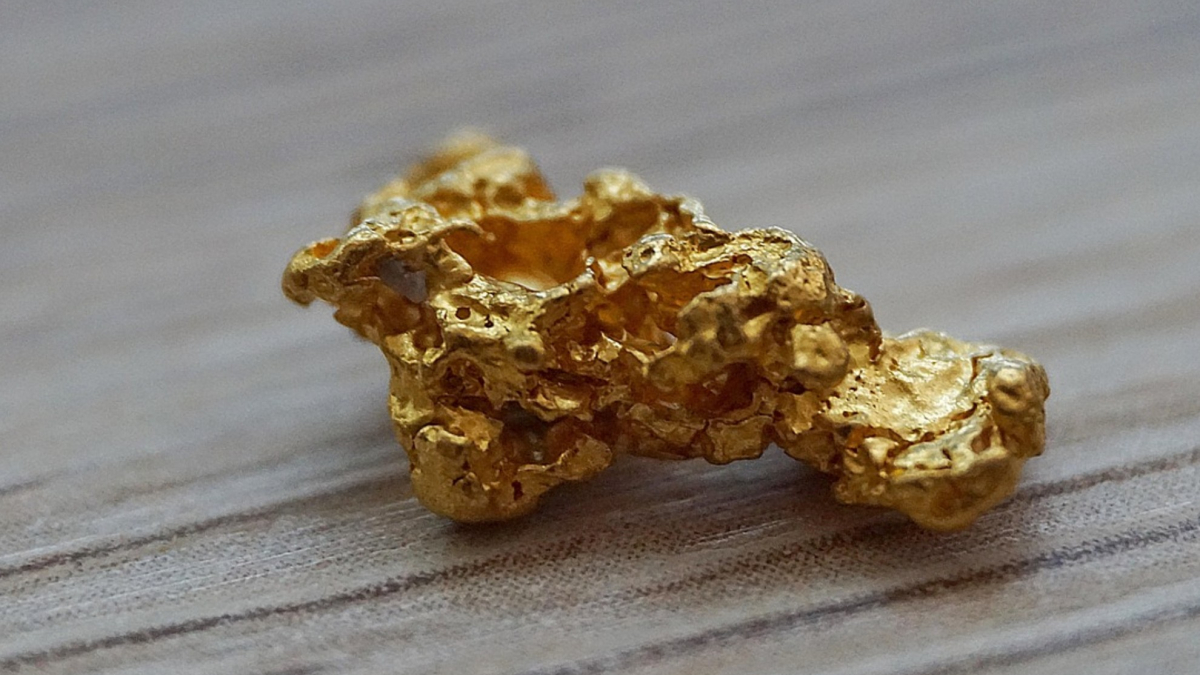
Scientists Discover Gold-Dissolving Fungus in Australia: A Breakthrough for Sustainable Mining?
In the vast, mineral-rich soils of Western Australia, a microscopic organism is rewriting the rules of gold extraction. Researchers from Australia’s national science agency, CSIRO, have uncovered a fungus that not only interacts with gold particles but actively dissolves and re-deposits the precious metal on its own surface. The discovery, first documented in 2019, challenges long-held assumptions about gold’s chemical inertness and could pave the way for more sustainable mining practices.
The fungus, identified as Fusarium oxysporum, was found in soils near Boddington, a region in Western Australia known for its gold deposits. Unlike traditional mining methods, which rely on heavy machinery and chemical processes, this organism offers a natural alternative—one that could reduce environmental damage while improving the efficiency of gold prospecting. But how does it work, and what does this mean for the future of mining?
For Maria Petrova, World Editor at World Today Journal, this discovery is more than a scientific curiosity—it’s a potential game-changer for an industry grappling with sustainability challenges. “Gold mining has long been associated with environmental degradation, from deforestation to toxic waste,” Petrova notes. “If this fungus can help locate gold deposits with minimal disruption, it could transform how we approach resource extraction globally.”
The Science Behind the Discovery
Gold is famously unreactive, making it resistant to most biological processes. Yet Fusarium oxysporum defies this norm. According to the 2019 study published in Nature Communications, the fungus oxidizes gold particles in the soil, dissolving them into a mobile form. It then re-precipitates the metal as tiny nanoparticles, which adhere to its thread-like structures called hyphae. The result? A fungus literally coated in gold—though not in the way one might imagine.
“This isn’t about growing gold bars in a lab,” explains Dr. Tsing Bohu, a geochemist at CSIRO and lead author of the study. “The gold particles are nanoscale, invisible to the naked eye. But under a microscope, you can see them clinging to the fungus’s filaments like a metallic armor.” The process is driven by the fungus’s production of superoxides—highly reactive molecules that temporarily alter gold’s chemical state, making it more mobile in the soil.
The implications are significant. Gold nanoparticles have unique properties, including enhanced conductivity and catalytic activity, which could be harnessed in industries beyond mining. But the most immediate application lies in prospecting. If Fusarium oxysporum thrives in gold-rich soils, its presence could serve as a biological indicator, helping miners pinpoint deposits without extensive drilling.
Why This Fungus Could Revolutionize Mining
Traditional gold mining is resource-intensive, often involving large-scale excavation, cyanide leaching, and significant land disruption. These methods not only harm ecosystems but also come with high economic costs. The discovery of Fusarium oxysporum offers a potential alternative: bio-prospecting.
“Bio-prospecting uses living organisms to locate mineral deposits,” says Dr. Bohu. “We’ve seen this with termite mounds and eucalyptus trees, which can accumulate trace amounts of gold in their tissues. But a fungus that actively processes gold? That’s a first.” The approach could reduce the require for exploratory drilling, lowering both costs and environmental impact.

The fungus’s ability to “wear” gold also hints at a functional advantage. In laboratory experiments, gold-coated fungi grew larger and spread more aggressively than their non-coated counterparts. While the exact mechanism remains under study, researchers speculate that the gold nanoparticles may enhance the fungus’s resistance to environmental stressors, such as drought or competition from other microbes.
Beyond prospecting, the discovery could inform biomineralization—a field that explores how organisms interact with metals. “Understanding how Fusarium oxysporum processes gold could help us develop new methods for extracting metals from low-grade ores or even electronic waste,” says Dr. Bohu. This aligns with broader efforts to produce mining more sustainable, including the apply of microbes to recover metals from discarded smartphones and circuit boards.
From Earth to Space: The Future of Biomining
The potential applications of Fusarium oxysporum extend beyond Earth. NASA and other space agencies have long explored biomining as a way to extract resources from asteroids or other planets. Traditional mining equipment is heavy and energy-intensive, making it impractical for space missions. Microbes, however, could offer a lightweight, efficient alternative.
“If we can harness fungi or bacteria to extract metals in space, it could revolutionize off-world colonization,” says Dr. Charles Cockell, an astrobiologist at the University of Edinburgh who was not involved in the CSIRO study. “Imagine sending a slight bioreactor to Mars instead of a fleet of mining robots. It’s a game-changer.” While Fusarium oxysporum itself may not be the ideal candidate for space—due to its reliance on Earth-like conditions—its discovery provides a blueprint for how such organisms might be engineered or adapted for extraterrestrial environments.
Back on Earth, the fungus’s role in sustainable mining is already generating excitement. Australia, home to some of the world’s largest gold reserves, is investing heavily in research to commercialize bio-prospecting techniques. The state of Western Australia, where the fungus was discovered, has allocated funding to explore its potential in partnership with mining companies. “This could make Australia a leader in low-impact mining,” says Dr. Bohu. “But we’re still in the early stages. The next step is scaling up our experiments to see how this works in real-world conditions.”
Challenges and Ethical Considerations
Despite its promise, the use of Fusarium oxysporum in mining is not without challenges. For one, the fungus’s interaction with gold is still not fully understood. While the 2019 study confirmed its ability to dissolve and re-deposit gold, researchers are still investigating the long-term ecological effects of introducing such organisms into new environments. Could engineered fungi disrupt local ecosystems? Could they inadvertently spread beyond mining sites?
“Any time we introduce a non-native organism, there are risks,” warns Dr. Cockell. “We need rigorous testing to ensure that these fungi don’t turn into invasive or alter soil chemistry in unintended ways.” Regulatory frameworks for bio-prospecting are also in their infancy, raising questions about how governments will oversee the use of living organisms in mining operations.
Ethical concerns extend to the broader implications of biomining. If fungi or bacteria can extract gold from low-grade ores, could this drive a new gold rush, leading to increased mining activity in sensitive ecosystems? Or could it, as proponents argue, reduce the need for destructive practices like open-pit mining? The answers remain unclear, but the debate underscores the need for careful, evidence-based policymaking.
What’s Next for the Gold-Dissolving Fungus?
For now, Fusarium oxysporum remains a subject of intense scientific study. Researchers at CSIRO and partner universities are conducting field trials to test the fungus’s effectiveness as a prospecting tool. They’re also exploring whether it can be used to recover gold from mine tailings—waste material left behind by traditional mining that still contains trace amounts of the metal.
“The goal isn’t to replace conventional mining overnight,” says Dr. Bohu. “But if we can make the process more efficient and less harmful, that’s a win for both industry and the environment.” The next phase of research will focus on scaling up the technology, with results expected within the next two to three years.
For the global mining industry, the discovery of Fusarium oxysporum is a reminder that nature often holds the keys to innovation. As Petrova puts it, “This fungus isn’t just a scientific oddity—it’s a potential solution to some of mining’s biggest challenges. The question now is whether we can harness it responsibly.”
Key Takeaways
- A gold-dissolving fungus: Fusarium oxysporum, discovered in Western Australia, can dissolve and re-deposit gold nanoparticles on its surface, challenging assumptions about gold’s chemical inertness.
- Potential for sustainable mining: The fungus could serve as a biological indicator for gold deposits, reducing the need for invasive prospecting methods like drilling.
- Biomineralization breakthrough: The discovery could inform new methods for extracting metals from low-grade ores or electronic waste, making mining more sustainable.
- Space applications: Biomining, including the use of fungi, is being explored as a lightweight, efficient way to extract resources in space.
- Challenges ahead: Ethical and ecological concerns, such as the risk of invasive species and regulatory gaps, must be addressed before the technology can be widely adopted.
FAQ
Q: Can Fusarium oxysporum be used to “grow” gold bars?
A: No. The gold particles produced by the fungus are nanoscale and invisible to the naked eye. While the fungus can accumulate gold on its surface, it cannot produce gold in quantities large enough for commercial use.

Q: How does the fungus dissolve gold?
A: The fungus produces superoxides, highly reactive molecules that temporarily alter gold’s chemical state, allowing it to dissolve and later re-precipitate as nanoparticles.
Q: Is this fungus dangerous to humans or the environment?
A: Fusarium oxysporum is already widespread in soils and is not known to be harmful to humans. However, introducing it into new environments for mining purposes could have unintended ecological consequences, which are still being studied.
Q: When could this technology be used in real-world mining?
A: Researchers are currently conducting field trials to test the fungus’s effectiveness as a prospecting tool. If successful, commercial applications could emerge within the next few years.
Q: Could this fungus be used to extract other metals?
A: While the current research focuses on gold, the principles of biomineralization could potentially be applied to other metals. However, further study is needed to explore this possibility.
As research into Fusarium oxysporum continues, the world will be watching to see whether this tiny organism can indeed revolutionize an industry. For now, one thing is clear: the future of mining may lie not in pickaxes and dynamite, but in the quiet, microscopic processes of nature.
What do you feel? Could fungi like Fusarium oxysporum be the key to sustainable mining? Share your thoughts in the comments below, and don’t forget to follow World Today Journal for more groundbreaking stories from around the globe.