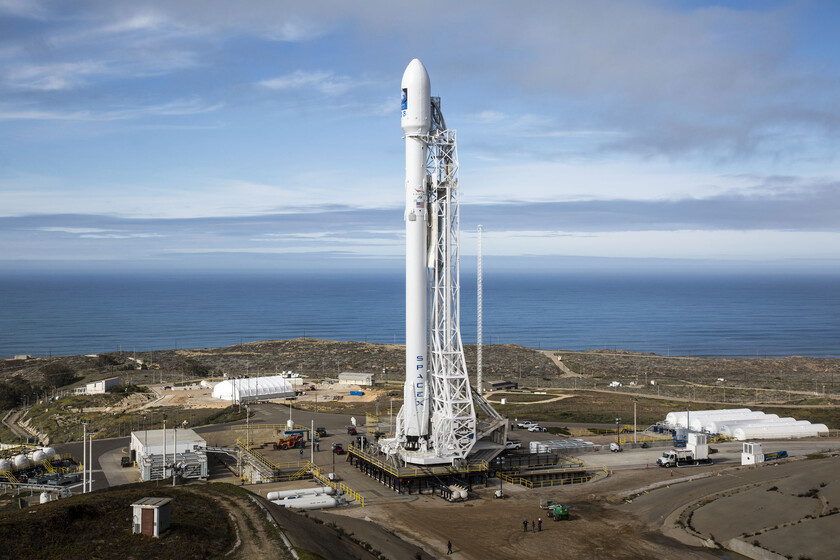
SpaceX has successfully deployed a satellite equipped with commercial nuclear power technology, marking a significant milestone in space hardware development. The mission, carried out as part of the Transporter-17 rideshare flight, features power systems developed by City Labs, a company specializing in betavoltaic technology. This launch represents the first time a commercial satellite utilizing nuclear-derived power has reached orbit, signaling a potential shift in how small satellites maintain energy autonomy in deep space.
The integration of nuclear power into commercial satellite architecture addresses a long-standing challenge in the aerospace sector: the need for reliable, long-term energy sources that do not rely solely on traditional solar arrays. Unlike conventional nuclear reactors used in large-scale space exploration, the technology provided by City Labs utilizes radioactive decay to generate electricity. According to the company’s technical specifications, these betavoltaic cells function similarly to a long-lasting battery, providing consistent power for decades without the need for light exposure or complex mechanical maintenance.
Understanding Betavoltaic Technology in Space
The core of this innovation lies in the use of tritium, a radioactive isotope of hydrogen, which acts as the power source within the betavoltaic cells. As the tritium decays, it releases beta particles—high-energy electrons—that are captured by a semiconductor material to generate a steady flow of electrical current.

For the commercial sector, the primary advantage is reliability. Traditional solar panels can degrade due to space radiation, and orbiters often face “eclipse” periods where they are shielded from the sun by a planet, forcing them to rely on chemical batteries. A nuclear-powered system, such as the one launched on Transporter-17, provides a constant power baseline. This allows for continuous operation of onboard instruments, communication arrays, and guidance systems, regardless of the satellite’s position relative to the sun or its distance from Earth. Information regarding the specific power output and regulatory compliance for this launch can be found in the Federal Communications Commission’s (FCC) licensing database, which oversees orbital spectrum and hardware deployment protocols.
Regulatory Frameworks and Safety Standards
Launching nuclear-related material into orbit requires stringent adherence to international and domestic safety protocols. The deployment of the City Labs technology was subject to the oversight of the Federal Aviation Administration (FAA), which manages commercial launch licenses, and the Nuclear Regulatory Commission (NRC), which governs the handling and containment of radioactive materials. These agencies mandate that all such payloads must be engineered to withstand the extreme stresses of launch, including high-G forces and potential atmospheric reentry scenarios.
The safety design of these commercial units emphasizes containment. Because the amount of radioactive material in a betavoltaic cell is significantly lower than that found in a traditional fission reactor, the risk profile is categorized differently by space safety authorities. The units are designed to remain intact under extreme impact, ensuring that the radioactive isotopes are contained even in the event of a launch failure or an unplanned orbital decay.
The Future of Commercial Nuclear Power in Orbit
The success of the Transporter-17 mission provides a proof-of-concept for the viability of nuclear-powered commercial satellites. Industry analysts suggest that this development could open new markets, particularly for satellites operating in high-radiation environments or in orbits where solar power is insufficient. By moving away from the limitations of chemical batteries and solar panels, companies may be able to extend the operational lifespan of their satellite constellations from a few years to several decades.
While this represents a breakthrough, the technology remains in its early stages. The cost of manufacturing betavoltaic cells is currently higher than that of traditional solar solutions, and the power density is lower, meaning they are currently better suited for low-power, long-duration missions rather than high-performance computing or heavy data transmission. As production scales and the technology matures, it is expected that the intersection of private spaceflight and nuclear engineering will become a more frequent occurrence in orbital logistics.

The next steps for this project involve ongoing telemetry monitoring to assess the performance of the betavoltaic cells in the harsh environment of low Earth orbit. Stakeholders and industry observers can track future developments through the Space-Track.org database, which provides official orbital data and debris monitoring for all launched objects. As more commercial entities look toward deep-space operations, the deployment of this technology serves as a technical benchmark for the industry’s ability to safely integrate nuclear energy into the private orbital economy.
We welcome your thoughts on the evolution of commercial space power. Please share your perspective on these developments in the comments section below.