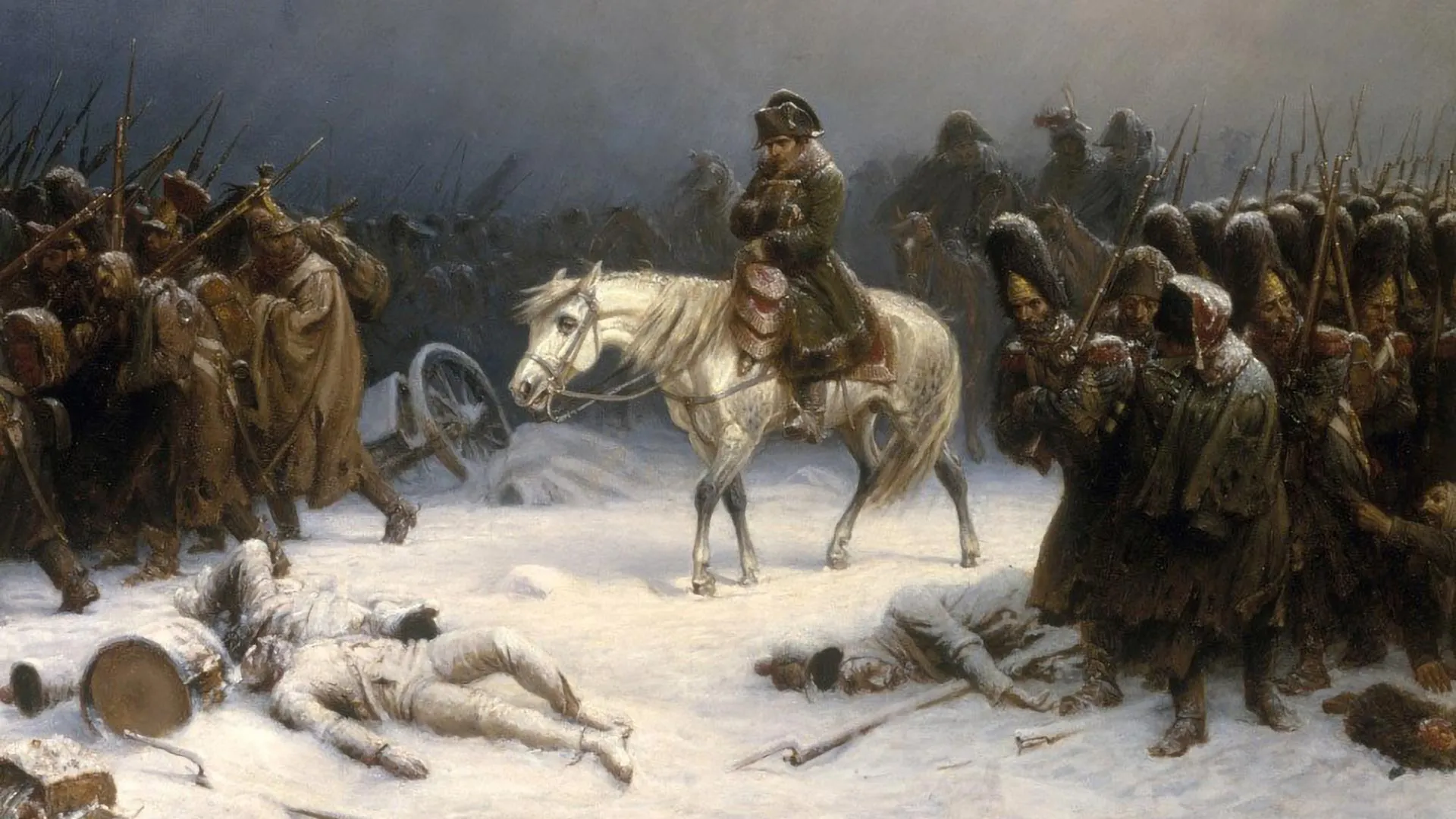
Unearthing the Pathogens of Defeat: New Genetic Evidence Illuminates Disease’s Role in Napoleon’s 1812 russian Retreat
Napoleon Bonaparte’s 1812 invasion of Russia remains a chilling case study in military disaster. While the brutal Russian winter and logistical failures are well-documented contributors to the Grande Armée’s catastrophic retreat, the precise role of infectious disease has long been a subject of ancient debate. Now, groundbreaking research published in Current Biology on October 24th, provides the most definitive genetic evidence yet linking specific pathogens to the suffering and decimation of Napoleon’s troops. This examination, a collaboration between the Institut Pasteur’s Microbial Paleogenomics Unit and the Laboratory of Biocultural Anthropology at Aix Marseille University, offers crucial insights into the evolution of disease and its impact on historical events – and holds valuable lessons for modern public health.
Reconstructing the Microbial Landscape of a Lost Army
The research team meticulously analyzed the ancient DNA extracted from the remains of 13 French soldiers exhumed from a mass burial site in Vilnius, Lithuania. These soldiers, discovered during archaeological excavations in 2002, represent a poignant snapshot of the human cost of the 1812 campaign.Utilizing cutting-edge next-generation sequencing technology, researchers sought to identify the genetic signatures of infectious agents present during the retreat. This isn’t simply a matter of identifying that disease was present, but which strains, offering a granular understanding of the threat faced by the soldiers.
The results were striking. the team successfully detected genetic material from two distinct and debilitating pathogens: Salmonella enterica subsp. enterica (serovar Paratyphi C), the causative agent of paratyphoid fever, and Borrelia recurrentis, the bacterium responsible for relapsing fever. Relapsing fever, transmitted by lice, is characterized by cycles of fever and apparent recovery, relentlessly weakening its victims. Paratyphoid fever, similarly, induces high fevers, exhaustion, and severe gastrointestinal distress. The combined effect of these infections, layered upon the already horrific conditions of cold, starvation, and unsanitary conditions, would have dramatically exacerbated the soldiers’ plight.
First Genetic Confirmation of Historical Suspicions
This study marks the first direct genetic confirmation of S. enterica Paratyphi C and B. recurrentis within Napoleon’s army. While historical accounts hinted at widespread fever outbreaks, this research provides concrete molecular evidence. The findings build upon previous work identifying Rickettsia prowazekii (typhus) and Bartonella quintana (trench fever) as also circulating amongst the troops – painting a picture of a battlefield ravaged by multiple, overlapping epidemics.
Of the 13 soldiers analyzed,four carried traces of S. enterica Paratyphi C, and two were infected with B. recurrentis. It’s crucial to note the limitations of the sample size. These 13 individuals represent a minuscule fraction of the estimated 500,000-600,000 soldiers who participated in the campaign, of whom approximately 300,000 perished during the retreat.The burial site itself contains the remains of over 3,000 individuals, highlighting the need for further investigation to determine the true prevalence of these infections.
A Novel Approach to Ancient Pathogen Detection
The success of this research hinges on a novel and rigorous authentication workflow developed in collaboration with scientists at the University of Tartu in Estonia. Ancient DNA is notoriously fragmented and present in extremely low quantities. The team’s innovative approach, utilizing phylogeny-driven interpretation, allows for the accurate identification of pathogens even from these degraded genome fragments – and, in certain specific cases, even pinpointing specific lineages.
“In most ancient human remains, pathogen DNA is extremely fragmented and only present in very low quantities, which makes it very difficult to obtain whole genomes,” explains Nicolás Rascovan, Head of the Microbial Paleogenomics Unit at the Institut Pasteur and the study’s lead author. “So we need methods capable of unambiguously identifying infectious agents from these weak signals,and sometimes even pinpointing lineages,to explore the pathogenic diversity of the past.” This methodological advancement is a significant contribution to the field of paleogenomics, paving the way for future investigations into historical disease outbreaks.
Lessons from the Past, Preparedness for the Future
The findings resonate powerfully with historical descriptions of the fevers that decimated Napoleon’s forces, strengthening the argument that infectious diseases were a critical, and often underestimated, factor in the campaign’s failure. This research isn’t simply about rewriting history; it’s about understanding the evolutionary dynamics of pathogens and informing modern public health strategies.
“Accessing the genomic data of
Worth a look