
The view of home has always been a catalyst for human perspective, but on April 3, 2026, that perspective shifted once again. NASA released the first images captured by the crew of the Artemis II mission, showing Earth as a luminous, fragile sphere against the void. These photographs, taken from the windows of the Orion spacecraft, mark the first time in over 50 years that humans have ventured into the vicinity of the moon, signaling a new era of deep space exploration.
The images were captured by mission commander Reid Wiseman using a Personal Computing Device—a tablet equipped with a camera—as the crew makes its way toward the lunar destination. One particular shot, described by mission control at the Johnson Space Center in Houston as a reminder that we are “still one world,” captured the sun setting behind Earth, revealing auroras and a band of bright zodiacal light. Another image, utilizing a shorter shutter speed, emphasized the electric glow of cities across the nighttime side of the planet.
This mission is not merely a flight of observation but a critical test of NASA’s human deep space capabilities. Launching on April 1, 2026, Artemis II is the first crewed flight to utilize the Space Launch System (SLS) rocket and the Orion spacecraft. The 10-day mission is designed to demonstrate the broad range of capabilities required for long-term lunar habitation and future crewed missions to Mars.
A Diverse Crew Breaking New Frontiers
The crew of Artemis II represents a significant shift in the demographics of space exploration, reflecting a more inclusive vision of humanity’s reach into the cosmos. The team consists of four astronauts: Commander Reid Wiseman, Mission Specialists Christina Koch and Victor Glover, and Canadian Space Agency astronaut Jeremy Hansen.
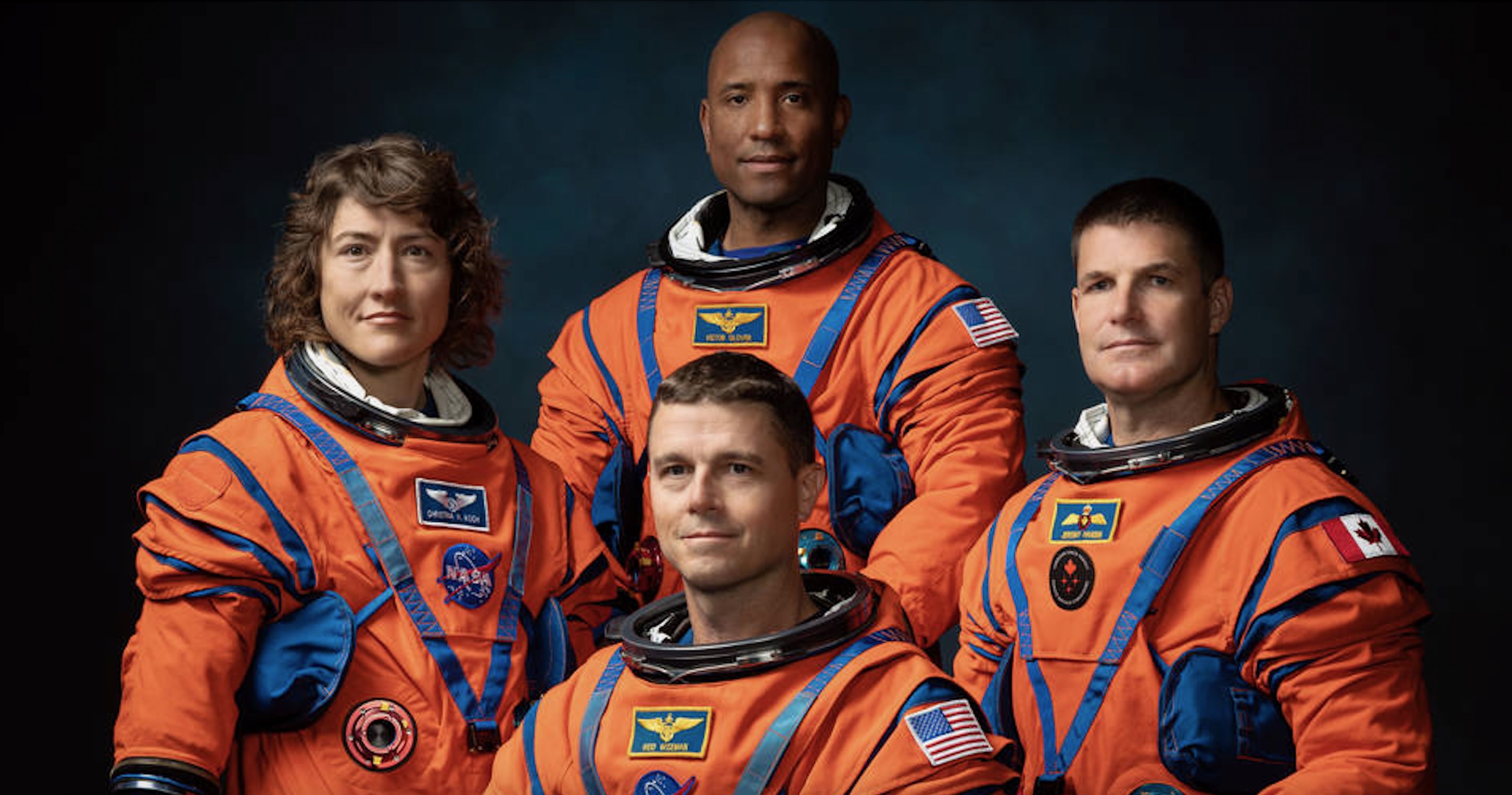
Each crew member is making history. Victor Glover is the first Black man to venture within the vicinity of the moon, whereas Christina Koch becomes the first woman to do so. Jeremy Hansen is the first Canadian to travel near the lunar surface. Their journey is more than a technical exercise; This proves a symbolic step toward a permanent human presence in deep space.
During a downlink event on Day 2 of the flight, Christina Koch shared her excitement about the transition from viewing Earth to viewing the moon. “Having just experienced incredible views of planet Earth, and seeing the entire planet out the window in one pane, knowing that we’re about to have some similar views of the moon in that same way is definitely getting me more excited for it,” Koch stated.
The Technical Journey: From TLI to Lunar Flyby
The Artemis II mission is a crewed lunar flyby, meaning the astronauts will travel around the moon rather than landing on its surface. The mission’s success relies on the synergy between the SLS rocket—the most powerful rocket ever built—and the Orion spacecraft, which serves as the exploration vehicle that sustains the crew and ensures their safe return to Earth.
The mission timeline has already seen several critical milestones. On Day 2, the crew and Houston polled “Go” for the Translunar Injection (TLI) burn, the maneuver that pushed Orion out of Earth orbit and onto a trajectory toward the moon. By Day 3, the crew began preparing for their first correction burn and readied themselves to receive lunar observation assignments.
The Orion spacecraft is specifically developed to carry astronauts to the moon and serve as a crucial stepping stone for eventually sending crews to Mars. By testing these systems with a human crew aboard, NASA can verify the life-support and navigation systems needed for the much longer journeys required for interplanetary travel.
The Road to a Permanent Lunar Base
Artemis II builds upon the success of the uncrewed Artemis I mission in 2022. While this current flight focuses on the flyby, it is the essential precursor to the Artemis III mission, which aims to return humans to the lunar surface. NASA’s current objective is to set the stage for a moon landing as early as 2028.
The long-term vision extends beyond a single landing. NASA intends to establish a permanent lunar base, which will serve as a research hub and a staging ground for missions further into the solar system. The moon’s lower gravity and proximity make it an ideal environment for testing the technologies—such as sustainable power and radiation shielding—that will be mandatory for a crewed mission to Mars.
| Detail | Specification |
|---|---|
| Launch Date | April 1, 2026 |
| Crew Size | 4 Astronauts |
| Mission Duration | 10 Days |
| Spacecraft | Orion |
| Launch Vehicle | Space Launch System (SLS) |
| Mission Type | Crewed Lunar Flyby |
What This Means for Global Space Policy
The inclusion of Jeremy Hansen from the Canadian Space Agency highlights the international nature of the Artemis campaign. By partnering with global agencies, NASA is fostering a collaborative framework for space exploration that shares the costs, risks, and scientific rewards of deep space discovery. This multilateral approach is seen as a necessity for the immense scale of the “dream martien”—the eventual goal of reaching Mars.
For the global audience watching from Earth, the “pale blue dot” images serve as a powerful reminder of the unity required to achieve such feats. The transition from the Apollo era to the Artemis era is not just about better technology, but about a broader definition of who gets to explore the unknown.
The crew is now continuing its journey, with the world awaiting the first images of the lunar surface captured through the eyes of the Artemis II astronauts. The next confirmed checkpoint for the mission will be the completion of the lunar flyby and the subsequent reentry of the Orion capsule into Earth’s atmosphere.
Do you think a permanent lunar base is the right next step for humanity? Share your thoughts in the comments below or share this story on social media to join the conversation.
Related reading