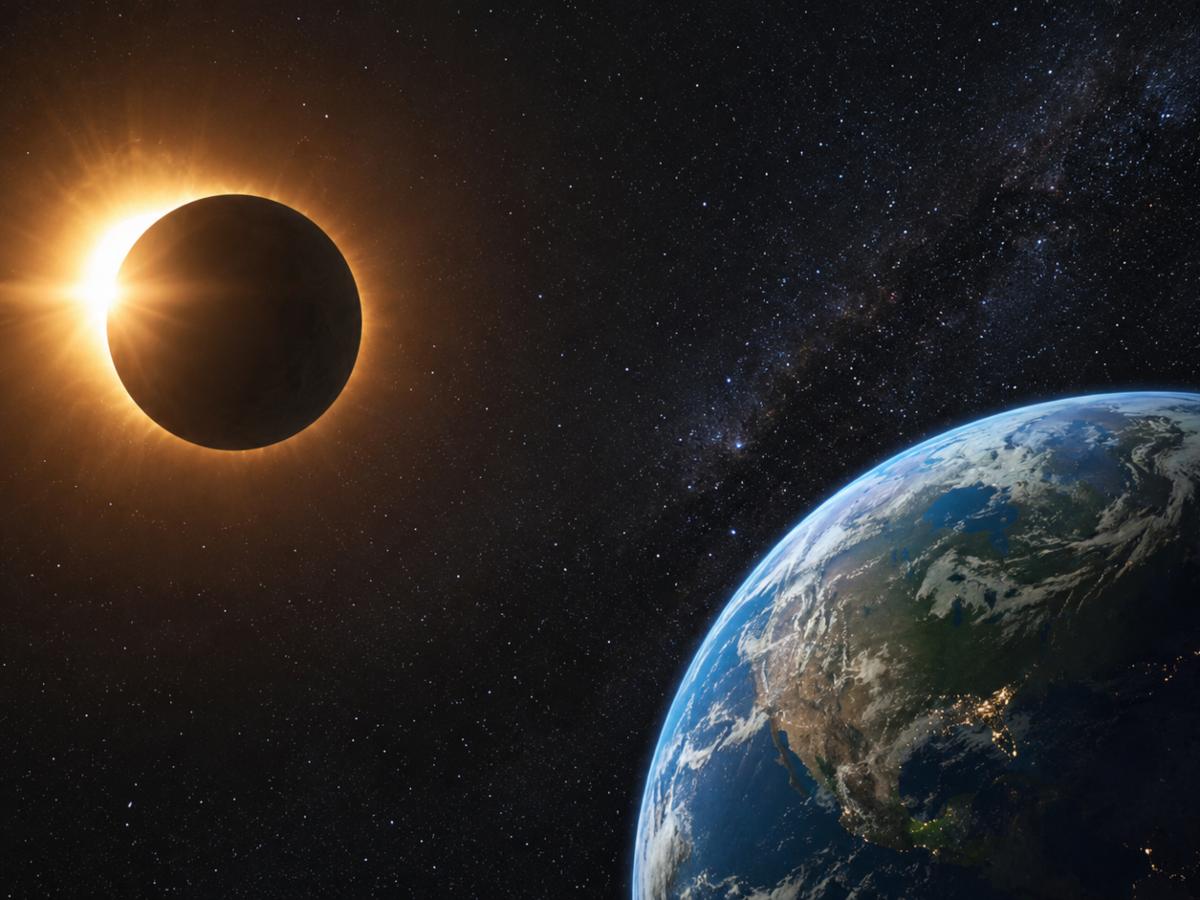
The National Aeronautics and Space Administration (NASA) has formally debunked a viral social media rumor claiming that the Earth will lose its gravity for seven seconds on August 12, 2026. According to verified space agency statements and independent fact-checking organizations, the terrifying internet claims are entirely fabricated, originating from a now-deleted Instagram post that falsely cited a fictional government initiative called “Project Anchor.”
As online panic spread through short-form video reels warning of catastrophic disruptions to humanity, it was clarified that Earth’s gravitational pull is tied directly to its massive physical mass—including its core, mantle, crust, oceans, and atmosphere—meaning a sudden, temporary loss of gravity is physically impossible.
The false claims originally surfaced on December 31, 2025, via an Instagram account under the username @mr_danya_of, which vanished shortly after publication. The video featured a text overlay alleging that a secret 2024 NASA document outlined an $89 billion budget to survive an impending seven-second gravitational anomaly caused by intersecting black hole gravitational waves. Subsequent investigations by investigative outlets like Snopes and Gizmodo confirmed that neither Project Anchor nor any such leaked documentation exists.
When contacted by researchers regarding the viral panic, a NASA spokesperson dismissed the notion entirely, stating that it is not how gravity works. The agency reiterated that the Earth’s gravity is determined by its mass, and the only way it could lose gravity is if the system loses its combined mass.
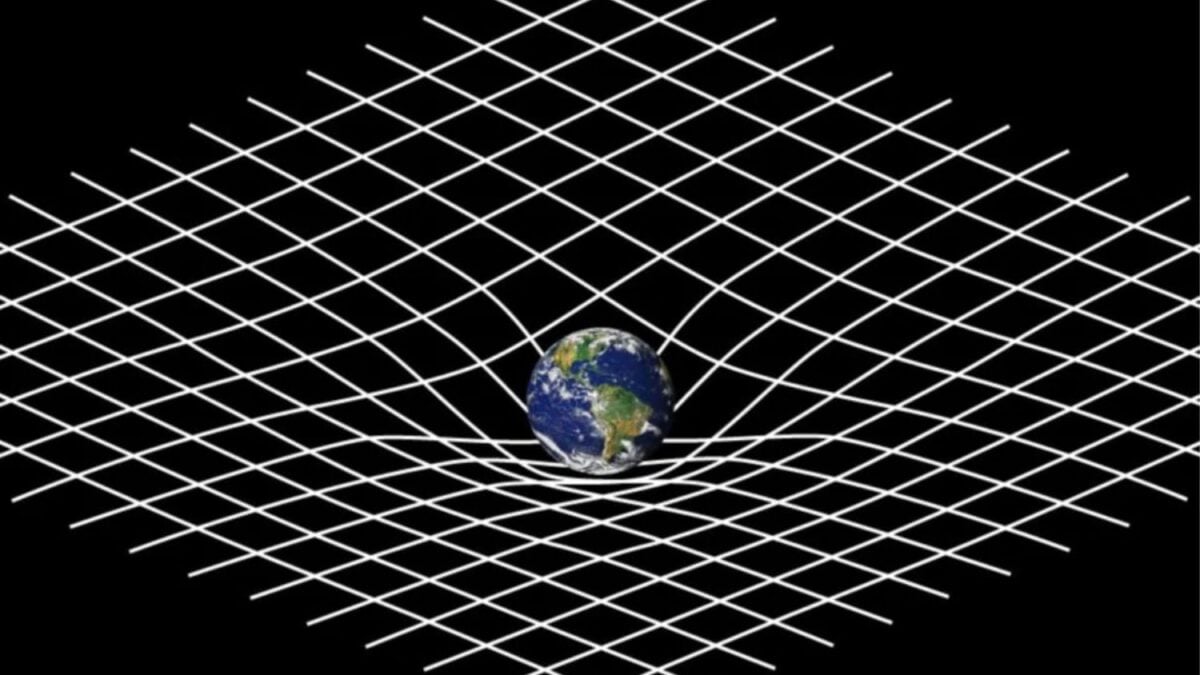
To understand why the viral rumor holds no scientific merit, Gizmodo points to Albert Einstein’s theory of general relativity. Rather than viewing gravity merely as a pulling force, general relativity defines gravity as the curvature of space-time generated by massive celestial bodies. Just as a heavy bowling ball creates a depression on a stretched rubber sheet, planets distort the fabric of space-time around them, causing less massive objects to follow those curved trajectories. A sudden cessation of this fundamental distortion would require an instantaneous loss of planetary mass.
While the internet panicked over fictitious black hole intersections, astronomers confirmed that a genuinely predictable celestial event is indeed scheduled for the exact same date. On August 12, 2026, a total solar eclipse will sweep across parts of the Northern Hemisphere, offering an astronomical spectacle rather than an existential crisis.
The Real Event: The Total Solar Eclipse of 2026
Instead of a gravitational collapse, August 12, 2026, will bring a total solar eclipse across select regions of the globe. According to NASA, the path of totality will cross over parts of Greenland, Iceland, the northern reaches of Russia, the Atlantic Ocean, Spain, and a small portion of Portugal. Observers stationed across broader regions of Europe, North America, and Africa will experience a partial solar eclipse.
NASA officials have emphasized that a solar eclipse exerts no unusual impact on Earth’s gravity. The routine alignment of the Moon passing directly between the Earth and the Sun merely blocks sunlight temporarily across localized corridors. While the gravitational interplay between the Sun, Moon, and Earth predictably influences ocean tides, these shifts follow well-documented gravitational mechanics that scientists can forecast decades in advance.
Within the narrow band of totality, the Moon will completely obscure the solar disk for a maximum duration of slightly over two minutes. Outside this specific corridor, numerous regions will witness a partial eclipse. NASA has clarified that countries like El Salvador lie completely outside the path of totality, meaning residents there will experience neither total darkness nor any extraordinary change in gravitational conditions.
Scientific Study and Public Safety Guidance
Rather than executing secret underground bunker plans as alleged by viral conspiracy theories, NASA’s actual operational focus for August 12, 2026, involves deploying scientific balloons and specialized research aircraft. Scientists plan to study the solar corona and the temporary changes that darkness can produce in the terrestrial atmosphere.
While the celestial alignment poses zero threat to planetary gravity, it is stressed that looking directly at the Sun remains dangerous without proper ocular equipment. NASA strongly advises the public to utilize certified solar viewing glasses or specialized eclipse filters during the partial phases of the event. Standard sunglasses, regardless of how dark their tint appears, fail to provide the necessary protection.
Only observers positioned directly within the narrow path of totality may briefly look directly at the Sun during the exact moments when the Moon completely covers the solar disc. For all other phases and locations, certified eye protection must be used.
As digital misinformation continues to circulate across social media platforms, scientific institutions urge internet users to verify extraordinary claims against official agency statements before sharing unverified rumors. The upcoming August 2026 eclipse remains a routine, anticipated milestone for astronomy—one governed by predictable celestial mechanics rather than internet fiction.
Worth a look