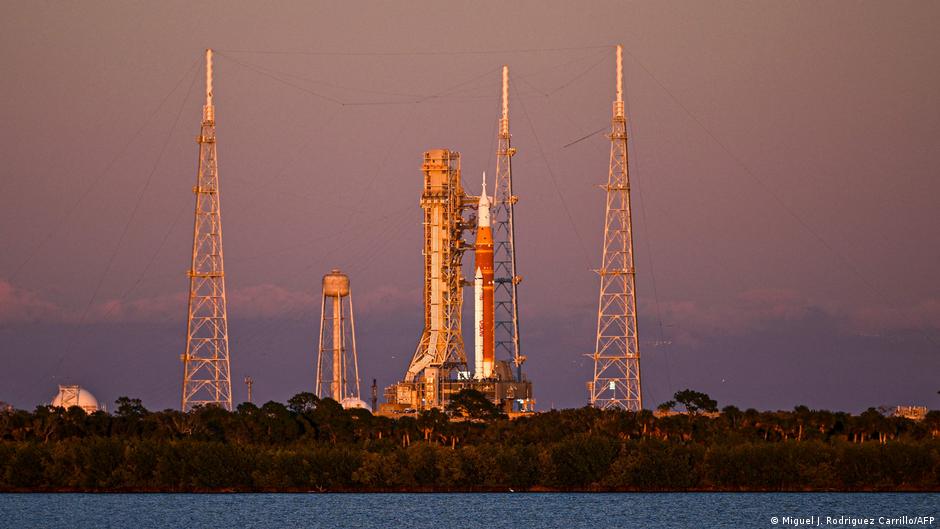
NASA Delays Artemis II Lunar Mission, Citing Helium System Issue
Cape Canaveral, FL – NASA has once again postponed the launch of Artemis II, the highly anticipated mission set to send astronauts around the Moon for the first time in over 50 years. The delay, announced on Saturday, February 21, 2026, is due to a technical issue involving a helium system critical for the rocket’s operation. This setback pushes the launch date to no earlier than April 1, 2026, further extending a mission already years behind schedule. The news comes just a day after NASA expressed optimism following a successful wet dress rehearsal, a crucial pre-launch test.
The Artemis II mission represents a pivotal moment in space exploration, aiming to pave the way for a sustained human presence on the Moon and, eventually, Mars. This mission is not simply a repeat of past lunar voyages; it will be groundbreaking in its composition, carrying the first woman, the first person of color, and a Canadian astronaut on a lunar flyby. The crew consists of NASA astronauts Reid Wiseman, Victor Glover, Christina Koch, and Canadian Space Agency astronaut Jeremy Hansen. The mission’s objectives include testing the Orion spacecraft’s life support systems and demonstrating the capabilities needed for future lunar surface missions.
Helium Leak Forces Return to Vehicle Assembly Building
According to NASA officials, engineers identified a leak in the helium flow system during overnight checks. Helium is essential for pressurizing the rocket’s fuel tanks and ensuring proper engine operation. The precise nature of the issue remains under investigation, but NASA Administrator Bill Nelson stated that the problem necessitates returning the rocket to the Vehicle Assembly Building (VAB) at the Kennedy Space Center for repairs. Engadget reports that this setback effectively eliminates the possibility of a March launch.
We’ve detected an issue with a helium flow valve on the Artemis II rocket. The team is working to gather data and determine the best path forward. Safety is our top priority, and we will share updates as soon as they become available. https://t.co/99w9w9w9w9
— NASA (@NASA) February 21, 2026
Nelson acknowledged the disappointment this delay will cause, drawing parallels to the challenges faced during the Apollo program in the 1960s. “Understanding that people are disappointed is an understatement,” Nelson said, according to WIRED. He emphasized the agency’s commitment to safety and the importance of thoroughness in preparing for such a complex mission. The Apollo program, while ultimately successful, as well experienced its share of delays and setbacks, highlighting the inherent risks and complexities of space travel.
Artemis II: A Historic Crew and Mission Profile
The Artemis II mission is designed as a flyby of the Moon, meaning the spacecraft will orbit the lunar body without landing. The primary goal is to test the Orion spacecraft’s critical systems – including life support, navigation, and communication – in the harsh environment of deep space. The mission will last approximately 10 days, during which the crew will travel 280,000 miles from Earth. This distance will subject the spacecraft and its occupants to extreme temperatures and radiation levels, providing valuable data for future, longer-duration missions.
As previously mentioned, the crew composition is particularly noteworthy. Victor Glover will become the first African American astronaut to venture beyond Earth orbit, while Christina Koch will be the first woman to do so. Jeremy Hansen will be the first Canadian to participate in a lunar mission. This diverse crew reflects NASA’s commitment to inclusivity and its desire to broaden participation in space exploration. The selection of these astronauts underscores the international collaboration that is central to the Artemis program.
Previous Delays and the Broader Artemis Program
The Artemis II mission has faced numerous delays throughout its development. The program as a whole, aiming to return humans to the Moon, has experienced significant cost overruns and schedule slips. The initial goal of landing astronauts on the Moon by 2024 was revised to 2025 and now appears unlikely before 2026, at the earliest. Scientific American details the ongoing challenges facing the program, including technical hurdles and budgetary constraints.
The Artemis program is divided into several phases. Artemis I, an uncrewed test flight of the Orion spacecraft, successfully completed its mission in December 2022, orbiting the Moon and returning safely to Earth. Artemis II, as discussed, is the next step, focusing on crewed lunar flyby. Future missions, including Artemis III, are planned to land astronauts on the lunar surface, establishing a sustainable presence for scientific research and resource utilization. The ultimate goal is to use the Moon as a stepping stone for future missions to Mars.
Looking Ahead: Next Steps and Continued Monitoring
NASA is currently working to diagnose the precise cause of the helium leak and develop a plan for repairs. The agency has not yet provided a firm timeline for completing the necessary work, but officials have indicated that it will likely seize several weeks, at minimum, to return the rocket to a flight-ready condition. The delay will undoubtedly have ripple effects on the broader Artemis program, potentially impacting the schedules for subsequent missions.
The next confirmed checkpoint for the Artemis II mission is a technical briefing scheduled for early March, where NASA engineers will provide an update on the investigation and repair efforts. The agency will also continue to monitor the performance of the Orion spacecraft and other critical systems in preparation for the rescheduled launch. Updates will be posted on NASA’s official website and social media channels.
The ongoing delays with Artemis II serve as a reminder of the inherent complexities and risks associated with space exploration. While frustrating for those eager to see humans return to the Moon, these setbacks also underscore the importance of prioritizing safety and thoroughness in all aspects of mission planning and execution. The Artemis program remains a bold and ambitious undertaking, and its success will require continued dedication, innovation, and international collaboration.
Key Takeaways:
- NASA has postponed the Artemis II launch to no earlier than April 1, 2026, due to a helium system issue.
- The mission will be the first crewed flight around the Moon in over 50 years.
- The Artemis II crew includes the first woman, first person of color, and first Canadian to participate in a lunar mission.
- The program has faced previous delays and cost overruns.
What are your thoughts on the latest delay? Share your comments below, and be sure to share this article with your network!
Related reading