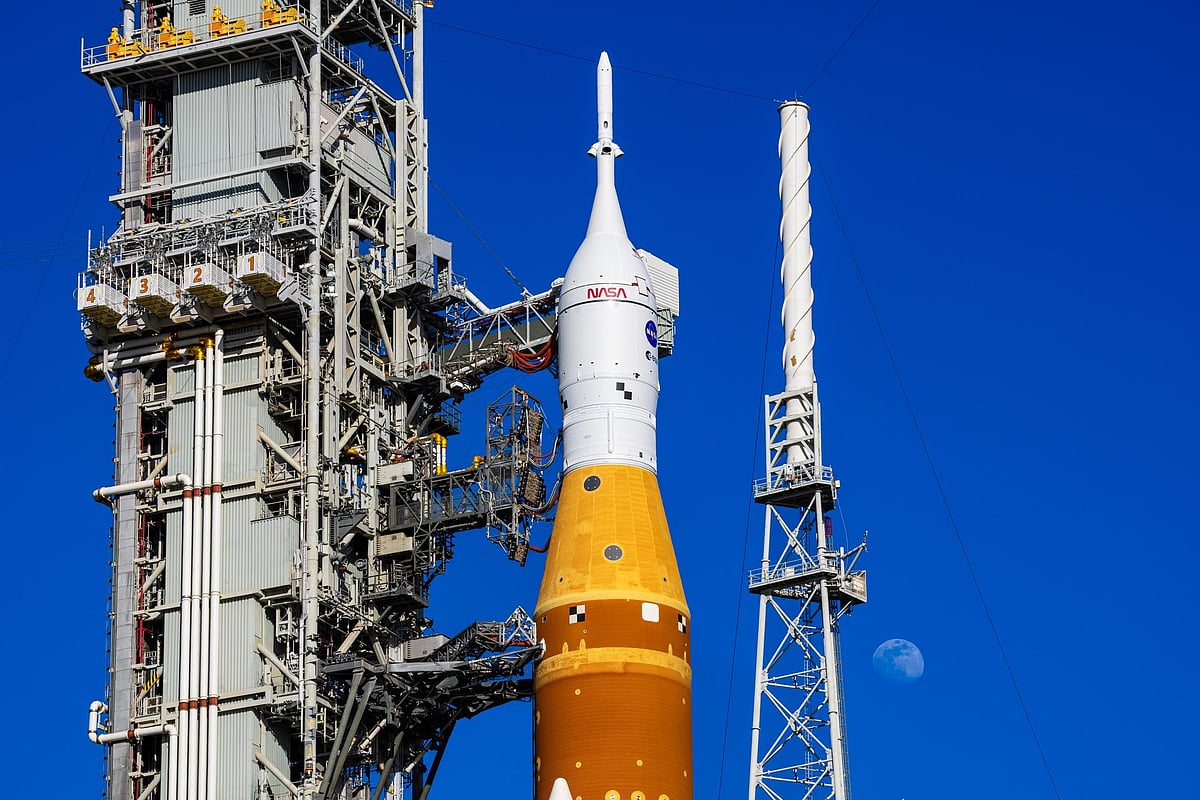
NASA Delays Artemis II Lunar Mission Due to Hydrogen Leak
Cape Canaveral, Florida – NASA has once again postponed the launch of its highly anticipated Artemis II mission, the first crewed flight to orbit the Moon in over 50 years. The delay stems from a hydrogen leak discovered during a critical “wet dress rehearsal” – a full fueling and countdown simulation – at Launch Complex 39-B at the Kennedy Space Center. This setback pushes the launch date to no earlier than April, after the initial target of March 6, 2026, proved unattainable.
The Artemis II mission represents a pivotal step in NASA’s broader Artemis program, aiming to establish a sustained human presence on the Moon and eventually pave the way for crewed missions to Mars. Even as the uncrewed Artemis I mission successfully orbited the Moon in 2022, Artemis II will be the first to carry a human crew – a team of four astronauts – on this challenging journey. The mission is designed to test critical systems, including the Space Launch System (SLS) rocket and the Orion spacecraft, in the harsh environment of deep space. The planned ten-day flight will see the crew travel around the Moon and return to Earth, gathering valuable data for future lunar landings.
Hydrogen Leak Prompts Return to Vehicle Assembly Building
According to NASA, the leak was detected in the flow of liquid hydrogen to one of the SLS rocket’s stages during the wet dress rehearsal. Liquid hydrogen is a crucial component of the rocket’s fuel, used to power its engines and provide the necessary thrust for liftoff. However, it’s similarly an incredibly volatile substance, and even small leaks can pose significant safety risks. The extreme cold of liquid hydrogen (-253°C or -423°F) also makes it prone to leakage due to material contraction and the difficulty of maintaining a perfect seal.
The discovery of the leak forced NASA to halt the fueling process multiple times during the rehearsal. The agency determined it was unable to complete the full test and made the decision to roll the rocket back to the Vehicle Assembly Building (VAB) for further inspection and repairs. The rocket began its 6.4-kilometer (approximately 4-mile) journey back to the VAB on Tuesday, February 18, 2026, weather permitting, as reported by CNN.
“The rollback to the VAB is necessary to determine the cause of the problem and implement a fix,” NASA stated in an official release. This isn’t the first time NASA has grappled with hydrogen leaks during the Artemis program. Similar issues plagued the Artemis I mission in 2022, requiring last-minute repairs by a team of technicians to address a leaky valve. The Space Shuttle program also experienced recurring hydrogen leak issues throughout its 30-year history, highlighting the inherent challenges of working with this fuel.
The Crew and the Mission Profile
The Artemis II crew consists of four astronauts: Reid Wiseman, Victor Glover, Christina Koch, and Jeremy Hansen. Wiseman is the mission commander, Glover is the pilot, Koch is a mission specialist, and Hansen, a Canadian Space Agency astronaut, is also a mission specialist. This international collaboration underscores the global nature of space exploration. The crew has been in quarantine in preparation for the launch opportunity, according to NASA, demonstrating the agency’s commitment to crew safety.
The mission profile involves a lunar flyby, meaning the Orion spacecraft will not land on the Moon. Instead, it will orbit the Moon at a distance of approximately 10,000 kilometers (6,200 miles) before returning to Earth. This trajectory allows NASA to test the spacecraft’s systems and capabilities in a realistic lunar environment without the complexities of a landing. The ten-day mission will provide invaluable data on the performance of the SLS rocket, Orion spacecraft, and life support systems, informing the design and execution of future lunar surface missions.
Why Hydrogen? The Challenges of Rocket Fuel
Despite the recurring issues, hydrogen remains a preferred rocket fuel due to its high energy density. Engineers first pioneered its use in the mid-20th century for the Apollo moon rockets, and it continues to be favored for its efficiency. However, its extremely low temperature and small molecular size create it notoriously difficult to contain. The hydrogen leaks pose a significant safety concern, as the fuel is highly flammable and can create an explosive atmosphere.
The question of why NASA continues to rely on this “fickle fuel” is a valid one. While alternative fuels are being explored, hydrogen currently offers the best performance characteristics for deep space missions. Addressing the leak issues requires meticulous engineering, advanced materials, and rigorous testing procedures. NASA is actively investigating the cause of the latest leak and implementing corrective measures to prevent future occurrences.
Looking Ahead: Revised Launch Windows
Following the rollback to the VAB, NASA will conduct a thorough investigation to identify the source of the hydrogen leak and implement the necessary repairs. The agency has identified five potential launch windows in March and six in April. However, the exact launch date will depend on the outcome of the investigation and the completion of the repairs. The agency is committed to ensuring the safety of the crew and the success of the mission, even if it means further delays.
The Artemis program represents a significant investment in space exploration and a renewed commitment to lunar exploration. The success of Artemis II is crucial for advancing NASA’s long-term goals of establishing a sustainable presence on the Moon and preparing for future missions to Mars. The challenges encountered with the hydrogen leak underscore the inherent complexities of spaceflight and the importance of rigorous testing and meticulous engineering.
Key Takeaways
- The Artemis II mission, NASA’s first crewed lunar flyby in over 50 years, has been delayed due to a hydrogen leak.
- The leak was discovered during a “wet dress rehearsal” at Kennedy Space Center and prompted a rollback of the SLS rocket to the Vehicle Assembly Building.
- The mission, carrying four astronauts, is designed to test critical systems for future lunar landings and eventual missions to Mars.
- Hydrogen, while an efficient fuel, presents significant challenges due to its volatility and tendency to leak.
- NASA is working to resolve the issue and has identified potential launch windows in March and April.
NASA will provide updates on the progress of the repairs and the revised launch schedule as they become available. The agency’s website, nasa.gov/artemis-ii, is the best source for the latest information on the mission. We encourage readers to share their thoughts and questions about the Artemis II mission in the comments below.