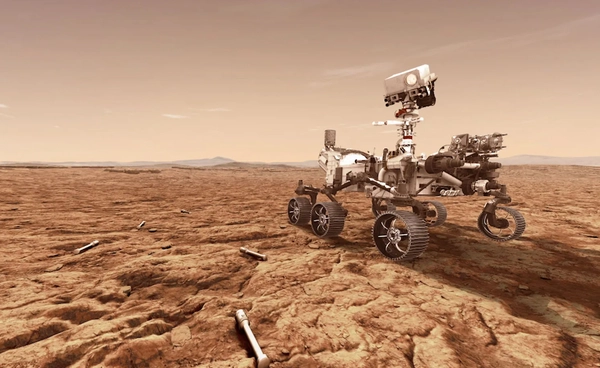
NASA’s Perseverance rover has identified a diverse range of organic molecules within the Jezero Crater on Mars, providing significant new data for researchers studying the planet’s potential for past habitability. These findings, detailed in research published in the journal Nature, represent a complex chemical environment that raises new questions about how organic matter is preserved in the Martian crust, according to the National Aeronautics and Space Administration (NASA).
The detection of these carbon-based compounds does not serve as definitive proof of ancient life on Mars. Instead, the presence of these molecules—which are the building blocks of life as we know it—offers a critical roadmap for future sample-return missions. As a technologist observing these developments, the integration of the Scanning Habitable Environments with Raman & Luminescence for Organics & Chemicals (SHERLOC) instrument has been instrumental in mapping these molecules directly on the rock surface, providing context that was previously unavailable in earlier missions, such as those conducted by the Curiosity rover in Gale Crater.
Understanding Organic Molecules in the Martian Context
Organic molecules contain carbon and are frequently associated with biological processes, though they can also be formed through abiotic, or non-biological, geological processes. The samples analyzed by the Perseverance rover were found in the Jezero Crater, a location scientists believe was once an ancient river delta. According to the study published in Nature, the rover identified signals consistent with various organic species, including those related to aromatic rings and other complex carbon structures.

The significance of these findings lies in the diversity of the signals. While previous missions have detected simple organic molecules, the data from the SHERLOC instrument suggests a more complex chemical history. Researchers are currently evaluating whether these molecules originated from water-rock interactions, atmospheric deposition, or potential biological origins. The distinction remains a primary focus for the Mars Sample Return mission, which aims to transport these collected cores back to Earth for high-precision laboratory analysis.
The Role of the SHERLOC Instrument
The SHERLOC instrument is an ultraviolet Raman and fluorescence spectrometer designed to detect organic molecules and minerals. By mapping the distribution of these chemicals, scientists can see the relationship between organic matter and the mineral environment. This spatial context is vital; it helps determine if the organic molecules were trapped during the formation of the rock or if they were later introduced by environmental factors.

NASA officials note that the rover has successfully collected multiple samples from the crater floor. These samples are currently being stored in sealed titanium tubes, awaiting a future retrieval mission. The ability to perform this level of chemical mapping on the Martian surface represents a major technological leap from the early days of the Viking landers, which lacked the sensitivity to distinguish complex organic signatures in the same manner.
What Happens Next in the Search for Life
The next phase of the investigation involves the complex task of bringing these samples to Earth. The Mars Sample Return program, a joint effort between NASA and the European Space Agency (ESA), is currently in the planning and development phase. According to the official mission portal, the goal is to launch a retrieval craft that will land in Jezero Crater, collect the tubes cached by Perseverance, and launch them into orbit for transport back to Earth.

While the detection of complex carbon is a milestone, the scientific community maintains a cautious stance. The presence of organic material is a necessary condition for life, but it is not a sufficient one. Until these samples can be analyzed in state-of-the-art laboratories on Earth, the origin of these specific carbon chains will remain a subject of intense peer-reviewed debate.
Readers interested in following the progress of the Mars 2020 mission can find real-time updates and images of the rover’s path through the crater on the official NASA Mars 2020 website. We will continue to monitor the mission’s progress as the rover moves toward the remnants of the delta, where even higher concentrations of ancient sediments are expected to be found. Please share your thoughts in the comments below on what this discovery means for the future of space exploration.