
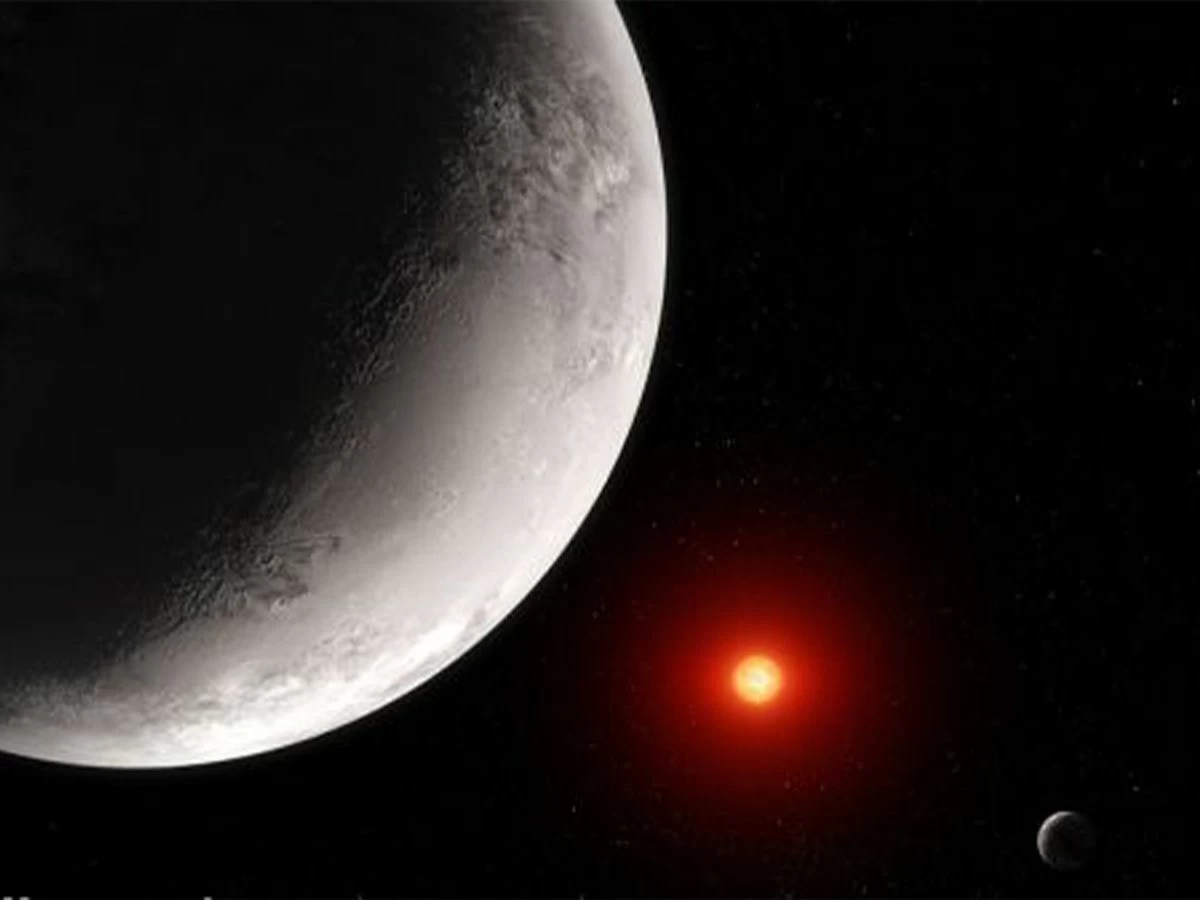
Astronomers have identified two gas giant exoplanets, which possess an exceptionally low density that researchers have likened to the consistency of cotton candy. These celestial bodies, discovered using data from NASA, challenge existing models of planetary formation due to their massive size and disproportionately low mass. These planets orbit a star.
The Physics of “Cotton Candy” Exoplanets
The term “cotton candy” refers to the extreme atmospheric expansion of these planets. While these planets are roughly the size of Jupiter, their actual mass is significantly lower, resulting in a density that is remarkably low for their scale. Researchers found that these planets are likely composed of hydrogen and helium, wrapped in a thick, opaque layer of high-altitude clouds. This cloud cover makes it difficult for scientists to determine the exact composition of the atmosphere beneath.
The low density is partially attributed to the age of the system. Astronomers hypothesize that these planets are currently in a transition phase, where their massive, puffy atmospheres are slowly evaporating into space due to the intense radiation from their host star. Over the next billion years, these giants may shrink significantly, eventually evolving into smaller, denser planets more consistent with those found in older solar systems.
Data and Methodology
The identification of these low-density worlds relied on transit photometry—a method where astronomers monitor the dip in brightness of a star as a planet passes in front of it. By combining this data with transit timing variations (TTVs), the research team was able to calculate the mass of the planets. This approach allowed for a clearer picture of how these “ghostly” planets interact with their environment.
The TTV method is particularly effective for multi-planet systems where the gravity of one planet influences the orbit of another. By measuring the slight variations in when these planets cross the face of their star, scientists can infer their masses with greater precision than radial velocity methods, which are often less effective for distant, faint stars. This discovery highlights the importance of archival data from the Kepler mission, which continues to yield significant insights into planetary diversity.
Why These Planets Matter for Astronomy
Understanding planets like those in this system is essential for refining theories on how solar systems evolve. The existence of these “puffy” giants suggests that early planetary development is far more dynamic than previously assumed. If these planets are indeed losing mass through atmospheric escape, they provide a real-time look at a process that may have shaped the history of many other worlds, including those within our own solar system.
Future observations may provide the spectroscopic data needed to pierce through the thick cloud layers of these planets. By analyzing the light filtering through the edges of these atmospheres, scientists hope to detect chemical signatures such as water vapor or methane. Such data would confirm whether these worlds are truly as “ghostly” as their density suggests or if they harbor more complex chemical structures beneath their expansive, airy surfaces.
Summary of Planetary Characteristics
- Host Star: A star.
- Distance: A vast distance away from our solar system.
- Physical State: Extremely low density, often compared to cotton candy.
- Evolutionary Status: Expected to shrink as their atmospheres evaporate over the next billion years.
As the scientific community continues to analyze data from the Kepler and Hubble missions, further updates regarding the atmospheric composition of these planets are expected. Researchers have identified the system as a primary candidate for ongoing monitoring to track the rate of atmospheric loss. Readers interested in the latest findings from deep-space exploration can follow updates on the NASA Exoplanet Exploration portal for official research releases and observational schedules.