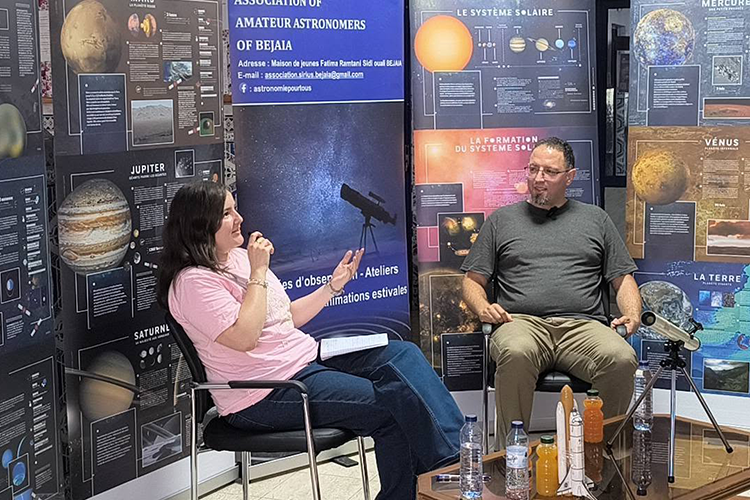
NASA engineer Karim Bouschouicha has provided technical insights into the complex communication systems supporting the Artemis program, drawing on his expertise in space telecommunications. Based in the United States, Bouschouicha’s contributions to the agency’s lunar exploration initiatives highlight the critical role of robust data transmission in maintaining contact with spacecraft as they venture beyond Earth’s orbit and toward the lunar surface.
The Artemis program, which aims to return humans to the moon and establish a sustainable lunar presence, relies on a sophisticated network of deep-space antennas and satellite relays. According to NASA’s official mission documentation, these systems must overcome significant environmental challenges, including radiation interference and the vast distances between the Earth and the Moon, which averages approximately 238,855 miles.
Engineering the Artemis Communication Infrastructure
Communication architectures for deep-space missions are built upon the Deep Space Network (DSN), a global array of giant radio antennas that provide constant connectivity to spacecraft. As noted in technical specifications from NASA, these antennas allow mission controllers to send commands and receive scientific data from lunar orbiters and landers. The reliability of these links is essential for the safety of future crewed missions, as engineers must monitor telemetry data in real-time to ensure all life-support and navigational systems remain operational.
Bouschouicha’s involvement underscores the collaborative nature of international aerospace engineering. Modern space missions often draw talent from a diverse global workforce, with engineers contributing specialized knowledge in software development, signal processing, and systems integration. At the core of these efforts is the development of resilient protocols capable of maintaining high-speed data rates despite the inherent latency and signal degradation found in deep-space environments.
Overcoming Challenges in Deep-Space Data Transmission
One of the primary hurdles for the Artemis program is the transition from traditional radio-frequency communications to more advanced laser-based systems. NASA’s Space Communications and Navigation (SCaN) program is currently testing optical communications, which offer significantly higher bandwidth than standard radio waves. This transition is vital for transmitting high-definition video and large datasets from the lunar surface back to research facilities on Earth.
The complexity of these systems requires meticulous testing and verification phases. Engineers like Bouschouicha focus on the architecture that manages these data streams, ensuring that the information packets remain intact during transmission through the vacuum of space. This work is essential for the success of future crewed Artemis flights, where the ability to transmit voice and biometric data without interruption is a non-negotiable safety requirement.
The Future of Lunar Exploration and Global Collaboration
The Artemis program is not only a technological endeavor but also a foundation for future missions to Mars. By establishing a lunar gateway and testing communication relay systems near the moon, NASA is effectively creating a “proving ground” for the technologies required for longer-duration human spaceflight. The contributions of engineers working within these programs are documented through regular NASA news releases and mission updates, which provide the public with insight into the milestones reached by the project teams.
As the program progresses, the emphasis remains on international cooperation and the integration of new technologies from both government and private sector partners. The ongoing success of these missions depends on the precision of the engineering teams who design the digital lifelines that keep spacecraft connected to Earth. The next major milestones for the program, including upcoming uncrewed and crewed flight tests, will continue to rely on the robust communication networks currently being refined by NASA’s technical staff.
For those interested in following the progress of the Artemis program, NASA provides regular updates via its official mission portal. We invite readers to share their thoughts on the evolution of deep-space communication technology in the comments section below.
Related reading