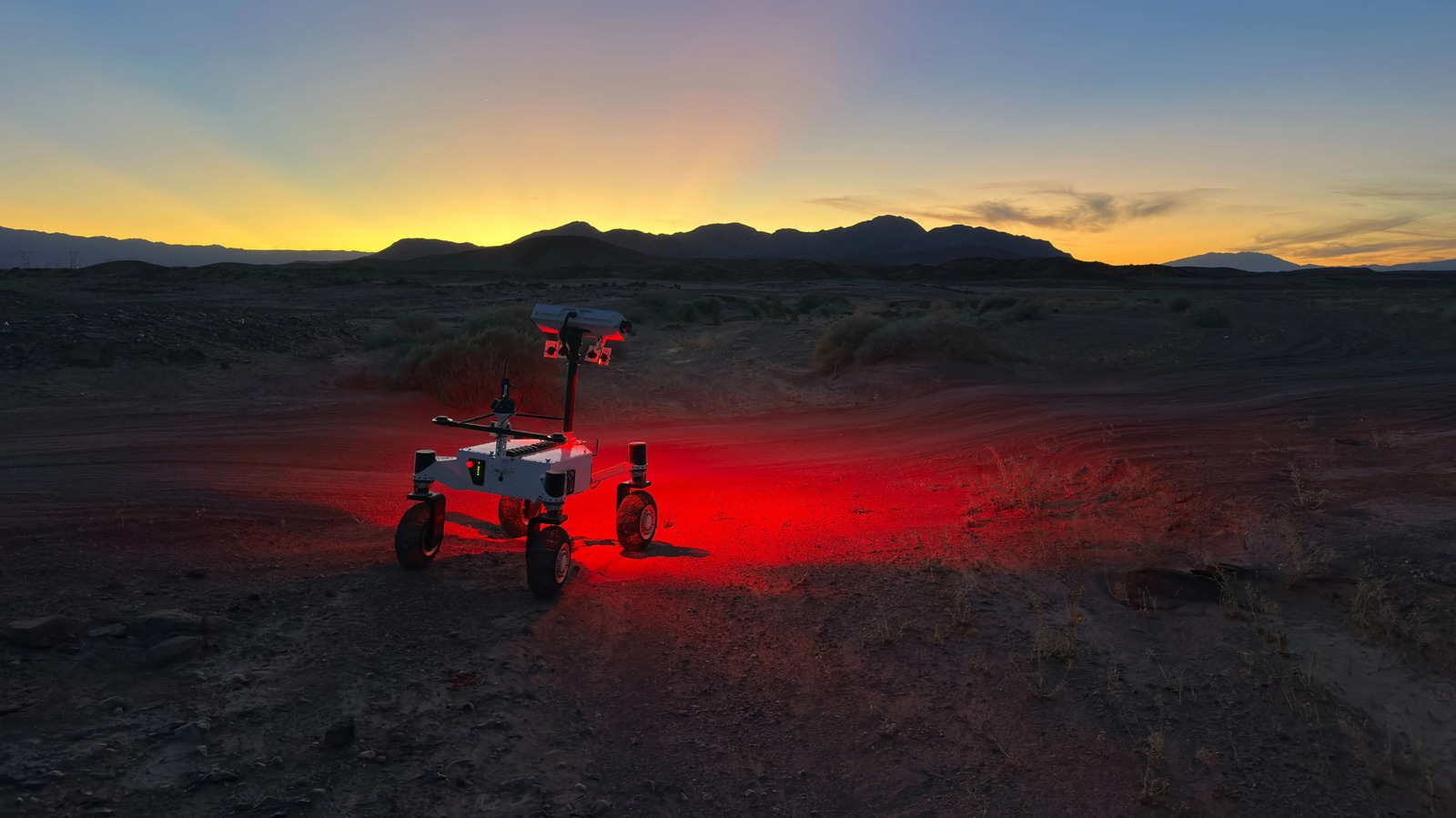
NASA engineers are testing a specialized rover prototype capable of navigating rugged lunar and Martian terrain by lifting its individual wheels to climb over obstacles. The robotic platform, known as the Ernest prototype rover, is part of an ongoing effort to increase the speed and mobility of future planetary exploration vehicles, according to official documentation from the National Aeronautics and Space Administration.
The testing phase focuses on improving the autonomy and mechanical dexterity of rovers, which have historically relied on slow, cautious movement to avoid getting trapped in loose regolith or stalled by rock formations. By integrating a suspension system that allows for vertical wheel manipulation, the Ernest prototype aims to maintain traction while traversing uneven surfaces that would currently force mission controllers to halt operations for safety assessments.
Engineering Mobility for Future Space Missions
Current planetary rovers, such as the Perseverance and Curiosity models, are designed with a rocker-bogie suspension system that keeps all six wheels on the ground to distribute weight evenly. While effective for stability, this design limits the speed at which a rover can travel across boulder-strewn landscapes. The Ernest prototype introduces a departure from this design philosophy by utilizing an active suspension that can lift specific wheels to clear obstacles rather than driving over them.
This capability is critical for mission success in regions such as the lunar south pole, where the topography is characterized by deep craters and high-density debris. According to the NASA Glenn Research Center, which manages various aspects of advanced mobility research, the goal is to increase the operational range of surface missions. By enabling a rover to move faster and navigate more complex paths, scientists can collect significantly more data points within the limited lifespan of a mission’s power supply.
How the Wheel-Lifting Mechanism Functions
The mechanical core of the Ernest prototype involves high-torque actuators that provide the force necessary to lift the wheel assemblies independently. Unlike standard mobility systems, these actuators are designed to operate under the extreme temperature fluctuations and vacuum conditions found on the Moon. The testing footage released by the agency demonstrates the vehicle’s ability to approach a vertical obstruction and retract a front wheel to clear the height of the object, subsequently repositioning it on the other side.
This development is part of the Space Technology Mission Directorate (STMD) portfolio, which invests in high-risk, high-reward technologies to advance robotic and human exploration. The data gathered during these terrestrial tests provide engineers with the necessary performance metrics to refine the control algorithms that will eventually manage these movements autonomously on another planet. As reported by the agency, the ability to “step over” an obstacle reduces the risk of high-centering—a scenario where a rover’s chassis rests on a rock while its wheels spin in the air, rendering it immobile.
Addressing Challenges in Autonomous Navigation
While the mechanical hardware is a significant advancement, the software required to command these movements represents a parallel challenge. Autonomous navigation systems must identify the height and stability of an obstacle before deciding whether to drive over it or utilize the wheel-lifting function. This decision-making process is supported by high-resolution hazard detection cameras and LiDAR sensors, which create a 3D map of the immediate surroundings in real time.
The integration of these systems is intended to reduce the reliance on Earth-based operators, who currently must manually approve pathing decisions due to the light-speed communication delay. As the agency noted in its recent technical updates, moving toward greater autonomy is a cornerstone of the Artemis program, which aims to establish a long-term human presence on the Moon. These advancements in rover mobility ensure that robotic assets can scout areas ahead of human arrivals, identifying safe zones for equipment and habitat placement.
What Happens Next
The Ernest prototype remains in the developmental testing phase at NASA’s specialized research facilities. The next steps for the project include stress-testing the wheel-lifting actuators in simulated low-gravity environments and refining the power-consumption models to ensure the mechanism does not prematurely drain the rover’s battery. The agency has not yet announced a specific mission for the deployment of this technology, but it continues to provide progress updates through its official robotics portal.
Readers interested in the latest developments in space exploration can monitor the STMD’s public archives for future testing milestones. If you found this breakdown of NASA’s latest mobility research useful, please share this article or leave a comment below to discuss how autonomous robotics might reshape our understanding of the lunar surface.
Worth a look