
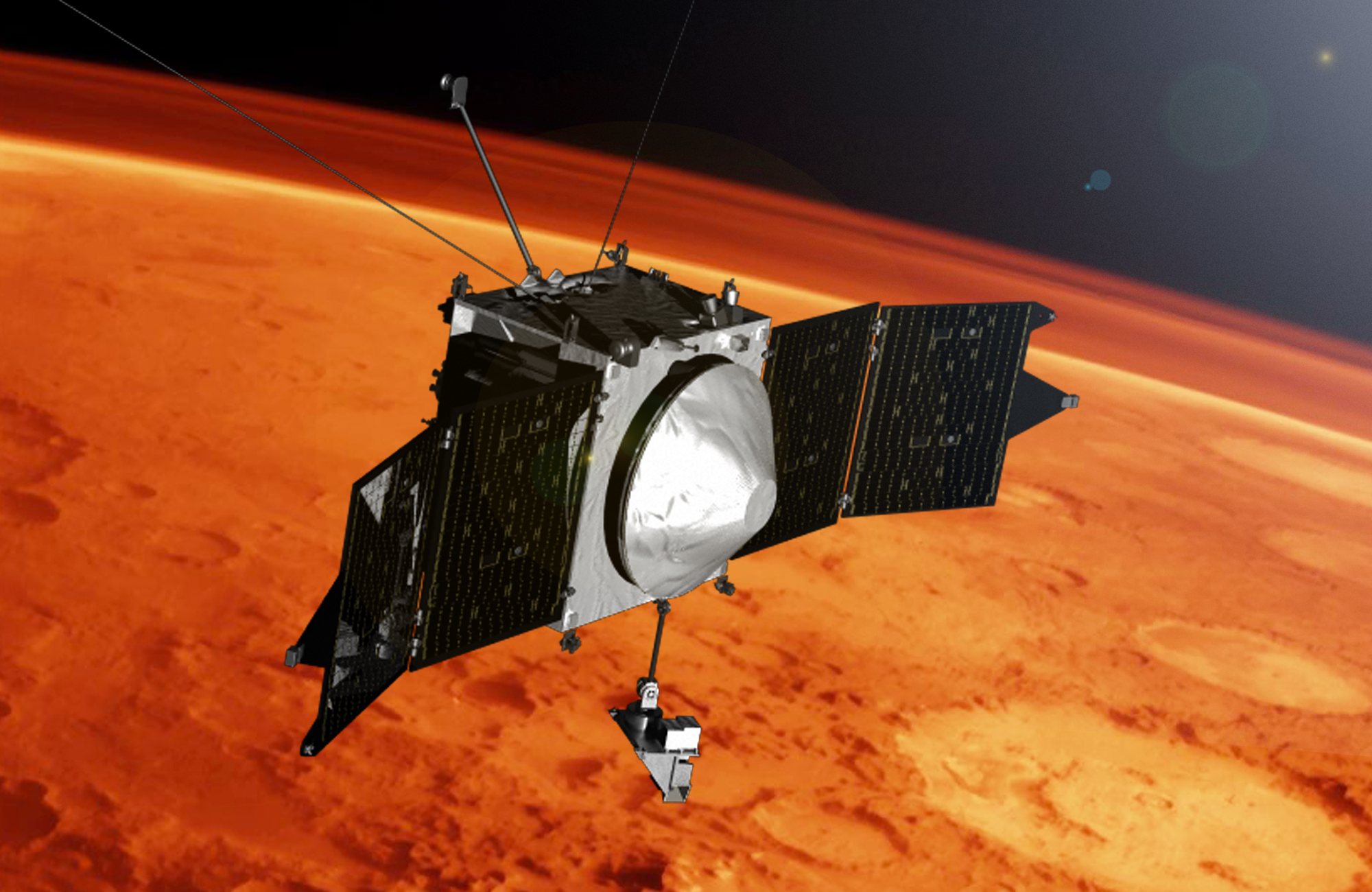
NASA has officially concluded the mission of the Mars Atmosphere and Volatile Evolution (MAVEN) orbiter after six months of silence, marking the end of an 11-year operational chapter at the Red Planet. Agency officials confirmed that the $582 million spacecraft is considered unrecoverable following a loss of contact that occurred in late 2025.
The final successful communication with MAVEN took place on December 6, 2025. According to Mike Moreau, the MAVEN project manager at NASA’s Goddard Space Flight Center, the spacecraft was performing normally as it entered a scheduled period of occultation—passing behind Mars—but failed to reestablish a signal with the Deep Space Network when it emerged. Despite repeated attempts to remotely reset the probe’s flight computer and force it to reestablish contact, the agency has received no telemetry or data since that date.
Understanding the MAVEN Mission
Launched on November 18, 2013, MAVEN was designed to address fundamental questions about the Martian environment. The primary objective of the mission was to study the Martian atmosphere and determine how solar wind interacts with it, specifically focusing on how particles from the sun contribute to the erosion and thinning of the planet’s atmosphere over time. The probe successfully entered orbit around Mars in September 2014.
For more than a decade, MAVEN provided scientists with critical data regarding the loss of volatile compounds in the Martian atmosphere. The spacecraft utilized a sophisticated suite of onboard instruments to monitor these processes, helping researchers build a clearer picture of how Mars transitioned from a potentially habitable world to the arid, cold environment observed today. You can find more information about NASA’s ongoing efforts to explore the solar system on the official NASA website.
The Final Attempt at Recovery
The loss of the orbiter was unexpected. Project manager Mike Moreau stated that there were no indications of technical issues with the spacecraft’s subsystems in the week leading up to the December 6, 2025, signal loss. When the probe failed to emerge from behind the planet as expected, the mission team initiated a series of “blind” commands—instructions sent to the spacecraft without confirmation of receipt—in an attempt to trigger a computer reboot.
These efforts were ultimately unsuccessful. With no telemetry received and no response to commands, NASA reached the difficult decision to declare the mission at an end. The termination of the MAVEN mission closes a significant chapter in the agency’s robotic exploration of Mars, though other missions, such as the Perseverance rover, continue to operate on the surface of the planet.
What Happens Next?
While MAVEN is no longer operational, the data collected over its 11-year lifespan remains a vital resource for planetary scientists. The mission’s findings continue to influence current understanding of atmospheric science and the history of Mars. NASA continues to manage a wide array of deep space projects; for the latest updates on agency missions and ongoing exploration, you can follow NASA’s featured news and mission updates.
The end of MAVEN serves as a reminder of the inherent risks and challenges of deep-space exploration. While the probe has gone silent, the legacy of its contributions to our understanding of the Red Planet remains secure. Readers interested in the history of this mission or other current events in space exploration are invited to share their thoughts or questions in the comments section below.
Related reading