
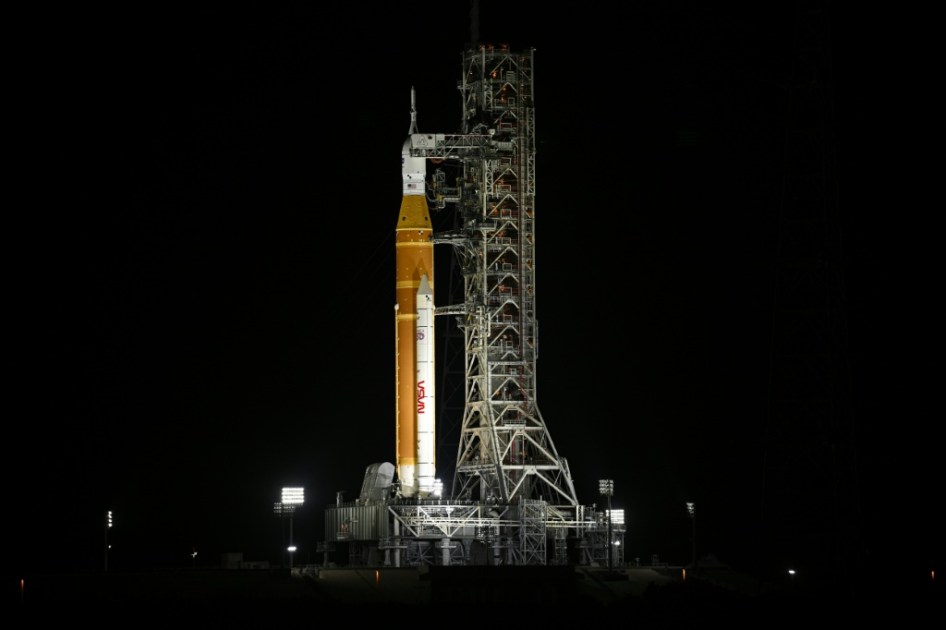
Cape Canaveral, FL – NASA successfully completed a critical wet dress rehearsal Thursday for the Artemis 2 mission, bringing the agency one step closer to sending astronauts around the Moon for the first time in over 50 years. The test, conducted at Launch Complex 39B at the Kennedy Space Center in Florida, involved fully fueling the Space Launch System (SLS) rocket and simulating a launch countdown. This successful rehearsal follows a previous attempt earlier in February that was halted due to hydrogen leaks, delaying the planned launch timeline.
The Artemis 2 mission represents a pivotal moment in space exploration, marking the first crewed flight test of the SLS rocket and Orion spacecraft. It’s a crucial component of NASA’s broader Artemis program, which aims to establish a sustainable human presence on the Moon and eventually pave the way for missions to Mars. The successful completion of this wet dress rehearsal is a significant milestone, demonstrating progress towards achieving these ambitious goals. The mission will send four astronauts – three from the United States and one from Canada – on a 10-day journey around the Moon, a feat not accomplished since the Apollo 17 mission in December 1972.
According to NASA officials, the Thursday test proceeded smoothly, with minimal hydrogen leakage detected – well within safety limits. Engineers meticulously pumped over 700,000 gallons of supercooled liquid hydrogen and liquid oxygen into the SLS rocket, replicating the conditions of an actual launch. The team even ran through the final ten minutes of the countdown sequence twice, providing valuable data and confirming the readiness of the systems. This meticulous process is essential for identifying and resolving potential issues before risking the lives of the astronauts and the substantial investment in the Artemis program.
Addressing Previous Challenges and Ensuring Safety
The initial wet dress rehearsal earlier this month was cut short by concerning hydrogen leaks, prompting engineers to replace seals and a clogged filter in the rocket’s fueling system. Hydrogen, used as a propellant for the SLS, is notoriously difficult to handle due to its extremely low temperature and tendency to leak easily. The successful completion of Thursday’s test indicates that the repairs were effective and that the fueling system is now operating as intended. As reported by the Associated Press, NASA prioritized addressing these leaks to ensure the safety of the mission and the crew.
Safety remains paramount throughout the Artemis program. NASA Administrator Bill Nelson has repeatedly emphasized the agency’s commitment to a cautious and deliberate approach, prioritizing the well-being of the astronauts above all else. The rigorous testing and meticulous attention to detail demonstrated during the wet dress rehearsal underscore this commitment. The agency has as well implemented a two-week quarantine period for the Artemis II crew, beginning Friday, to provide flexibility within the potential March launch window. This proactive measure aims to minimize the risk of illness affecting the mission timeline.
The Space Launch System: A Powerful Engine for Deep Space Exploration
The SLS rocket is the centerpiece of NASA’s Artemis program, designed to be the most powerful rocket ever built. According to NASA fact sheets, the SLS is capable of sending the Orion spacecraft, four astronauts, and large cargo directly to the Moon on a single launch. The core stage of the SLS towers at 212 feet tall and has a diameter of 27.6 feet, storing cryogenic liquid hydrogen and liquid oxygen to fuel its four RS-25 engines. This immense power is essential for overcoming Earth’s gravity and propelling the spacecraft towards lunar orbit.
The development of the SLS has been a complex and challenging undertaking, involving years of research, engineering, and testing. The rocket incorporates advanced technologies and innovative designs to maximize its performance and reliability. Beyond its role in the Artemis program, the SLS is also capable of carrying CubeSats to deep space, providing opportunities for scientific research and technology demonstration. The successful wet dress rehearsal demonstrates the maturity of the SLS and its readiness to support the next generation of human space exploration.
Artemis II: Crew and Mission Objectives
The four astronauts selected for the Artemis II mission represent a diverse and highly qualified team. The crew includes three NASA astronauts – Reid Wiseman, Victor Glover, and Christina Koch – and Canadian Space Agency astronaut Jeremy Hansen. Wiseman will serve as the mission commander, Glover as the pilot, Koch as a mission specialist, and Hansen as another mission specialist. Each astronaut brings a wealth of experience and expertise to the mission, contributing to its overall success.
The primary objective of Artemis II is to test the Orion spacecraft’s life support systems and demonstrate its ability to sustain a crew during a deep space flight. The mission will involve a flyby of the Moon, bringing the spacecraft within approximately 6,800 miles of the lunar surface. During the 10-day mission, the crew will conduct a series of experiments and observations, gathering valuable data that will inform future lunar missions. The data collected will also be crucial for validating the performance of the SLS rocket and Orion spacecraft in a real-world space environment.
Looking Ahead: Launch Date and Future Artemis Missions
Following the successful wet dress rehearsal, NASA is expected to announce a firm launch date for the Artemis II mission on Friday. While a March 2026 launch remains the target, the exact date will depend on the final analysis of the test data and any remaining preparations. The agency is committed to a deliberate and cautious approach, ensuring that all systems are fully operational before entrusting the lives of the astronauts to the SLS and Orion.
The Artemis program extends beyond Artemis II, with plans for subsequent missions to establish a long-term human presence on the Moon. Artemis III, currently planned for 2026, will aim to land astronauts on the lunar surface near the South Pole, an area believed to contain significant deposits of water ice. This water ice could be used to produce propellant, oxygen, and other resources, enabling a sustainable lunar base. Future Artemis missions will build upon these initial steps, ultimately paving the way for human missions to Mars.
The success of the Artemis program hinges on continued innovation, international collaboration, and a steadfast commitment to safety. The wet dress rehearsal for Artemis II represents a significant step forward in this ambitious endeavor, bringing humanity closer to realizing its dreams of exploring the cosmos and establishing a permanent presence beyond Earth. The mission promises to inspire a new generation of scientists, engineers, and explorers, and to unlock new discoveries that will benefit all of humankind.
The next key milestone for the Artemis II mission will be the announcement of the official launch date on Friday. Stay tuned to NASA’s website and social media channels for the latest updates. We encourage you to share your thoughts on this exciting development in the comments below.




