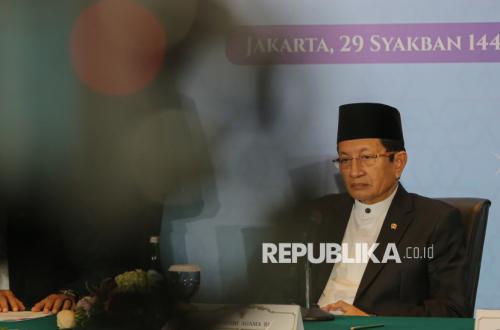
Indonesian Religious Affairs Minister Apologizes for Remarks on Zakat, Reaffirms its Importance
Jakarta – Indonesian Minister of Religious Affairs, Nasaruddin Umar, issued a public apology on Sunday, March 1, 2026, for recent statements regarding the Islamic practice of Zakat, which sparked public misunderstanding. The Minister emphasized that his comments were not intended to diminish the obligatory nature of Zakat for Muslims, but rather to encourage a broader approach to Islamic philanthropy. The clarification comes after widespread concern fueled by circulating interpretations of his remarks made during a recent economic forum.
The controversy arose following Minister Umar’s participation in the Sarasehan 99 Ekonomi Syariah (99 Islamic Economy Forum) on February 24, 2026, hosted by the Center for Sharia Economic Development (CSED) INDEF. Initial reports suggested the Minister was advocating for a reduction in the emphasis on Zakat, leading to criticism from various segments of Indonesian society. However, Minister Umar clarified that his intention was to promote a more diversified approach to Islamic finance, encompassing instruments like Waqf (endowment), Infaq (charity), and Sadaqah (voluntary giving), alongside Zakat.
Addressing Misinterpretations and Reaffirming Zakat’s Status
“I, Nasaruddin Umar, sincerely apologize for my statements regarding Zakat that may have caused misunderstanding among some people,” the Minister stated in a message shared via the official social media channels of the Ministry of Religious Affairs. He unequivocally affirmed that Zakat remains a fundamental pillar of Islam (Rukun Islam) and a mandatory individual obligation (Fardhu ‘Ain) for those who meet the eligibility criteria. This clarification was also echoed in a statement released by the Minister, as reported by Sindonews and Antara News.
The Minister explained that his remarks at the economic forum were intended as a call for a reorientation in the management of Islamic funds. He argued that relying solely on Zakat as the primary instrument for economic empowerment limits its potential. He advocated for optimizing a wider range of philanthropic tools to foster sustainable economic growth within the Muslim community.
The Potential of Waqf and Lessons from Other Nations
Minister Umar highlighted the successful models of economic development in countries like Qatar, Kuwait, the United Arab Emirates, Egypt, and Sudan, noting that their progress wasn’t solely reliant on Zakat. He specifically pointed to the significant role of Waqf in these nations, where dedicated Waqf ministries have become powerful engines for social and economic development. “They didn’t rely only on Zakat. In fact, Waqf has been the most productive and widespread instrument. There, the Waqf ministry has become a massive driver of development,” he stated, according to Liputan6.com.
Waqf, a voluntary charitable endowment in Islam, involves dedicating property or assets for religious or charitable purposes. The income generated from these assets is then used to fund various social programs, including education, healthcare, and poverty alleviation. Minister Umar believes that Indonesia can learn from these successful models and leverage the potential of Waqf to accelerate its own economic progress.
Expanding Islamic Philanthropy Beyond Zakat
The Minister’s call for a broader approach to Islamic philanthropy extends beyond Waqf to include Infaq and Sadaqah. Infaq refers to voluntary charitable giving, while Sadaqah encompasses a wider range of benevolent acts. He emphasized that optimizing these instruments, alongside Zakat, can unlock significant resources for community development and economic empowerment. He identified a total of 27 potential instruments for managing Islamic funds, including Hibah (gifts), Wasiat (wills), Luqathah (lost and found property), Fai’, Ghanimah (spoils of war), Mudharabah, and Musyarakah (Islamic partnership structures).
This broader perspective on Islamic finance aligns with a growing global trend towards impact investing and socially responsible finance. By diversifying its approach to philanthropy, Indonesia aims to maximize the impact of its Islamic financial resources and contribute to sustainable economic development.
Context and Concerns Leading to the Apology
The initial public reaction to Minister Umar’s remarks was largely negative, with many expressing concern that he was undermining the importance of Zakat. Social media platforms were flooded with criticism, and some religious leaders voiced their disapproval. The controversy was further fueled by the circulation of edited video clips that appeared to misrepresent the Minister’s statements. The Ministry of Religious Affairs swiftly responded by clarifying that the circulated clips were taken out of context and did not accurately reflect the Minister’s full message.
The incident underscores the sensitivity surrounding discussions about Zakat within the Indonesian Muslim community. Zakat is deeply ingrained in Islamic tradition and is considered a fundamental obligation for financially capable Muslims. Any perceived attempt to diminish its importance is likely to be met with strong resistance.
Looking Ahead: Optimizing Islamic Finance in Indonesia
Minister Umar’s apology and subsequent clarification aim to quell the controversy and refocus the conversation on the potential for optimizing Islamic finance in Indonesia. The government is expected to continue exploring strategies for leveraging a wider range of philanthropic instruments to promote economic growth and social welfare. This includes strengthening the regulatory framework for Waqf management, promoting financial literacy among Muslims, and fostering collaboration between government agencies, Islamic financial institutions, and civil society organizations.
The Ministry of Religious Affairs has indicated that it will be working closely with Islamic scholars and community leaders to ensure that any future initiatives related to Islamic finance are aligned with Islamic principles and meet the needs of the Indonesian Muslim community. The goal is to create a more robust and sustainable Islamic financial ecosystem that benefits all segments of society.
The next step in this process will likely involve a series of consultations with stakeholders to gather feedback and develop a comprehensive plan for optimizing Islamic finance in Indonesia. The Ministry has not yet announced a specific timeline for this plan, but We see expected to be unveiled in the coming months.
What are your thoughts on the Minister’s clarification? Share your comments below and join the discussion.
Keep reading