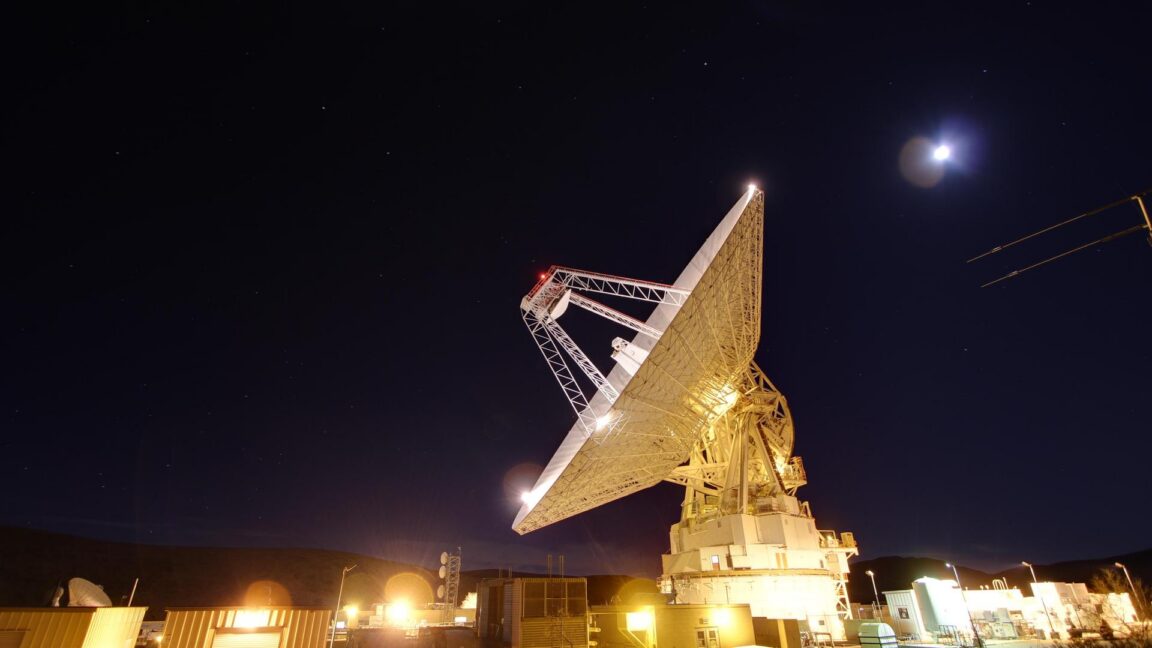
NASA’s Deep Space Network (DSN) successfully maintained critical communications during the Artemis II mission, managing the high-bandwidth demands of the Orion spacecraft while supporting a global array of robotic science missions. Despite previous concerns regarding network saturation during the 2022 Artemis I flight, the agency reported that ground station operations functioned as intended, ensuring continuous contact with the crew of four during their flight around the Moon. The mission, which spanned just over nine days, benefited from a streamlined operational profile compared to the longer, 25-day uncrewed test flight that preceded it.
The Deep Space Network consists of three primary antenna complexes located in Goldstone, California; Madrid, Spain; and Canberra, Australia, which together provide 360-degree coverage for spacecraft in deep space, according to NASA’s official Deep Space Network overview. During the Artemis I mission in late 2022, the surge in data requirements for the Orion capsule placed significant pressure on these resources, occasionally forcing the agency to prioritize mission-critical downlinks over routine science data from other assets, such as the James Webb Space Telescope and various Mars rovers. The experience underscored the necessity of balancing human spaceflight priorities with the broader portfolio of ongoing robotic exploration.
Managing Data Demands in Deep Space
Operating a crewed spacecraft requires a constant, high-speed data stream to support life support monitoring, navigation, and mission control communications. During the Artemis II mission, the Artemis II flight path required the DSN to handle significantly higher data throughput than in previous test scenarios. However, the duration of the mission played a vital role in mitigating potential bottlenecks. By limiting the mission to approximately nine days, NASA reduced the cumulative time the DSN had to dedicate exclusively to the Orion capsule compared to the 25-day duration of the Artemis I mission.

The reduction in secondary payloads also eased the strain on the network. While Artemis I carried 10 small CubeSats that required tracking and telemetry services, the Artemis II mission carried fewer small satellites, allowing ground controllers to dedicate more bandwidth and antenna time to the primary crewed vehicle. This adjustment in mission architecture demonstrated the agency’s ability to learn from previous operational stressors to maintain the stability of the global communication grid.
Maintaining Global Connectivity
The DSN serves as the backbone for nearly all deep space exploration, and its role in human spaceflight is expanding as the Artemis program progresses. According to the NASA Space Communications and Navigation (SCaN) program, the network is undergoing continuous upgrades to handle the increased data rates required for future lunar and Mars missions. These improvements include the construction of new 34-meter antennas at the existing complexes to increase the overall capacity of the network.
The coordination between Mission Control and the DSN is critical for the safety of the crew. During the Artemis II flight, engineers monitored antenna load factors in real-time to ensure that no single mission—including the high-priority Orion capsule—disrupted the integrity of the network. The successful communication link throughout the mission confirmed that the current infrastructure, when managed with precise scheduling and resource allocation, is capable of supporting the current cadence of lunar exploration.
Future Infrastructure Upgrades
As NASA prepares for future Artemis missions, the agency is looking toward long-term network sustainability. The current strategy involves a combination of software-defined radio technology and the integration of optical communications, which offer significantly higher data rates than traditional radio frequency systems. These advancements are expected to be essential as the number of active missions in deep space continues to rise over the next decade.
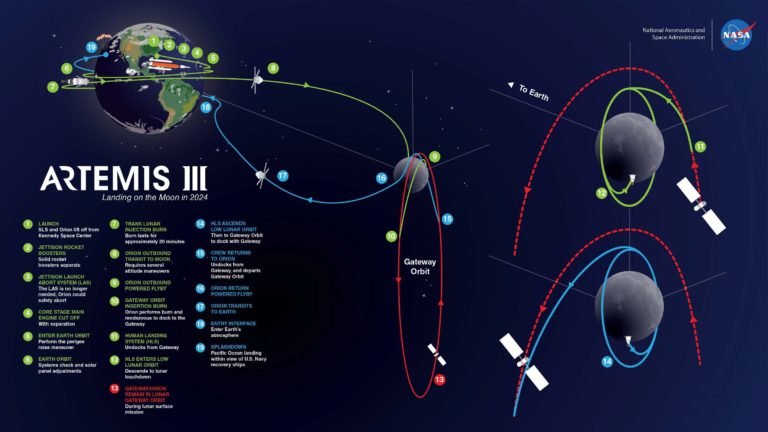
The next major checkpoint for the Artemis program involves preparations for the Artemis III mission, which aims to land astronauts on the lunar surface. As the agency moves toward this milestone, the DSN will play an even more central role, requiring sophisticated coordination to support both the lunar lander and the orbiting Orion spacecraft simultaneously. Readers interested in the latest updates regarding deep space communications and Artemis mission planning can visit the official NASA Artemis portal for mission status reports and technical briefings.
The resilience shown by the Deep Space Network during recent missions provides a baseline for the technical requirements of future human exploration. While the challenges of managing finite bandwidth remain, the agency’s ability to adapt its operational procedures suggests a sustainable path forward for deep space telecommunications.
What are your thoughts on the future of lunar communication? Join the conversation by leaving a comment below or sharing this report with your network.
Keep reading