
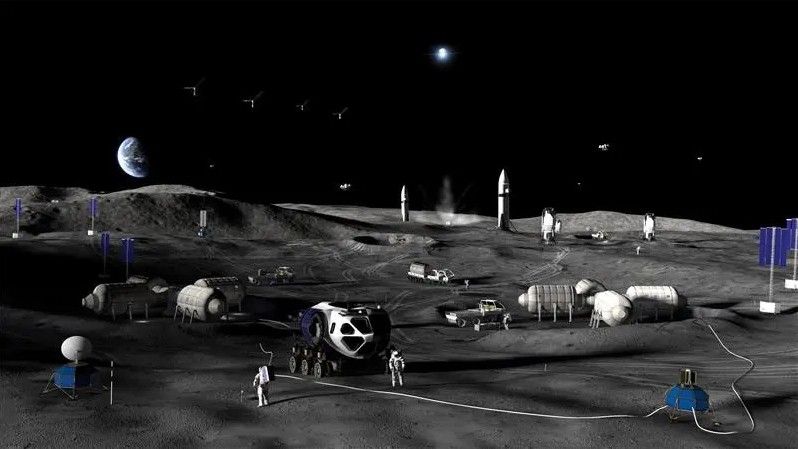
NASA has unveiled a comprehensive roadmap for its most ambitious lunar endeavor to date, releasing the NASA Moon Base User’s Guide to outline the requirements for a permanent human presence on the moon. The document, published on April 6, 2026, serves as a candid assessment of the agency’s current capabilities and the significant hurdles that remain before humans can sustainably live and function on the lunar surface Moon Base User’s Guide.
The guide follows the agency’s “Ignition” event held on March 24, 2026, where NASA first announced its aggressive goals for lunar and Martian exploration. While the recent successful splashdown of the Artemis II crewed lunar flyby confirmed the agency’s ability to transport humans to the vicinity of the moon, the new guide highlights that establishing a permanent base is a far more complex challenge involving “near-impossible” engineering and logistical requirements.
At the heart of this strategy is a staggering scale of activity: NASA plans a total of 73 moon landings to establish its infrastructure. To lay the groundwork, the agency intends to execute 21 robotic and uncrewed lunar missions within the next three years alone NASA’s permanent lunar base plans. These initial missions are designed to scout locations and test technologies before the first crewed missions are slated to arrive in 2028.
Addressing Critical Infrastructure Gaps
Despite the ambitious timeline, the NASA Moon Base User’s Guide is a lean, nine-page document that focuses primarily on the gaps in current technology. For a permanent base to be viable, NASA and its partners must solve fundamental problems regarding how humans will land, survive, and maintain power in the harsh lunar environment.

The agency has identified three primary areas of concern where capabilities are currently insufficient:
- Landing Systems: The mechanisms required to safely deliver heavy equipment and personnel to the surface repeatedly.
- Habitation Systems: The creation of living quarters that can protect astronauts from extreme temperatures and radiation over long durations.
- Power Systems: The development of reliable energy sources capable of sustaining a base through the lunar night.
Closing these gaps is a prerequisite for the projected $20 billion moon base NASA’s permanent lunar base plans. Without breakthroughs in these core areas, the transition from short-term visits to a permanent settlement remains a significant risk.
The Path to Mars and the ‘Freedom’ Spacecraft
The lunar base is not an conclude goal in itself, but rather a stepping stone for deeper space exploration. NASA’s broader strategy involves using the moon as a testing ground for technologies that will eventually enable human travel to Mars.

As part of this trajectory, the agency has announced plans to launch a nuclear-powered spacecraft named “Freedom.” This vessel is intended for a mission to Mars by 2028 NASA’s permanent lunar base plans. The use of nuclear propulsion is seen as a critical necessity to reduce travel time and increase the safety of crews venturing beyond the Earth-Moon system.
Key Mission Milestones
To help track the agency’s progress, the following table summarizes the key targets outlined in recent NASA communications:
| Objective | Target Date/Quantity | Details |
|---|---|---|
| Robotic Lunar Landings | 21 missions (by 2029) | Groundwork for permanent base |
| Total Planned Landings | 73 landings | Comprehensive lunar infrastructure |
| First Crewed Base Missions | 2028 | Transition to permanent habitation |
| “Freedom” Mars Launch | 2028 | Nuclear-powered crewed mission |
The scale of these ambitions suggests a shift in NASA’s approach, moving toward a “torrent” of missions to rapidly accelerate learning and deployment. However, the transparency of the User’s Guide indicates that the agency is acutely aware of the technical deficits it must overcome to turn these plans into reality.
The next major milestone for the program will be the continued deployment of the robotic missions intended to bridge the gaps in power and habitation systems before the 2028 crewed deadline.
Do you believe the 2028 timeline for a permanent moon base and Mars mission is realistic? Share your thoughts in the comments below.