
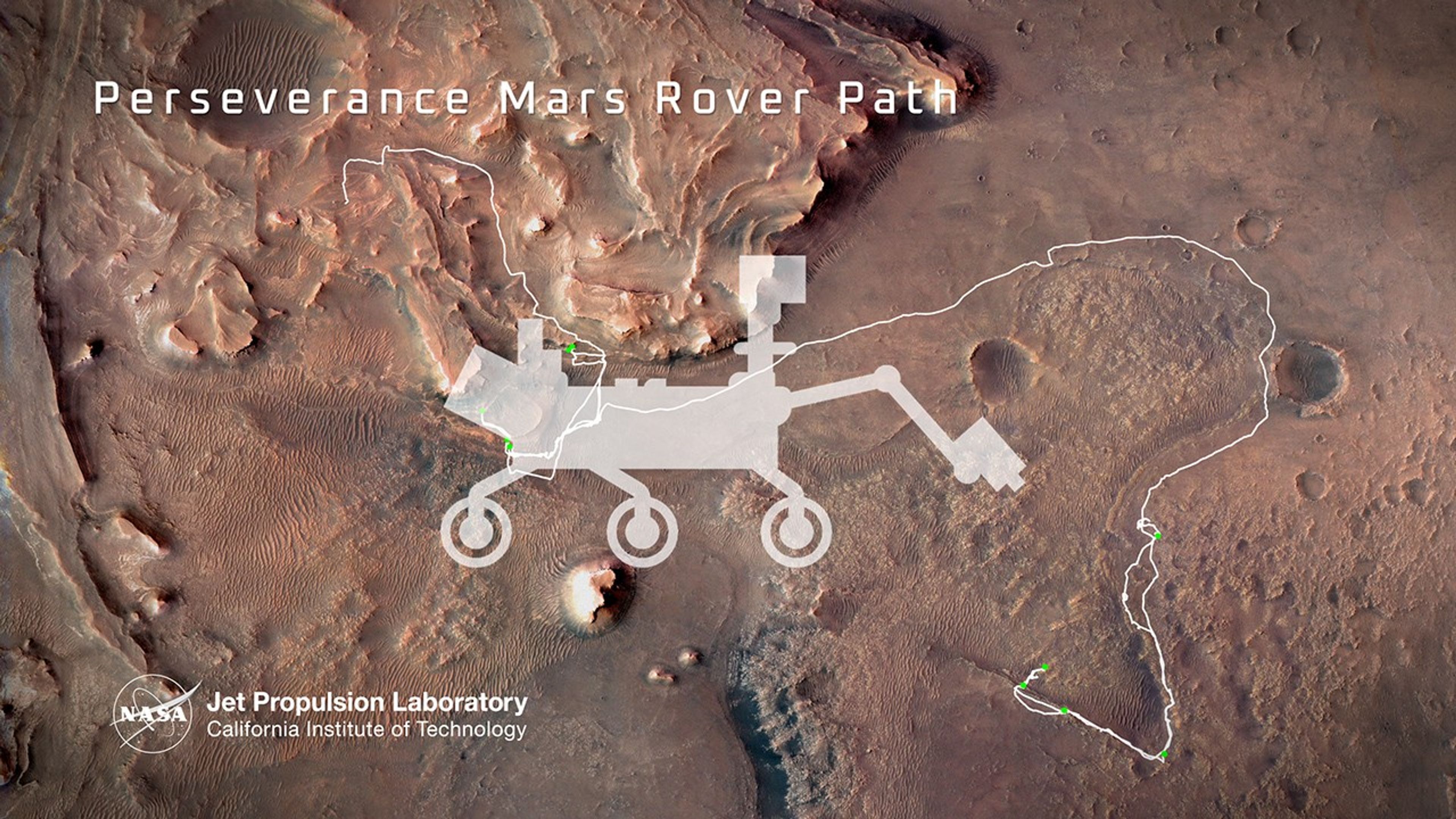
NASA’s Perseverance rover has become the first spacecraft to complete a marathon on Mars, traveling over 28 miles (45 kilometers) since landing in Jezero Crater in February 2021. The milestone, announced by the space agency, underscores the rover’s endurance and its critical role in NASA’s Mars Sample Return campaign, which aims to bring Martian rocks and soil to Earth for analysis. According to NASA’s Jet Propulsion Laboratory (JPL), Perseverance’s journey has been marked by both scientific discovery and technical challenges, including navigating treacherous terrain and avoiding obstacles like sand dunes and rocks.
While the rover’s primary mission is to search for signs of ancient microbial life and collect samples, its longevity has far exceeded expectations. Originally designed for a one-Mars-year (approximately two-Earth-year) mission, Perseverance has now operated for over five Earth years, with no signs of slowing down. “The fact that we’ve reached this distance is a testament to the rover’s robust design and the skill of the team operating it,” said Jennifer Trosper, Perseverance project manager at JPL, in a statement.
Perseverance’s marathon achievement comes as the rover continues to explore the ancient lakebed of Jezero Crater, where it has already collected 23 sample tubes. The mission’s next phase involves caching these samples for a future retrieval by the Mars Sample Return program, a collaborative effort between NASA and the European Space Agency (ESA). Meanwhile, the rover’s mobility system—including its six wheels and autonomous navigation software—has proven remarkably resilient, despite the harsh Martian environment.
NASA/JPL-Caltech video: Perseverance’s path across Mars since landing (2021–2024).
Why This Milestone Matters for Mars Exploration
Perseverance’s marathon accomplishment isn’t just about distance—it highlights three key advancements in Mars exploration:
- Endurance beyond design limits: The rover was built to last one Mars year (687 Earth days), but it has now operated for over 1,800 Earth days. This longevity reduces mission risk for future robotic explorers.
- Scientific productivity: The rover has collected enough samples to address core questions about Mars’ habitability, including whether the crater once hosted microbial life. “Each sample is a piece of the puzzle,” said Ken Farley, project scientist for Perseverance.
- Technological resilience: Perseverance’s autonomous navigation has allowed it to avoid hazards like the “Rogue Wave” rock formation, which damaged its predecessor, Curiosity, in 2022.
How Perseverance’s Journey Compares to Other Mars Rovers
Perseverance isn’t the only NASA rover to traverse Mars, but its marathon achievement sets it apart in several ways. Here’s how it stacks up against its predecessors:

| Rover | Landing Year | Total Distance Traveled (as of 2024) | Primary Mission Duration | Current Status |
|---|---|---|---|---|
| Sojourner | 1997 | ~100 meters (0.06 miles) | 7 Earth days | Inactive (first Mars rover) |
| Spirit | 2004 | ~7.73 miles (12.44 km) | 90 Earth days | Inactive (last contact: 2010) |
| Opportunity | 2004 | ~28.06 miles (45.16 km) | 90 Earth days | Inactive (last contact: 2018) |
| Curiosity | 2012 | ~17.8 miles (28.7 km) | 23 Earth months | Active (still exploring) |
| Perseverance | 2021 | ~28.2 miles (45.4 km) | 1 Mars year (~2 Earth years) | Active (extended mission) |
Source: NASA/JPL rover odometry reports (2024). Opportunity held the previous distance record until Perseverance surpassed it in June 2024.
What’s Next for Perseverance?
The rover’s extended mission includes several critical objectives in the coming months:
- Sample caching: Perseverance is preparing to deposit its collected samples in a designated “cache depot” near the base of Jezero Crater’s delta. This area was chosen for its accessibility to future retrieval missions.
- Delta exploration: The rover will ascend the ancient river delta, a key target for finding preserved organic material. “The delta is where we believe we have the best chance of finding biosignatures,” said Farley.
- Technical upgrades: NASA is testing new autonomous navigation algorithms to improve the rover’s ability to traverse complex terrain, including steep slopes and loose sand.
Looking ahead, the Mars Sample Return program remains on track for a 2028 launch of the Sample Retrieval Lander, which will carry a small rocket to bring the cached samples back to Earth by the early 2030s. “Perseverance is laying the groundwork for that mission every day,” said Trosper.
How the Rover’s Journey Has Advanced Science
Beyond distance, Perseverance’s mission has delivered groundbreaking scientific results. Here are three key discoveries enabled by its mobility:
- Evidence of past water activity: The rover’s instruments have confirmed that Jezero Crater was once a lake with inflowing rivers, as predicted by orbital data. “The sedimentary layers we’re seeing are textbook examples of a lake environment,” said Farley.
- Organic molecules: Perseverance’s SHERLOC instrument has detected aromatic organic compounds in rock samples, though their origin—biological or geological—remains under investigation.
- Climate clues: Data from the rover’s MEDA weather station has revealed seasonal dust storms and temperature patterns that help scientists understand Mars’ current climate and its evolution over billions of years.
These findings are being published in peer-reviewed journals, including a 2023 study in Science detailing the mineralogy of the crater floor (link). “Perseverance is rewriting what we know about Mars’ ancient environment,” said one of the study’s co-authors.
Challenges and Lessons Learned
Perseverance’s journey hasn’t been without obstacles. In 2022, the rover encountered a rock formation nicknamed “Rogue Wave” that damaged one of its wheels, a reminder of the harsh Martian terrain. Engineers at JPL developed a new route-planning algorithm to minimize wheel wear, extending the rover’s operational life.
Additionally, the mission has faced delays in the Mars Sample Return program, with NASA’s independent review board recommending a more conservative timeline to reduce technical risks (report). “Every mile Perseverance travels brings us closer to that goal,” said Trosper.
What Happens Next for Mars Exploration?
With Perseverance’s marathon achievement, NASA is looking ahead to the next phase of Mars exploration:
- Sample Return: The Mars Sample Return program remains the agency’s top priority, with a launch window opening in 2028. “We’re on track to bring these samples home,” said NASA Administrator Bill Nelson in a recent briefing.
- Human missions: Perseverance’s data is informing plans for crewed missions to Mars in the 2030s, including radiation studies and habitat testing.
- New rovers: NASA’s next Mars rover, currently in development, will focus on in-situ resource utilization (ISRU) to support future human explorers.
The agency’s next major Mars mission, the Mars Ice Mapper, is scheduled for launch in 2026 to study water ice deposits that could be used for future human settlements (mission details).
Frequently Asked Questions
Q: How fast does Perseverance travel on Mars?
A: The rover’s average speed is about 0.1 mph (0.16 km/h), though it can reach up to 0.093 mph (0.15 km/h) in optimal conditions. “We prioritize science over speed,” said Trosper.
Q: Why is Jezero Crater such an important location?
A: Jezero was chosen because orbital images showed it was once a lake with a river delta, making it a prime location to search for signs of ancient microbial life. The crater’s sedimentary layers preserve a record of Mars’ climate history.
Q: How does Perseverance avoid obstacles?
A: The rover uses a combination of onboard cameras, laser ranging, and autonomous navigation software to detect and avoid hazards. Engineers at JPL can also remotely adjust its path in real time.
Q: What happens to the samples once they’re brought to Earth?
A: The samples will be distributed to laboratories worldwide for analysis. NASA has already begun selecting scientists to study them, with results expected in the early 2030s.
Q: Could Perseverance still be operating in 10 years?
A: While nothing is guaranteed, Perseverance’s power source (a radioisotope thermoelectric generator) is expected to last at least until the late 2030s. “We’re not ruling out another extended mission,” said Trosper.
NASA’s Perseverance rover continues to push the boundaries of what’s possible on Mars, with its next major milestone—the ascent of Jezero Delta—expected in late 2024. For updates on the mission, visit NASA’s official Perseverance page. Share your thoughts on Mars exploration in the comments below or on our social media channels.
- Google Pixel Watch 5 Teased Ahead of August 12 Reveal with Gemini and Familiar Design
- Australia to Introduce Age Verification for 18+ Rated Video Games
- Associate Lawyer: Public Economic, Procurement and Administrative Law (0-3 Years Experience) – Luther (world-today-news.com)
- Letterboxd Down: Users Locked Out & Service Status Updates (archyworldys.com)