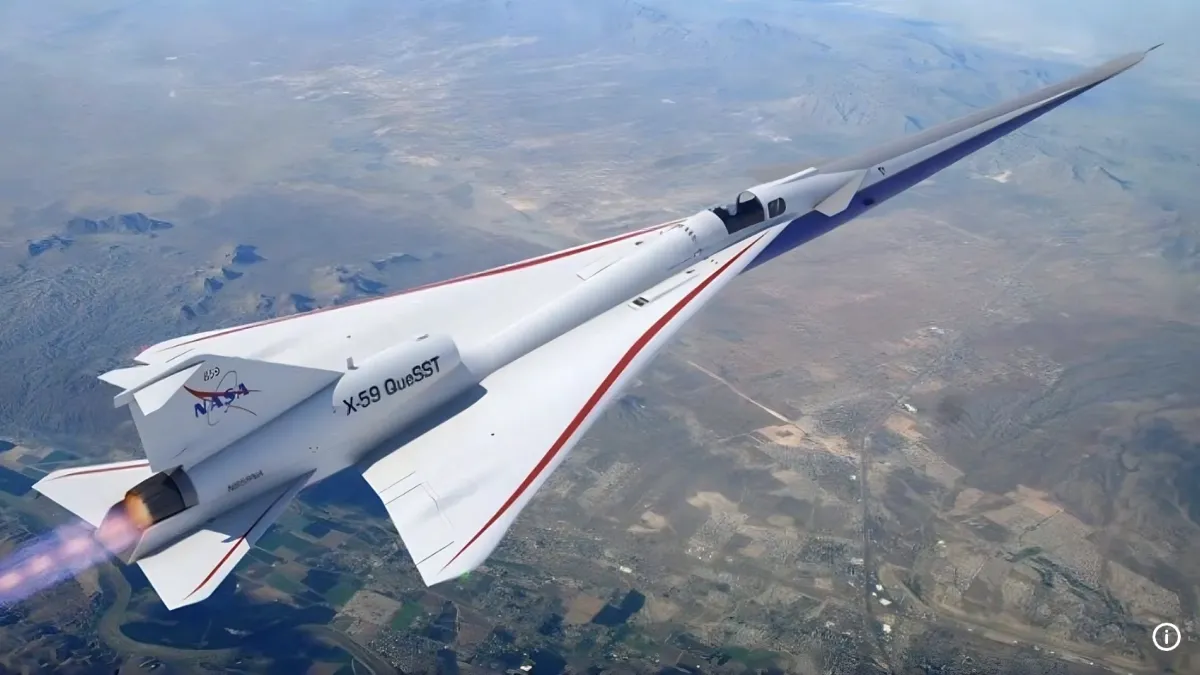
NASA’s experimental X-59 aircraft has reached a significant milestone in aviation history, successfully performing flight maneuvers that involve reaching supersonic speeds. Designed to test technologies that reduce the intensity of sonic booms, the aircraft represents a major step forward for the agency’s aeronautics research initiatives. This latest development follows a series of rigorous ground tests and ongoing experimental efforts at NASA facilities, including the Wallops Flight Facility, to push the boundaries of modern flight.
The X-59 is the centerpiece of NASA’s efforts to solve one of the most persistent challenges in supersonic travel: the disruptive noise generated when an aircraft breaks the sound barrier. By utilizing a unique design intended to soften the “boom” into a quieter “thump,” the agency aims to gather data that could eventually influence future regulations regarding overland supersonic flight. These advancements are part of a broader commitment to pioneering aeronautics research and scientific discovery, as detailed in the latest reports from NASA.gov.
The Engineering Behind the X-59
At the heart of the X-59 project is the goal of “quiet” supersonic flight. Traditional supersonic aircraft often produce loud sonic booms that can be heard on the ground, which has historically led to restrictions on flying at such speeds over populated areas. NASA’s experimental approach involves shaping the aircraft’s airframe to prevent the shockwaves from coalescing into a single, jarring boom. This design philosophy is a direct evolution of decades of aeronautics research that traces its roots back to the National Advisory Committee for Aeronautics (NACA), the predecessor agency to NASA, according to Wikipedia.
The aircraft itself is a testament to precision engineering, featuring an elongated nose and specific wing configurations that distinguish it from the iconic supersonic jets of the past. Beyond the airframe, the project relies on advanced deep-space communications and robust testing protocols to ensure data integrity during high-speed flight. As NASA continues to manage its diverse portfolio of missions—ranging from the Artemis lunar program to the ongoing exploration of Mars by the Perseverance rover—the X-59 serves as a critical bridge between current aerospace capabilities and the future of commercial aviation, as noted in recent NASA mission updates.
Why Supersonic Research Matters
The implications of the X-59 program extend beyond experimental flight. By proving that supersonic speeds can be achieved with minimal ground-level noise, NASA hopes to provide the technical foundation for a new era of high-speed travel. This research is particularly relevant as the agency balances its US$24.4 billion annual budget for 2026 across a wide array of scientific and exploration objectives, including planetary science and human spaceflight, as outlined in official NASA organizational data.
The project also highlights the collaborative nature of modern aerospace development. While the X-59 focuses on atmospheric flight, its success is bolstered by the same spirit of innovation found in NASA’s robotic spacecraft missions and the continued research into deep-space communications. For the global aviation industry, the successful testing of the X-59 is a signal that the barriers to faster, more efficient travel are being addressed through data-driven, methodical testing. It represents a shift from the experimental phase toward a more refined understanding of how to harmonize high-performance aircraft with environmental and public concerns.
What Happens Next
Following the recent flight tests, the X-59 program is slated to continue its data collection phase. Engineers and researchers will analyze the flight telemetry to confirm the effectiveness of the aircraft’s noise-reduction design. These findings will be critical for future deliberations regarding aviation policy and the potential reintroduction of commercial supersonic travel over land. As the agency moves forward, it remains focused on its core mission: pioneering the future in space exploration and aeronautics research.
For those interested in following the progress of the X-59 and other NASA milestones, the agency provides regular updates through its official website. The path forward involves continued flight testing and rigorous analysis, ensuring that each step taken is supported by comprehensive research and safety evaluations. Readers are encouraged to monitor official NASA channels for further announcements, technical reports, and insights into how this experimental aircraft is shaping the next generation of flight. We invite you to share your thoughts on the future of supersonic travel in the comments below.
Related reading