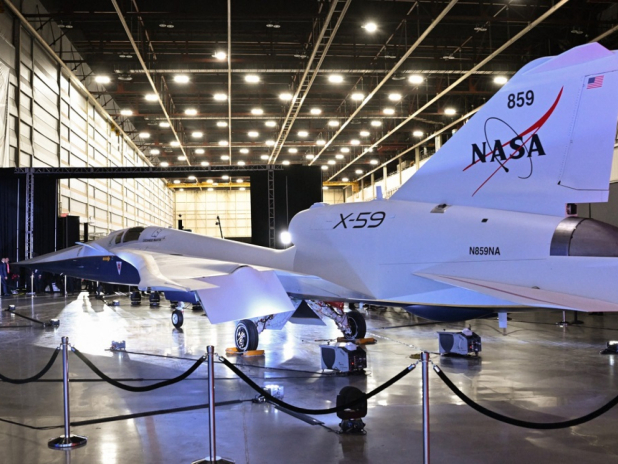
The quest to revolutionize civil aviation reached a significant milestone this week as the National Aeronautics and Space Administration (NASA) continues its progress toward redefining the future of supersonic flight. The agency’s X-59 research aircraft, a cornerstone of the Quesst mission, represents a sophisticated engineering endeavor designed to address one of the most persistent hurdles in high-speed travel: the sonic boom. By shifting the paradigm from loud, disruptive shockwaves to a muted “thump,” NASA aims to provide the technical data necessary to potentially lift current bans on supersonic flight over land.
As we observe these developments in June 2026, the X-59 stands as a testament to decades of aeronautical research and public-private collaboration. Developed in partnership with Lockheed Martin, the aircraft is not intended to be a commercial product itself, but rather an experimental platform—a “flying laboratory”—that will gather critical acoustic data. This data is expected to be shared with international and domestic regulators to inform new, sound-based standards for commercial supersonic aircraft design.
Engineering a Quieter Future
The X-59 “Quiet SuperSonic Technology” (QueSST) aircraft is distinct due to its unique airframe geometry. At approximately 100 feet long with a wingspan of roughly 30 feet, the aircraft features an elongated, needle-like nose designed specifically to prevent shockwaves from coalescing into the traditional, jarring double-bang associated with supersonic travel. Instead, the design aims to soften these waves into a sound roughly equivalent to a car door slamming in the distance when heard from the ground.
According to official documentation from NASA’s Quesst mission, the aircraft’s development has been a multi-year process involving rigorous wind tunnel testing and advanced computational fluid dynamics simulations. The integration of these systems at Lockheed Martin’s Skunk Works facility in Palmdale, California, underscores the high level of technical precision required to balance aerodynamic efficiency with acoustic mitigation.
The Path to Regulatory Change
The primary goal of the X-59 is to enable overland supersonic flight. Currently, federal regulations in the United States, as well as international standards, largely prohibit civil supersonic travel over populated areas due to the public disturbance caused by sonic booms. NASA’s strategy is to conduct community overflight tests once the aircraft is fully operational, using the gathered data to demonstrate that the sound levels are acceptable to the general public.
This process is essential for the aviation industry, which has long sought to reduce travel times across the globe. By providing empirical, peer-reviewed data to the Federal Aviation Administration (FAA) and international bodies like the International Civil Aviation Organization (ICAO), NASA hopes to replace the current speed-based restrictions with noise-based standards. This would allow aircraft manufacturers to design faster planes that meet specific decibel limits, rather than being restricted by a blanket ban on supersonic speeds.
Technical Milestones and Mission Phases
The journey of the X-59 involves several distinct phases, ranging from ground vibration testing to initial flight envelope expansion. Each test flight is meticulously planned to monitor the aircraft’s structural integrity and propulsion performance. The data gathered during these early flights serves as a baseline for the more complex acoustic testing that will take place in the coming months and years.
For those tracking the program’s progress, NASA provides regular updates through its official mission portal. These updates include information on flight test schedules, technical specifications, and the broader implications for the aerospace sector. As the program moves forward, the focus will shift from proving the aircraft can fly safely to proving it can fly quietly across diverse geographic and atmospheric conditions.
Why This Matters for Global Travel
If successful, the implications of the X-59 program extend far beyond simple speed. The ability to fly at supersonic speeds over land could drastically reduce travel times for transcontinental flights, potentially connecting major global hubs in a fraction of the current time. However, the path to commercial viability remains long and will depend heavily on the results of the upcoming acoustic validation flights.
Industry stakeholders are watching closely, as the success of the X-59 could spark a new era of investment in supersonic transport. Conversely, the technical challenges of maintaining such high speeds while keeping noise levels low at an efficient fuel burn rate remain significant. The data provided by the X-59 will essentially act as the “gold standard” for any future commercial supersonic endeavors.
Looking Ahead
As of June 2026, the project remains in a critical testing phase. NASA has indicated that the flight test program will continue to expand in complexity, with future milestones involving specific flight paths designed to measure how sound propagates over various types of terrain and under different atmospheric conditions. These results will be meticulously analyzed to ensure the data is robust enough to influence future aviation policy.
We will continue to monitor the status of the X-59 program and report on key milestones as they are confirmed by the agency. The evolution of this aircraft is a hallmark of modern aeronautical engineering, balancing the human desire for speed with the necessity of community acceptance. For those interested in the future of flight, keeping an eye on the official NASA mission updates is the best way to stay informed on this developing story.
What are your thoughts on the return of supersonic travel? Will the promise of faster transit times outweigh potential environmental and noise concerns? Share your perspective in the comments section below, and be sure to check back for our next update on the X-59’s flight test progress.
Keep reading