
The U.S. stock market faced heightened volatility this week as investors recalibrated their positions in semiconductor companies ahead of critical earnings reports. The Nasdaq Composite index saw downward pressure as a broader sell-off cooled recent rallies, prompting market participants to reassess valuations in the technology sector, according to reporting from Reuters on market movements tied to major tech earnings. While the tech-heavy Nasdaq struggled to maintain momentum, the Dow Jones Industrial Average showed relative resilience, highlighting a divergence in investor sentiment across different market segments.
This market activity reflects a period of intense scrutiny for chipmakers, which have served as the primary drivers of equity market growth throughout the year. Analysts point to concerns regarding high valuation multiples and the sustainability of record-setting capital expenditures by major cloud providers. According to the latest market data from CNBC, the tech-sector retreat was largely triggered by a cautious outlook on semiconductor demand, leading investors to take profits after a prolonged period of expansion.
Market Dynamics and Sector Rotation
The recent pullback in the Nasdaq Composite is largely attributed to a rotation out of high-growth technology stocks into more defensive areas of the market. As institutional investors adjust their portfolios, the focus has shifted toward companies with immediate cash flow stability rather than those priced for aggressive future growth. Financial analysts at Bloomberg noted that the anticipation surrounding Nvidia’s quarterly results acted as a focal point for this volatility, as the company’s performance is widely seen as a bellwether for the broader artificial intelligence infrastructure boom.
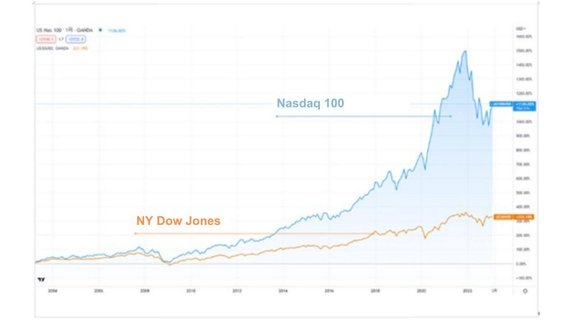
The divergence between the Nasdaq and the Dow Jones suggests that while tech-centric portfolios are experiencing a correction, the underlying economy remains supported by more traditional sectors such as industrials and healthcare. Market participants are currently monitoring the Federal Reserve’s latest meeting minutes for clues regarding the trajectory of interest rates, which continue to influence the discount rates applied to future earnings of growth-oriented technology firms.
The Role of Semiconductor Valuations
Semiconductor stocks have become the most significant variable in U.S. market performance due to their concentrated ownership and high beta. When major chip manufacturers experience price swings, the impact is disproportionately felt in indices like the Nasdaq 100. According to The Wall Street Journal, the recent cooling of the market is consistent with historical patterns where investors seek to “de-risk” ahead of major corporate catalysts that could trigger significant price movements in either direction.
For investors, the current environment underscores the importance of diversification. The rise in popularity of exchange-traded funds (ETFs) that track global indices or specific sectors has provided a mechanism for managing this volatility. By spreading exposure across a wider range of assets, market participants aim to mitigate the impact of single-sector downturns, a strategy that has gained traction as individual tech stocks face increased regulatory and competitive headwinds.
Looking Toward Future Volatility
The next major checkpoint for investors will be the release of U.S. Personal Consumption Expenditures (PCE) data, which the Bureau of Economic Analysis uses as its primary gauge for inflation. This data, coupled with subsequent corporate guidance from major tech firms, will likely dictate market direction for the remainder of the quarter. Investors are advised to monitor official filings through the SEC’s EDGAR database to ensure they are basing decisions on verified financial disclosures rather than market speculation.
Market volatility is expected to persist as long as economic indicators remain sensitive to interest rate policy and corporate capital spending. We encourage readers to share their perspectives on the current state of the semiconductor sector and how they are adjusting their investment strategies in the comments section below.