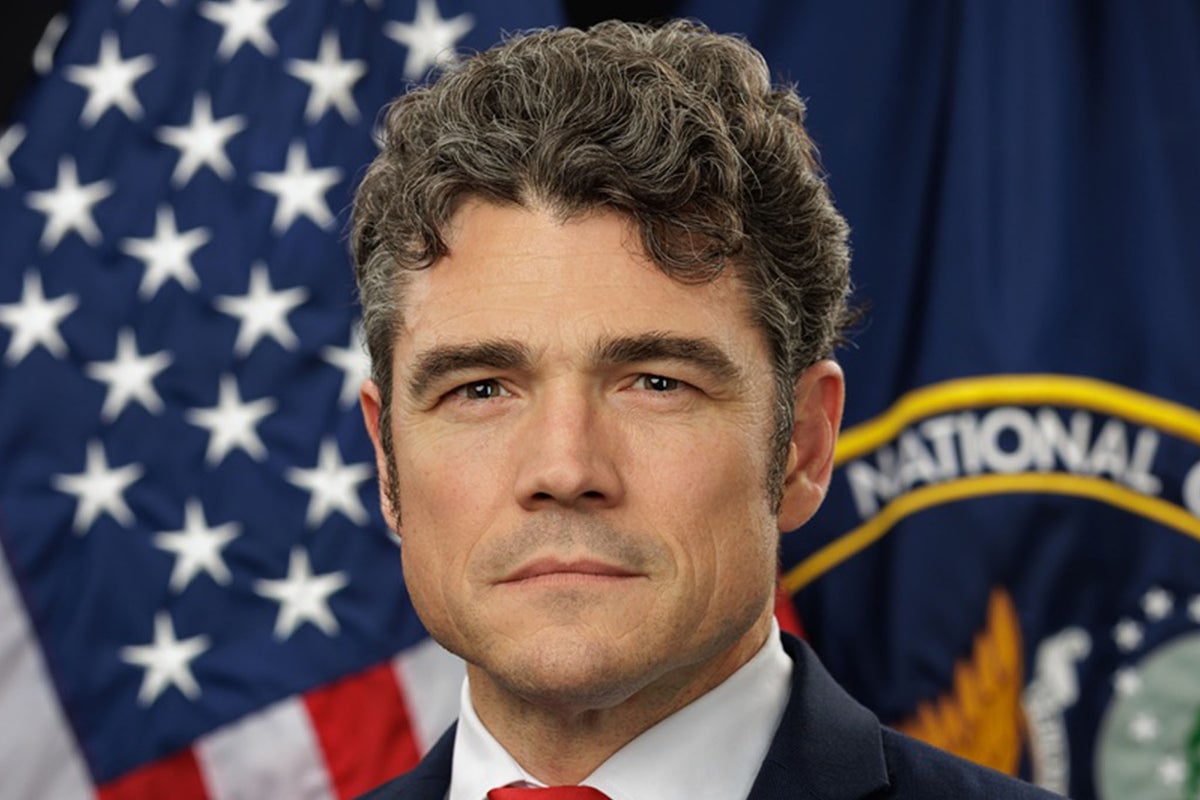
Sofia, Bulgaria – A sharp rebuke of the Trump administration’s foreign policy has come from within its own ranks, as former National Counterterrorism Center Director Joe Kent resigned, citing irreconcilable differences over the escalating tensions with Iran. Kent, a veteran of both the U.S. Army special forces and the CIA, publicly stated his inability to support what he characterized as a looming war with Tehran, arguing that Iran poses no immediate threat to U.S. National security. The resignation, announced via a post on X (formerly Twitter), has ignited a firestorm of debate, raising questions about the motivations behind the administration’s increasingly hawkish stance towards Iran and the influence of external actors on U.S. Foreign policy decisions.
Kent’s departure is particularly noteworthy given his own complex and controversial background. His confirmation to the NCTC director role was hard-fought, facing significant opposition from Democratic senators who questioned his qualifications and raised concerns about extremist views. The resignation letter, addressed directly to President Trump, alleges a deliberate campaign of misinformation orchestrated by “high-ranking Israeli officials and influential members of the American media” to push the U.S. Towards military conflict with Iran. He claims this campaign deliberately misled the President into believing an attack on Iran would be swift and decisive, echoing past failures in foreign policy decision-making.
The core of Kent’s argument centers on the assertion that the justification for military action against Iran is based on fabricated threats. He draws a parallel to the lead-up to the Iraq War, suggesting that similar tactics of deception are being employed to justify another costly and ultimately detrimental military intervention. This accusation, coupled with his personal history – including the loss of his wife, a Navy cryptanalyst, in an ISIS bombing in Syria – lends a particularly poignant weight to his opposition to further military engagement in the region. Kent’s statement underscores a growing concern among some within the intelligence community about the potential for miscalculation and unintended consequences in the Middle East.
Resignation Letter Details Allegations of Israeli Influence
The resignation letter, the contents of which have been widely reported, is a scathing indictment of the forces Kent believes are driving the U.S. Towards war with Iran. He accuses unnamed “high-ranking Israeli officials” and “influential members of the American media” of actively working to undermine President Trump’s previous policies and advocating for a more aggressive approach towards Tehran. Kent alleges a coordinated “misinformation campaign” designed to convince the President that Iran represents an imminent threat, a claim he vehemently disputes. He specifically references the Iraq War, warning that the same deceptive tactics are being used to justify another potentially disastrous military intervention. The Independent reported on Kent’s claims, highlighting the controversial nature of his accusations.
Kent’s letter similarly touches upon his personal tragedy, referencing the death of his wife in a 2014 ISIS bombing in Syria. He states that this loss fuels his opposition to sending another generation of Americans into harm’s way for a conflict he believes serves no legitimate national interest. However, his framing of the ISIS campaign as “manufactured by Israel” has drawn criticism and accusations of antisemitism, further complicating the narrative surrounding his resignation.
Controversial Background and Senate Confirmation Battle
Joe Kent’s path to becoming Director of the National Counterterrorism Center was far from smooth. His nomination faced intense scrutiny from Democratic senators, who raised concerns about his qualifications and questioned his adherence to mainstream intelligence assessments. Critics labeled him “patently unqualified” and accused him of promoting “conspiracy theories” and “white supremacist views.” The Senate confirmation battle stretched for six months, ultimately resulting in a narrow confirmation.
During the confirmation process, Kent’s association with Tulsi Gabbard, the former Democratic congresswoman and 2020 presidential candidate, also came under fire. While awaiting Senate confirmation, he joined the Office of the Director of National Intelligence as a senior aide to Gabbard, a move that further fueled concerns about his political leanings and potential biases. Gabbard herself has been criticized for her views on Syria and her past associations with figures linked to the Assad regime.
Involvement in Classified Information Leaks and Policy Disputes
Kent’s tenure within the Trump administration was marked by controversy, including his alleged involvement in a classified information leak and disputes over intelligence assessments. He was reportedly one of the officials involved in a March 2025 Signal chat that inadvertently included the editor-in-chief of The Atlantic while discussing classified war plans. This incident raised serious questions about security protocols and the handling of sensitive information within the administration.
reports suggest that Kent used his position as an aide to Gabbard to pressure intelligence analysts to alter an assessment regarding the alleged links between the Venezuelan government and the criminal gang Tren de Aragua. This alleged attempt to manipulate intelligence to align with the administration’s political agenda sparked accusations of politicization within the intelligence community. These incidents, combined with his recent resignation, paint a picture of a deeply fractured administration grappling with internal dissent and conflicting priorities regarding foreign policy.
The Broader Context: U.S.-Iran Relations and Regional Tensions
Kent’s resignation occurs against a backdrop of escalating tensions between the U.S. And Iran. The relationship between the two countries has been fraught with hostility for decades, marked by mutual distrust and a series of proxy conflicts. The Trump administration’s withdrawal from the Joint Comprehensive Plan of Action (JCPOA), commonly known as the Iran nuclear deal, in 2018, significantly exacerbated these tensions. The reimposition of sanctions on Iran crippled its economy and prompted Tehran to gradually roll back its commitments under the agreement.
Recent months have seen a series of escalating incidents, including attacks on oil tankers in the Persian Gulf, drone strikes targeting U.S. Forces in Iraq and increased Iranian support for proxy groups in the region. These events have raised fears of a potential military confrontation, prompting calls for de-escalation and renewed diplomatic efforts. The Biden administration has expressed a willingness to rejoin the JCPOA, but negotiations have stalled due to disagreements over the terms of the agreement and Iran’s nuclear program. The current situation remains highly volatile, with the potential for miscalculation and unintended consequences.
Key Takeaways
- Joe Kent resigned as Director of the National Counterterrorism Center, citing opposition to a potential war with Iran.
- Kent alleges a deliberate misinformation campaign orchestrated by Israeli officials and American media to push for military action.
- His resignation highlights deep divisions within the U.S. Government regarding Iran policy.
- Kent’s controversial background and past actions have drawn criticism and raised questions about his judgment.
- The situation between the U.S. And Iran remains highly volatile, with the risk of escalation.
The implications of Kent’s resignation extend beyond the immediate personnel change. It signals a growing rift within the intelligence community and raises serious questions about the integrity of the decision-making process regarding U.S. Foreign policy. The accusations of external influence, if substantiated, could have far-reaching consequences for U.S.-Israel relations and the credibility of U.S. Intelligence assessments. The coming weeks will be crucial in determining whether President Trump will heed Kent’s warning and pursue a path of de-escalation, or whether the U.S. Will continue on a trajectory towards potential military conflict with Iran. The next key development to watch will be the outcome of ongoing diplomatic efforts to revive the JCPOA, and whether any progress can be made towards a negotiated resolution of the nuclear issue.
What are your thoughts on Kent’s resignation and the future of U.S.-Iran relations? Share your comments below and join the conversation.
- Google Pulls Nano Banana 2 From Google Earth After OSINT Backlash
- Denmark News: Teenagers Arrested for School Terror Plot and SAS Strike Threats
- Israel’s Foreign Ministry Strategy: Interview With Lior Haiat (world-today-news.com)
- House of the Dragon Season 3: Director Insights, Episode Reviews and Fan Theories (newsdirectory3.com)