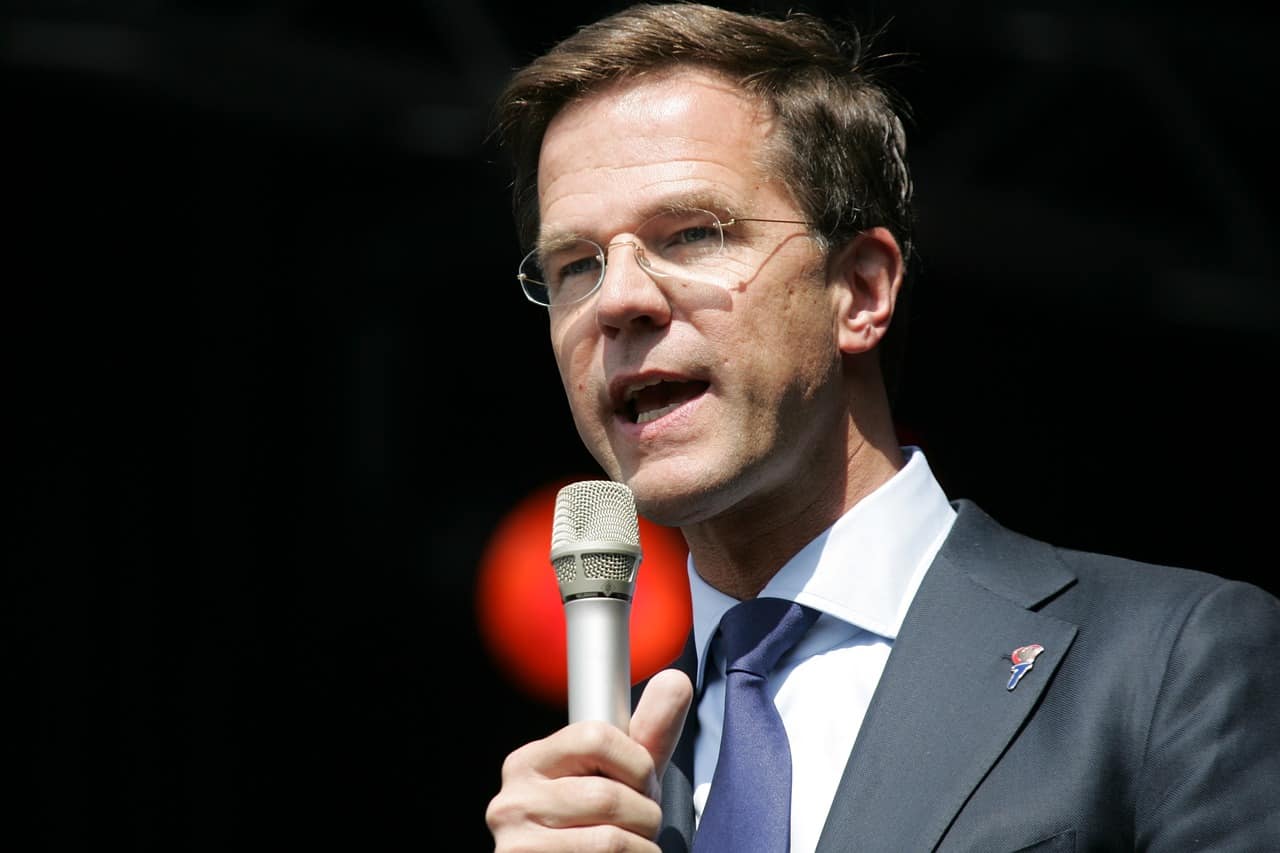
Brussels, Belgium – NATO Secretary General Mark Rutte has affirmed strong support among key European allies for the recent U.S. Military campaign against Iran, following actions that reportedly resulted in the death of Supreme Leader Ayatollah Ali Khamenei and a degradation of Iran’s nuclear and ballistic missile capabilities. The statements, made during a visit to North Macedonia, signal a unified front despite the significant escalation in tensions in the Middle East. This support comes as airstrikes continue across the region in the wake of the U.S. Operation.
Rutte emphasized the widespread backing he has received from European leaders, stating he spoke with numerous counterparts over the weekend and early this week. “I feel widespread support in Europe,” Rutte told journalists. “I clearly sensed that taking out the nuclear capability, taking out the ballistic missile capability and also Khamenei gone, this is applauded by many of my colleagues in NATO.” The NATO chief’s comments represent a significant show of solidarity with the United States, particularly given the potential for further regional instability. The situation underscores the complex geopolitical landscape and the interconnectedness of security interests among NATO member states.
While acknowledging the strong support for the U.S. Actions, Rutte was careful to clarify NATO’s role, stating the alliance itself was not directly involved in the military operations. “But I can assure you that NATO will defend every inch of NATO territory,” he added, reaffirming the organization’s commitment to collective defense. This distinction highlights the delicate balance between supporting a key ally and maintaining the alliance’s neutrality in a conflict not directly targeting a NATO member. The statement aims to reassure member states and deter any potential escalation that could draw NATO into a wider conflict.
European Leaders Express Support for U.S. Campaign
The backing from European leaders appears broad, with several key figures publicly voicing their support for President Trump’s decision to seize decisive action against Iran. According to reports, German Chancellor Friedrich Merz is scheduled to travel to Washington for meetings with President Trump, demonstrating Germany’s commitment to the alliance. NATO Chief Praises Trump’s Handling of Iran, as reported by Slay News, details Rutte’s assertion that European leaders are “stepping up” to provide logistical support and defend U.S. Interests in the region.
The United Kingdom initially faced legal concerns regarding its involvement, but ultimately provided access to its bases for defensive operations, demonstrating a willingness to support the U.S.-led effort. Yahoo News reports that this support, alongside backing from France and Germany, underscores the unity among key allies. This coordinated response is particularly significant given the potential for Iranian retaliation and the need for a unified front to deter further aggression.
Impact on Iran’s Military Capabilities
The U.S. Military campaign reportedly targeted Iran’s nuclear and ballistic missile infrastructure, aiming to significantly degrade the regime’s ability to develop and deploy these weapons. Rutte specifically highlighted the elimination of Iran’s nuclear capability and the degradation of its ballistic missile program as key achievements of the operation. This action is intended to address long-standing concerns about Iran’s nuclear ambitions and its destabilizing influence in the region. The dismantling of these capabilities is seen as crucial for maintaining regional stability and preventing the proliferation of nuclear weapons.
The elimination of Ayatollah Ali Khamenei, Iran’s Supreme Leader, represents a significant blow to the regime’s leadership and could potentially lead to a period of internal instability. While the long-term consequences of his death remain uncertain, it is widely believed that his removal will disrupt the regime’s decision-making processes and weaken its ability to project power in the region. The impact of this event will likely be felt across the Middle East, with potential implications for regional alliances and power dynamics.
NATO’s Role and Future Considerations
Despite the strong political support for the U.S. Campaign, NATO remains officially uninvolved in the military operations. Ground.news reports that Rutte explicitly stated NATO as an alliance would not be joining the regional conflict. Still, the alliance is prepared to defend its own territory should the conflict escalate and threaten NATO member states. This position reflects NATO’s core principle of collective defense while allowing individual member states to provide support to the U.S. On a bilateral basis.
The situation raises vital questions about the future of NATO’s role in the Middle East and its response to evolving security threats. While the alliance is not directly involved in the current conflict, it is likely to play a crucial role in managing the aftermath and preventing further escalation. NATO’s ability to maintain unity and coordinate its response will be critical in ensuring regional stability and protecting the interests of its member states. The current crisis underscores the need for continued dialogue and cooperation among allies to address the complex challenges facing the region.
Key Takeaways
- NATO Secretary General Mark Rutte has expressed strong support for the U.S. Military campaign against Iran.
- European leaders, including Germany, France, and the UK, are reportedly backing the U.S. Actions.
- The campaign aimed to eliminate Ayatollah Ali Khamenei and degrade Iran’s nuclear and ballistic missile capabilities.
- NATO is not directly involved in the military operations but remains committed to defending its own territory.
The situation remains fluid, and further developments are expected in the coming days and weeks. The international community is closely monitoring the situation, and diplomatic efforts are underway to de-escalate tensions and prevent a wider conflict. The next key development to watch will be the response from Iran and the potential for further retaliatory strikes. Readers are encouraged to stay informed through reliable news sources and to engage in constructive dialogue about the implications of this evolving crisis.
Do you have thoughts on NATO’s response to the situation in Iran? Share your opinions in the comments below.
Worth a look
- Luxury Tromsø Villa Sold Far Below Asking Price
- How to Enable Spotify Content and Consent to Data Usage
- Netanyahu Rejects Trump’s Gaza Plan: No Hamas Disarmament or Israeli Withdrawal (archyworldys.com)
- North Korean Hacking Group Kimsuky Building AI Tools for Cyberattacks, Genians Reports (archynewsy.com)