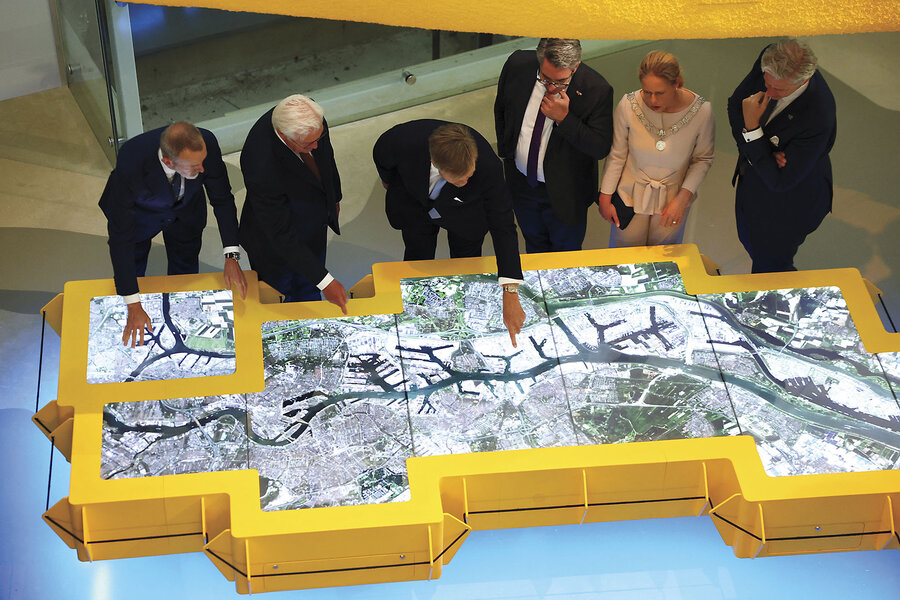
NATO is prioritizing the security and resilience of civilian infrastructure, specifically ports and bridges, as a central theme for its upcoming annual summit to ensure the rapid movement of military forces across Europe. According to official NATO strategic planning, the ability to mobilize troops and equipment depends heavily on the stability of these civilian hubs, which the alliance views as critical vulnerabilities in the event of a large-scale conflict.
The shift toward “military mobility” reflects a growing concern among allies that current civilian infrastructure cannot support the weight or volume of modern armored divisions. NATO Secretary General Jens Stoltenberg has repeatedly emphasized that the alliance must be able to move forces quickly from the Atlantic coast to the eastern flank, a process that requires seamless coordination between member states and the private operators of ports and rail networks.
This focus on infrastructure is part of a broader effort to implement the Military Mobility Pledges, where member nations commit to removing administrative and physical bottlenecks. These bottlenecks include bridge weight limits, rail gauge differences, and port congestion that could delay the arrival of reinforcements during a crisis.
Why are ports and bridges critical to NATO’s defense strategy?
Civilian hubs serve as the primary entry points for heavy equipment arriving from North America and other allies. If a major port is disabled or congested, the entire logistics chain for the eastern flank collapses. According to the NATO Military Mobility framework, the alliance is working to standardize the “last mile” of transport, ensuring that once a tank leaves a ship, it can actually cross local bridges to reach the front lines.

The vulnerability of these sites is not theoretical. Recent conflicts and hybrid threats have highlighted how targeting critical infrastructure can paralyze a nation’s ability to respond to aggression. By integrating civilian port security into military planning, NATO aims to create a “resilient web” of logistics that cannot be severed by a single strike on a key bridge or terminal.
Military mobility is not just about physical strength but also about bureaucracy. NATO officials have noted that customs delays and differing national regulations for transporting oversized loads often cause more friction than the physical infrastructure itself. The summit is expected to address how to harmonize these rules across the European continent.
How will the summit address infrastructure vulnerabilities?
Allied leaders are expected to discuss the creation of a more robust “Infrastructure Map” that identifies exactly which bridges are capable of supporting Main Battle Tanks (MBTs) and which ports have the crane capacity for rapid offloading. This data is essential for the NATO Deployment plans, which dictate how quickly forces can be shifted in response to a threat.

The alliance is also looking at the role of private sector partnerships. Since most ports and bridges are managed by civilian authorities or private companies, NATO must establish clear protocols for how these assets transition to military control during a state of emergency. This includes securing digital systems against cyberattacks that could freeze port operations.
Member states are being encouraged to invest in “dual-use” infrastructure—projects that serve the public during peacetime but are designed with military specifications for wartime. This includes reinforcing bridge pylons and expanding port berths to accommodate larger military transport vessels.
What are the risks of failing to secure these hubs?
A failure to synchronize civilian infrastructure with military needs creates “logistical chokepoints.” If a division of troops is stalled at a bridge that cannot support their weight, they become stationary targets. According to strategic assessments, the speed of mobilization is currently a primary metric for deterrence; if an adversary believes NATO cannot move its forces efficiently, the deterrent effect of the alliance is weakened.
Furthermore, the reliance on a few “super-ports” creates a high-risk concentration of assets. NATO is exploring ways to diversify entry points, utilizing smaller, secondary ports to ensure that the loss of a single major hub does not halt the flow of materiel.
The integration of these hubs also involves addressing the “intermodal” challenge—the transition from sea to rail to road. Discrepancies in rail gauges between different European countries remain a significant hurdle, requiring time-consuming transfers of equipment that can be avoided through targeted infrastructure investment.
The next official checkpoint for these initiatives will be the formal adoption of the updated defense plans during the NATO summit, where member states will report on their progress regarding the Military Mobility Pledges. This will determine the actual operational capacity of the alliance to move forces across the European theater.
Share your thoughts on how civilian infrastructure should be balanced with national security in the comments below.