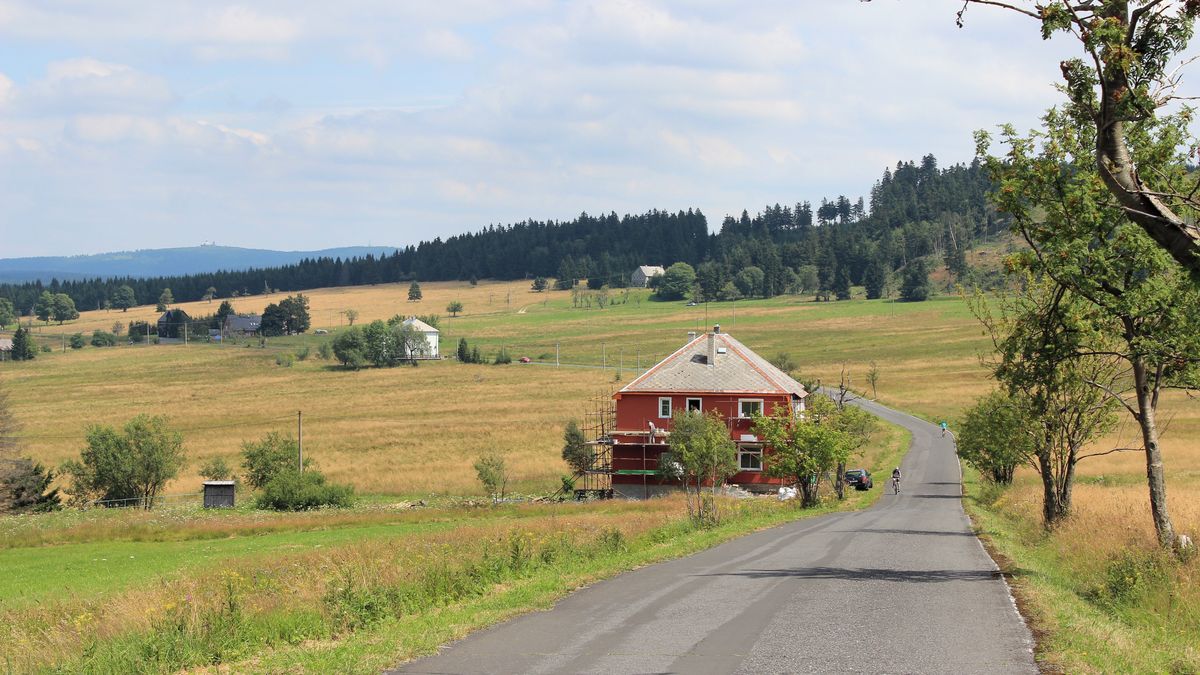
The long-running legal dispute over real estate development and environmental preservation in the Czech mountain resort of Boží Dar has officially reached the Constitutional Court, raising fundamental questions about local zoning autonomy and the protection of vulnerable alpine ecosystems. The case centers on municipal efforts to expand construction zones in an area surrounded by protected natural reserves, triggering intense opposition from conservationists and regional authorities who argue that unchecked building threatens fragile peat bogs and rare wildlife habitats.
Boží Dar, located in the Krušné hory (Ore Mountains) near the German border, holds the distinction of being the highest town in the Czech Republic, sitting at an elevation of roughly 1,028 meters. As winter tourism and demand for recreational properties surge, municipal leaders have pushed for updated territorial development plans to accommodate new guesthouses, apartments, and tourism infrastructure. Critics, including environmental groups and regional planners, contend that these commercial expansions encroach upon protected landscape areas and disrupt critical watershed ecosystems that feed the surrounding nature reserves, according to public registry records and regional administrative filings.
Municipal officials maintain that controlled growth is essential for the economic survival of the mountain community, which relies heavily on tourism. Local leadership argues that modernizing infrastructure and permitting new accommodation facilities will prevent depopulation and generate tax revenue needed for municipal services. However, opponents counter that the scale of proposed developments far exceeds the carrying capacity of the local environment, threatening unique natural formations such as the Boží Dar peat bog national nature reserve.
Legal Battlegrounds and Regional Planning Disputes
The judicial journey to the Constitutional Court highlights deep tensions within Czech spatial planning law, where municipal self-governance frequently collides with state-level environmental protections. Lower courts and regional authorities have previously reviewed challenges filed by both environmental advocates and property owners affected by restrictive zoning definitions. The core legal question before the justices involves balancing constitutionally guaranteed property rights and municipal autonomy against the state’s obligation to protect the environment under national conservation statutes.
Environmental organizations have repeatedly pointed to strict European Union directives and Czech conservation laws that designate large portions of the Ore Mountains as sensitive ecological zones. Previous administrative reviews focused on whether municipal land-use changes adequately weighed environmental impact assessments or if local zoning updates circumvented broader regional protections. The Constitutional Court’s eventual ruling is expected to establish a crucial legal precedent for how mountain municipalities across the Czech Republic manage the delicate balance between commercial real estate development and ecological preservation.
Stakeholder Perspectives and Economic Realities
For property owners and local developers in Boží Dar, the prolonged legal uncertainty has stalled multi-million-koruna investments in regional hospitality infrastructure. Proponents of the construction plans argue that private capital is necessary to upgrade aging utilities and winter sports facilities to meet modern European tourism standards. They assert that blanket restrictions on land use penalize local landowners while failing to address broader climate or tourism pressures.
Conversely, conservation scientists and local hiking associations emphasize that the Ore Mountains host rare endemic plant species and fragile hydrological networks that cannot easily recover from heavy construction disturbance. Soil compaction from heavy machinery and increased wastewater generation pose direct threats to local streams and peat ecosystems. Public access documents and municipal announcements indicate that residents remain sharply divided over the town’s future trajectory, caught between the financial allure of expanding tourism and the desire to preserve the pristine natural landscape that draws visitors to the region.
Next Steps and Judicial Timeline
The Constitutional Court has acknowledged receipt of the municipal filings and associated administrative documentation, with a formal hearing schedule to be announced through the court’s official docket. Legal experts note that a decision is unlikely before the coming months, given the complexity of balancing municipal planning rights with national environmental statutes. Municipal authorities in Boží Dar and representatives of the opposing environmental groups await the bench’s definitive interpretation of spatial planning boundaries.
Readers seeking further details on the docket can monitor updates directly through the Ústavní soud (Constitutional Court of the Czech Republic) website, where official case summaries and subsequent rulings will be published. We welcome your perspectives on this developing story; please share your thoughts or join the discussion in the comments section below.