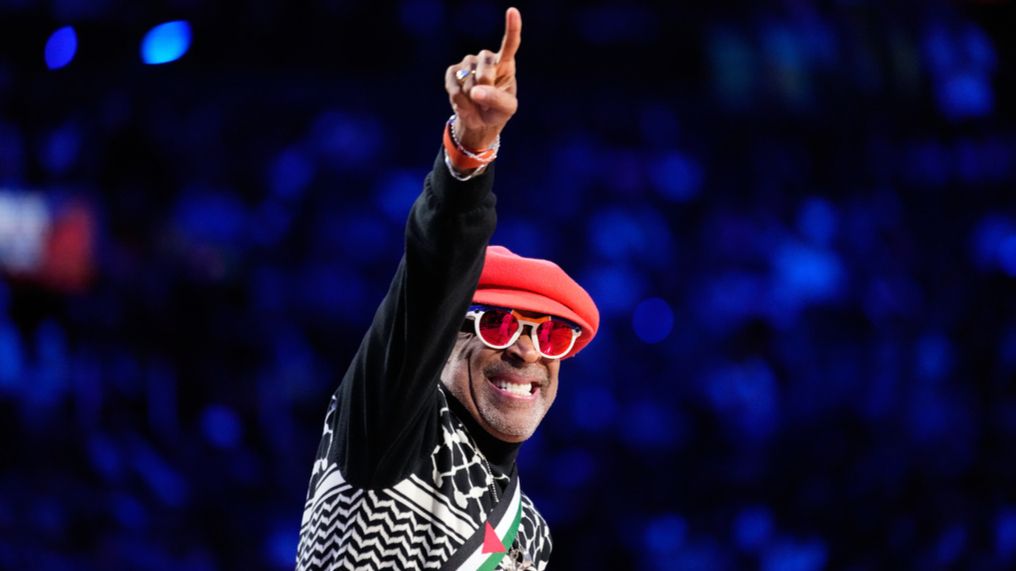
The NBA All-Star Game weekend in Inglewood, California, was overshadowed by controversy as filmmaker Spike Lee’s attire sparked debate, whereas comments from LeBron James too drew criticism. Lee, a longtime NBA fan and visible presence at games, wore clothing featuring Palestinian symbols – a keffiyeh-patterned sweater and a bag adorned with the Palestinian flag – during the festivities at the Intuit Dome. The gesture ignited a firestorm of discussion, particularly in light of the participation of Deni Avdija, the first Israeli-born player selected for the NBA All-Star Game. The incident highlights the increasing intersection of sports and political expression, and the challenges of navigating sensitive geopolitical issues on a global stage.
The core of the controversy stemmed from the perception that Lee’s pro-Palestinian display was intentionally directed at Avdija, who plays for the Portland Trail Blazers. Avdija’s inclusion in the All-Star Game was a historic moment for Israeli basketball, and some observers interpreted Lee’s clothing as a deliberate act of protest against his participation. However, Lee swiftly addressed these accusations, stating that he was unaware of Avdija’s nationality at the time he chose his outfit. This claim, posted on Instagram, has been met with skepticism, but Lee maintained that his attire was a demonstration of his “concern for Palestinian children and civilians” and not a personal attack on Avdija or an expression of antisemitism.
Spike Lee Clarifies Intent, Faces Continued Scrutiny
In a detailed Instagram post, Spike Lee explained that his choice of clothing was rooted in his deep concern for the humanitarian crisis unfolding in Palestine. He emphasized that his intention was not to target Avdija, whom he acknowledged as a talented player, stating, “He can BALL. NOW I DO Grasp.” According to the Jewish Telegraphic Agency, Lee’s statement aimed to quell the backlash and clarify his position. Despite his explanation, the incident continued to generate debate, with some critics questioning the sincerity of his claim of ignorance regarding Avdija’s background. New York radio host Craig Carton, for example, called for Lee to be banned from NBA arenas, arguing that such political statements were inappropriate for a sporting event.
The situation is further complicated by the ongoing conflict between Israel and Hamas. Since the October 2025 ceasefire, over 500 people have been killed in the Gaza Strip, bringing the total death toll in the conflict to over 72,000, according to the Hamas-run Gaza health ministry. The Times of Israel reports that the Israeli military believes Hamas’s overall toll is largely accurate. This context underscores the sensitivity surrounding any display of political allegiance, particularly when it involves a prominent public figure like Spike Lee and a high-profile sporting event like the NBA All-Star Game.
LeBron James’s Comments on Israel Spark Controversy
Adding to the weekend’s political undercurrent, LeBron James also faced criticism for comments he made about Israel. Prior to the All-Star Game, James was questioned by an Israeli journalist and expressed his admiration for Avdija’s performance. He then went on to state his desire to visit Israel, saying he had “heard nothing but good things” about the country. i24NEWS reported that these remarks triggered a wave of criticism on social media, with some accusing James of ignoring the plight of Palestinians. British commentator Mehdi Hasan was among those who voiced their disapproval, highlighting the perceived insensitivity of James’s comments in the context of the ongoing conflict.
The criticism directed at James underscores the challenges faced by athletes and celebrities when navigating politically charged issues. Their words and actions are often scrutinized and interpreted through a political lens, and even seemingly innocuous statements can be perceived as taking a side in complex conflicts. The NBA, as a global league with players and fans from diverse backgrounds, has increasingly become a platform for social and political expression, but this has also led to increased scrutiny and controversy.
Deni Avdija’s Historic All-Star Game Appearance
Despite the surrounding controversies, Deni Avdija’s participation in the NBA All-Star Game remained a significant achievement. He became the first Israeli-born player to be selected for the annual showcase, representing a milestone for Israeli basketball and a source of national pride. Avdija wore the Israeli flag on the back of his jersey during the game, further emphasizing the historical significance of his appearance. Fox News reported that Avdija expressed his pride in representing his country on the global stage, stating, “I feel like when I come to play, I come with the entire nation, and it’s fun to show that it’s possible, even for a small country like us.”
Avdija played for Team World in the All-Star Game, which featured a new format pitting a team of international players against a team of American All-Stars. While Team World ultimately fell short in the round-robin contest, Avdija’s participation was widely celebrated as a symbol of inclusivity and international cooperation. His performance, and his presence in the game, served as a reminder of the power of sports to transcend political boundaries and unite people from different backgrounds.
The Intersection of Sports and Politics
The incidents involving Spike Lee and LeBron James at the NBA All-Star Game are emblematic of a broader trend: the increasing intersection of sports and politics. Athletes and teams are increasingly using their platforms to advocate for social and political causes, and fans are often eager to engage in these discussions. This trend has been fueled by the rise of social media, which allows athletes to communicate directly with their fans and bypass traditional media outlets. However, it has also led to increased polarization and controversy, as fans and commentators often hold strong and conflicting opinions on political issues.
The NBA has a long history of social and political activism, dating back to the days of Bill Russell and Kareem Abdul-Jabbar. In recent years, the league has become more vocal in its support for social justice causes, such as Black Lives Matter. However, the league also faces the challenge of balancing its commitment to social responsibility with the need to maintain a broad and inclusive fan base. The controversies surrounding Spike Lee and LeBron James demonstrate the complexities of navigating these issues and the potential for unintended consequences.
Key Takeaways
- Spike Lee’s pro-Palestinian attire at the NBA All-Star Game sparked controversy and accusations of targeting Israeli player Deni Avdija.
- Lee defended his actions, claiming he was unaware of Avdija’s nationality and that his clothing represented concern for Palestinian civilians.
- LeBron James’s positive comments about Israel also drew criticism, with some accusing him of ignoring the Palestinian cause.
- Deni Avdija’s historic All-Star Game appearance as the first Israeli-born player was overshadowed by the surrounding political debates.
- The incidents highlight the growing intersection of sports and politics and the challenges of navigating sensitive geopolitical issues on a global stage.
The NBA has not released any official statement regarding the incidents involving Lee and James as of February 19, 2026. However, the league is likely to monitor the situation closely and may take steps to address any further controversies that arise. The ongoing debate surrounding these events underscores the importance of respectful dialogue and understanding in a world increasingly divided by political and ideological differences. The conversation surrounding these events is likely to continue, and it will be crucial for all stakeholders – players, teams, fans, and the league itself – to engage in a thoughtful and constructive manner.
What are your thoughts on the intersection of sports and politics? Share your opinions in the comments below, and be sure to share this article with your network.
Related reading