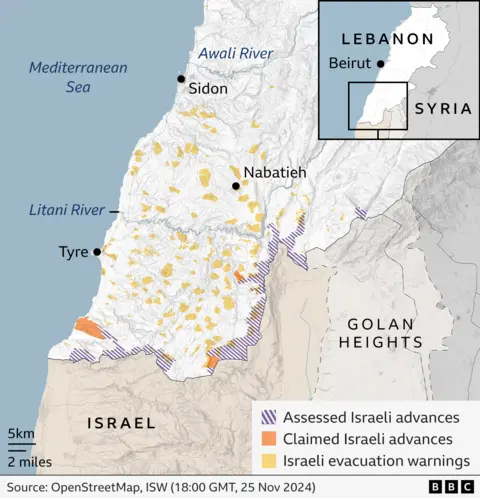
Benjamin Netanyahu has claimed that certain Christian villages in Lebanon have expressed a desire for “annexation” by Israel. This statement has drawn immediate attention to the shifting geopolitical dynamics along the Israel-Lebanon border amid ongoing hostilities between the Israel Defense Forces (IDF) and Hezbollah.
Netanyahu suggested that the request originated from local residents seeking security and stability. The remarks come as the IDF continues its military operations in southern Lebanon, a region that has seen a significant escalation in cross-border fire. These operations are officially aimed at neutralizing Hezbollah infrastructure to facilitate the return of displaced Israeli citizens to their homes in the north.
The Context of Border Security and Territorial Claims
The assertion by Netanyahu regarding the potential annexation of Lebanese territory has not been supported by independent verification or official requests from Lebanese municipal authorities. Lebanon’s political and religious leadership, including various Christian factions, has historically maintained a firm stance on the sovereignty of the Lebanese state. Under the current United Nations Security Council Resolution 1701, which brought an end to the 2006 Lebanon War, all parties are mandated to respect the Blue Line—the demarcation line between Lebanon and Israel—and uphold the territorial integrity of Lebanon.

Netanyahu’s comments are viewed by political analysts as an attempt to frame the Israeli military presence in southern Lebanon not merely as a security measure against Hezbollah, but as a response to local grievances. However, the lack of public documentation or formal petitions from the mentioned villages leaves these claims in a state of political ambiguity. In the context of international law, the annexation of territory acquired by force is prohibited under the Charter of the United Nations, a principle that remains a cornerstone of global diplomatic relations.
Regional Reactions and Diplomatic Implications
The suggestion has sparked concern among international observers and Lebanese officials who fear that such rhetoric could destabilize the fragile sectarian balance within Lebanon. The country’s Christian communities, represented by various political parties, have largely avoided aligning themselves with Israeli military objectives, preferring to work within the framework of the Lebanese Armed Forces (LAF) and the state apparatus. The LAF remains the only entity officially tasked with maintaining security across Lebanese territory, as mandated by the United Nations Interim Force in Lebanon (UNIFIL) protocols.
Observers note that the remarks may be intended for a domestic Israeli audience, emphasizing the necessity of the current military campaign. By suggesting that local populations are seeking Israeli protection, the government seeks to bolster the narrative that the IDF is acting as a stabilizing force in a volatile region. Yet, the diplomatic reality remains complex, as any formal change to the border would require a bilateral agreement that is currently absent from any official negotiations.
What Happens Next at the Border
As the conflict persists, the primary focus for international mediators, including the United States and France, remains the implementation of a ceasefire that would allow for the withdrawal of combatants and the restoration of state authority in southern Lebanon. There is no evidence to suggest that the Israeli government is preparing for a legal annexation process, which would necessitate significant legislative action and likely trigger widespread international condemnation.

The situation on the ground remains fluid, with ongoing aerial strikes and localized ground engagements. Future developments will depend on the outcome of ongoing ceasefire talks and the ability of the Lebanese government to assert control over the border regions. Interested readers can monitor official updates through the UNIFIL press office for the latest reports on the security situation along the Blue Line.
We invite our readers to share their perspectives on these developments in the comments section below. Please ensure that all contributions remain respectful and grounded in the reported facts as the situation continues to unfold.